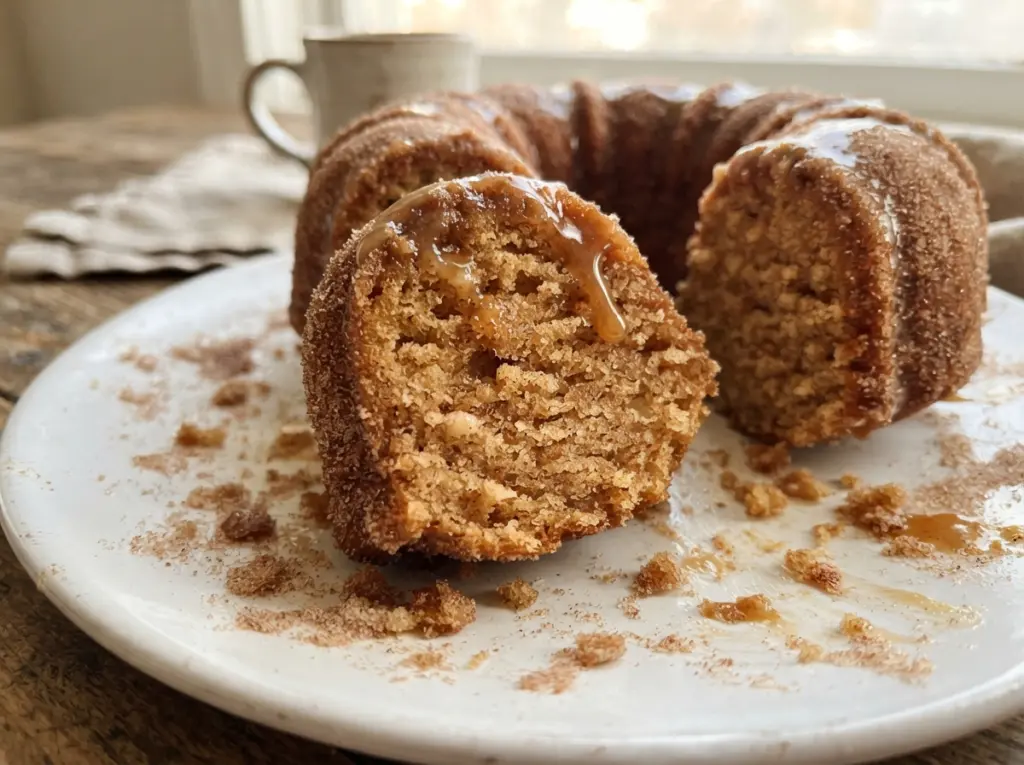
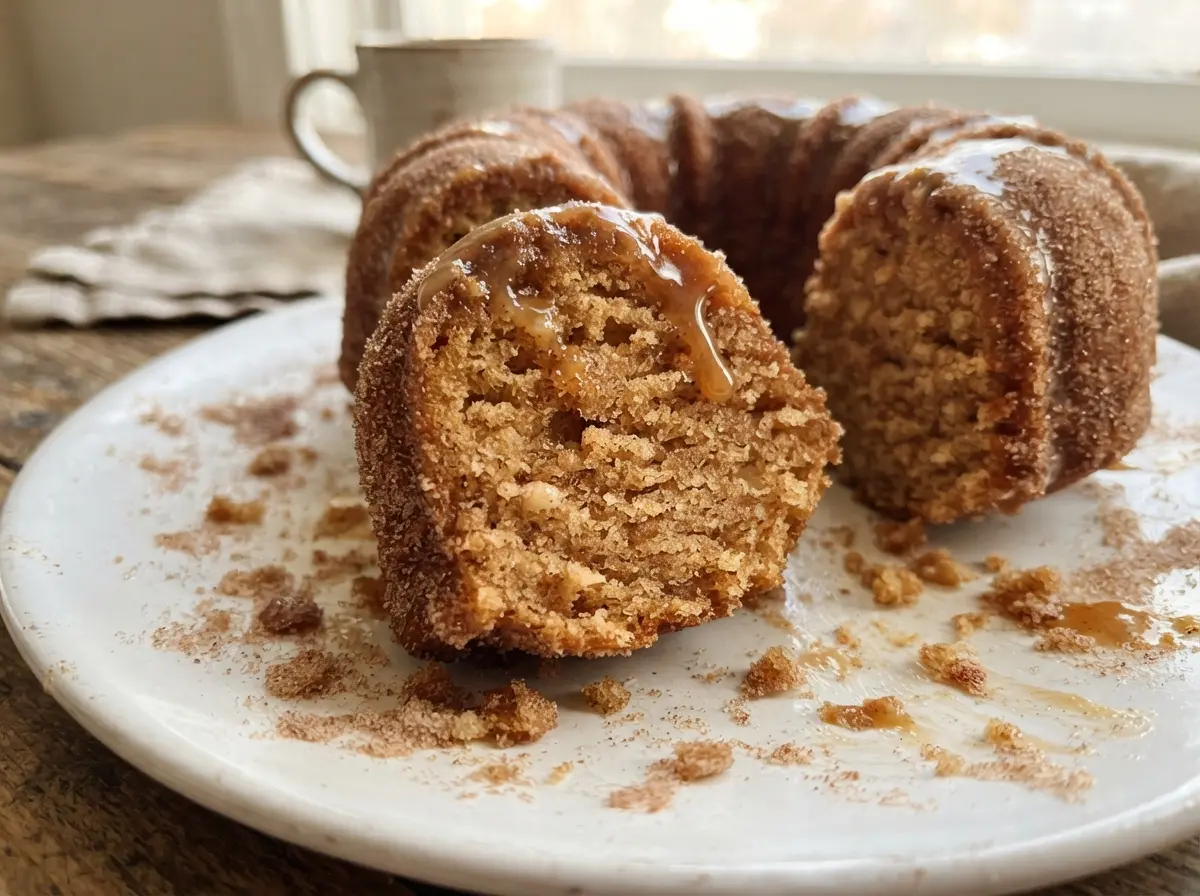
Apple Cider Donut Cake with Maple Glaze has the cinnamon warmth and tender crumb of a cider donut, baked into a Bundt cake that’s easy to slice and share. Reducing the cider before it goes into the batter gives the cake a deeper apple flavor without leaving you with a thin, wet batter. The maple glaze brings a gentle sweetness across the top, and it sets into a neat finish after a short rest.
The small details matter here. The cider needs to cool completely before you mix it with the sour cream, and the butter and sugars need a full few minutes of beating to turn pale and fluffy. Once the flour goes in, mix only until the dry streaks disappear; extra mixing can make the crumb tougher than you want.
Below, I’ve called out the cider-reduction cue, the pan-prep detail that helps a Bundt cake release cleanly, and how to adjust the glaze so it drizzles instead of running off in a puddle.
Kitchen Note
Let the reduced cider cool completely before you stir it into the sour cream. Warm cider can loosen the batter ingredients before they’re ready to be combined, and the full cooling time also gives you a chance to prep the pan without rushing.
Save this Apple Cider Donut Cake with Maple Glaze for the next time you want a spiced Bundt cake with concentrated cider flavor and a smooth maple finish.
Why the Cider Has to Reduce Before It Goes Into the Batter
Apple cider brings plenty of liquid, but adding it straight from the carton would dilute the batter and leave its apple character less concentrated. Simmering it until it measures one cup and looks noticeably darker takes care of both issues: less liquid goes into the cake, while the cider flavor becomes more pronounced. Keep an eye on the saucepan as it reduces, and stir occasionally so you can check the change rather than relying on the clock alone.
The other thing that can undermine the texture is treating the finished batter like something that needs a lot of mixing. Creaming the butter with both sugars for three to four minutes builds the pale, fluffy base; the eggs go in one at a time to keep that mixture smooth. After that, alternate the cider-sour cream mixture with the dry ingredients, starting and ending with the dry ingredients. Stop as soon as no dry flour remains. This measured mixing gives the leaveners room to do their job without overworking the flour.
The Cider, Sour Cream, and Maple Each Have a Specific Job

- Apple cider — Reducing cider concentrates its apple flavor and controls the moisture going into the batter. Use cider rather than swapping in plain water or another liquid; the cake’s defining flavor depends on it. The visual cue matters: the reduced cider should be darker and measure one cup, then cool completely.
- Sour cream — Mixed with the cooled cider, it adds moisture and a slight tang that balances the brown and granulated sugars. Bring it to room temperature as directed so it combines more smoothly with the butter mixture instead of chilling it abruptly.
- Butter and sugars — Softened butter can trap air as it’s beaten with the sugars, which helps build the cake’s texture. The brown sugar contributes a deeper sweetness, while the granulated sugar keeps the mixture from relying on brown sugar alone. Don’t rush the creaming stage; look for a pale, fluffy mixture.
- Flour and leaveners — All-purpose flour gives the cake its structure, while baking powder and baking soda provide lift. Whisk them with the spices and salt before adding them so the leaveners aren’t concentrated in one part of the batter. Self-rising flour isn’t a direct swap because this recipe already includes separate leaveners.
- Cinnamon and nutmeg — These are what steer the cake toward the familiar warm-spice character of an apple cider donut. Whisk them thoroughly into the flour mixture for an even flavor in each slice.
- Maple syrup and powdered sugar — Pure maple syrup gives the glaze its maple note; powdered sugar makes it smooth and opaque. Whole milk controls how thickly it pours, so add it gradually. A little kosher salt keeps the glaze from tasting one-note sweet.
Build the Batter in Stages, Then Let the Bundt Pan Do Its Work
Reduce the Cider Until It’s Darker
Bring the cider to a simmer over medium heat in a small saucepan, then cook it for 12 to 18 minutes, stirring occasionally. It’s ready when it has reduced to one cup and looks noticeably darker, not merely when the timer rings. Pour it into a heatproof measuring cup and let it cool completely. If you add it while warm, you’ll be working against the recipe’s temperature cues from the start.
Coat Every Part of the Bundt Pan
Heat the oven to 350°F and coat a 10-cup Bundt pan with baking spray that contains flour. Aim for an even, thin coating, checking the center tube, grooves, and curves for bare spots. Too little coverage can leave sections of cake behind when you turn it out. Whisk the flour, baking powder, baking soda, cinnamon, nutmeg, and salt together in a medium bowl while the pan is ready.
Cream First, Then Alternate the Wet and Dry Mixtures
Beat the softened butter with both sugars on medium speed for three to four minutes, until the mixture looks pale and fluffy. Add the room-temperature eggs one at a time, mixing each in before adding the next, then beat in the vanilla until smooth. Stir the completely cooled cider and sour cream together in a small bowl. Add that mixture in two additions, alternating with the dry ingredients in three additions; begin and end with the dry mixture, and use low speed only until no dry flour remains.
Use the Cake’s Edges and a Toothpick to Judge Doneness
Scrape the batter into the prepared pan and bake at 350°F for 45 to 55 minutes. The top should be golden, the cake should begin pulling away from the pan’s edges, and a toothpick inserted in the center should come out clean or with a few moist crumbs. If the toothpick is coated in wet batter, it needs more time; check again rather than taking it out based only on color. Oven timing can vary, so use all three cues together.
Wait for the Cake to Release Before Glazing
Cool the cake in its pan on a rack for 15 minutes, until it releases easily when gently nudged, then invert it onto the rack. Don’t rush the turn-out or try to glaze a warm cake; it needs to cool completely first. Whisk the powdered sugar, maple syrup, two tablespoons of milk, and salt until smooth, adding the remaining milk only as needed for a thick but pourable consistency. Drizzle the glaze over the cooled cake and give it about 15 minutes to set.
Small Changes for a Different Glaze or a Gluten-Free Table
Make the Maple Glaze Thicker or More Drizzly
For a thicker glaze that sits more visibly on the cake, begin with the first two tablespoons of milk and add the remaining milk only if it needs loosening. For a thinner drizzle, add the remaining milk gradually until it falls easily from the whisk. Pour slowly either way; you can add more glaze, but you can’t take back a stream that has run off the cake.
A Gluten-Free Flour Swap
For a gluten-free version, replace the all-purpose flour with a cup-for-cup gluten-free baking blend that includes a binder, following the blend’s package guidance for measuring. The cake may bake up with a slightly different crumb, so rely on the golden top, edges pulling from the pan, and toothpick test rather than the exact minute. This is an adaptation, not a tested guarantee of the same texture.
Storage and Reheating
- Refrigerator: Store covered in an airtight container for up to 4 days. The cake may feel firmer when chilled; let slices sit at room temperature briefly before serving.
- Freezer: Freeze the completely cooled cake without glaze for up to 2 months, wrapped tightly. Thaw it while still wrapped, then make and drizzle the glaze once the cake is fully thawed.
- Reheating: Warm an individual slice in the microwave for about 10 seconds, then add a few seconds if needed. Longer heating can dry the crumb and melt the glaze into the plate.
Questions That Come Up Before the Cake Goes in the Oven
Apple Cider Donut Cake with Maple Glaze
Ingredients
Equipment
Method
- Bring the apple cider to a simmer in a small saucepan over medium heat and cook for 12 to 18 minutes, stirring occasionally, until reduced to 1 cup and noticeably darker.
- Transfer the reduced cider to a heatproof measuring cup and cool completely.
- Heat the oven to 350°F.
- Coat a 10-cup Bundt pan thoroughly with baking spray with flour; the pan should have an even, thin coating with no bare spots.
- Whisk the flour, baking powder, baking soda, cinnamon, nutmeg, and salt in a medium bowl until evenly combined.
- Beat the butter, brown sugar, and granulated sugar in a large bowl with an electric mixer on medium speed for 3 to 4 minutes, until pale and fluffy.
- Beat in the eggs one at a time, mixing until each is incorporated.
- Beat in the vanilla until the mixture looks smooth.
- Stir the cooled cider and sour cream together in a small bowl until smooth.
- Add the cider mixture to the butter mixture in two additions, alternating with the dry ingredients in three additions, beginning and ending with the dry ingredients and mixing on low just until no dry flour remains.
- Scrape the batter into the prepared pan.
- Bake at 350°F for 45 to 55 minutes, until the top is golden, the cake begins to pull from the pan’s edges, and a toothpick inserted in the center comes out clean or with a few moist crumbs.
- Cool the cake in the pan on a rack for 15 minutes, until it releases easily when gently nudged.
- Invert the cake onto the rack and cool completely.
- Whisk the powdered sugar, maple syrup, 2 tablespoons milk, and salt in a small bowl until smooth, adding the remaining milk as needed until the glaze is thick but pourable.
- Drizzle the glaze over the completely cooled cake.
- Let the glaze set for about 15 minutes.