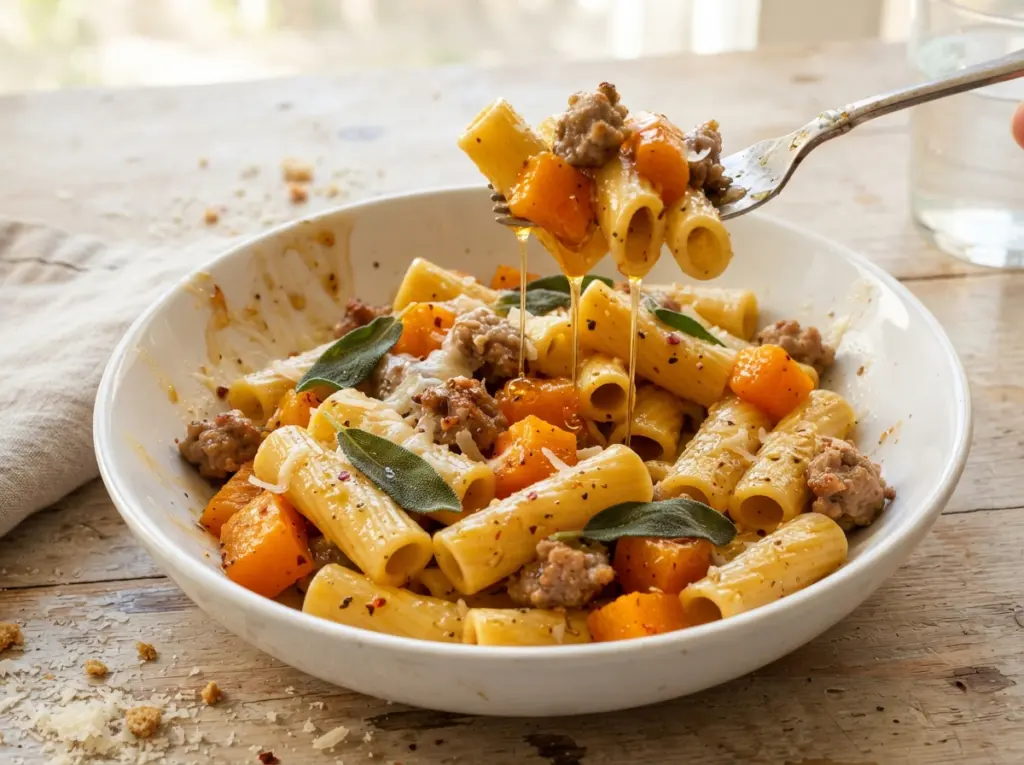
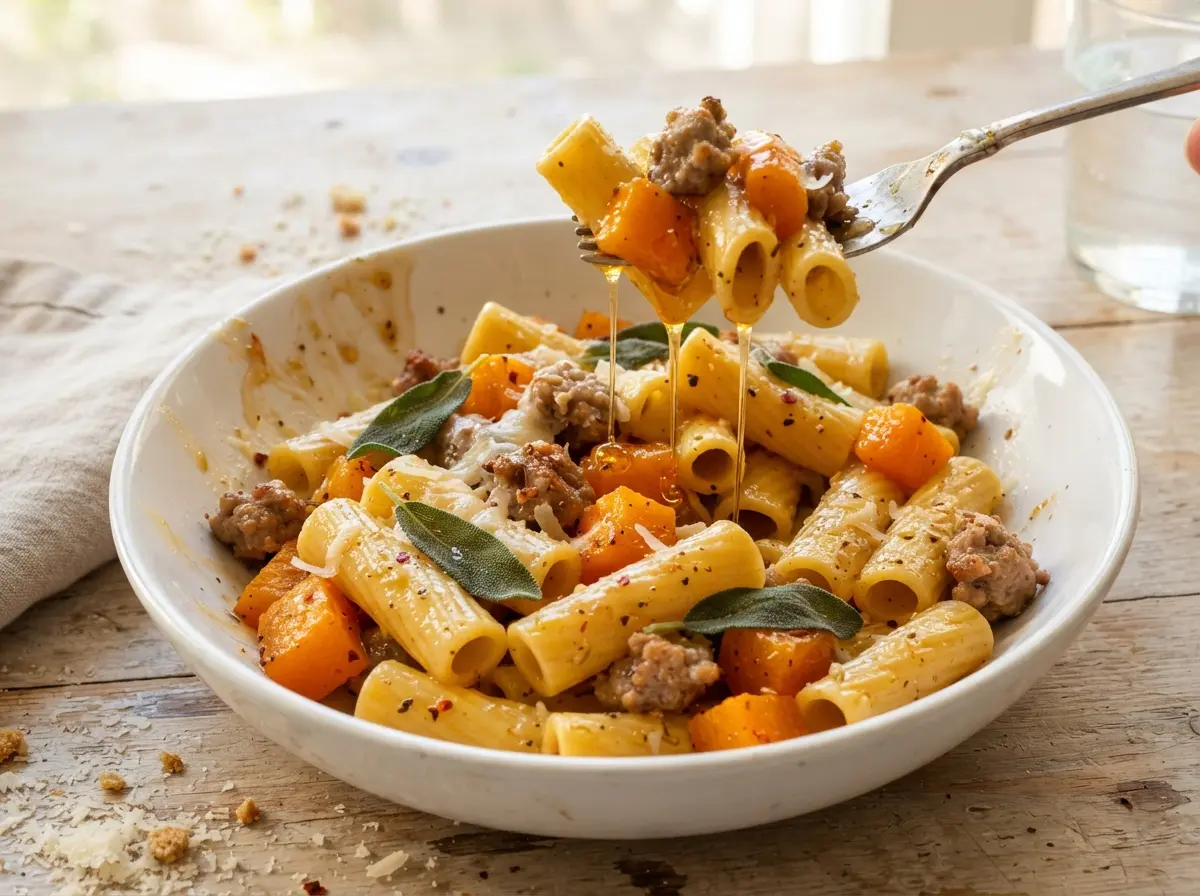
Hot Honey Butternut Squash Pasta with Sausage brings together browned, savory sausage, soft squash mashed into a creamy sauce, and a sweet-spicy finish that wakes up every bite. The rigatoni gives that thick sauce plenty of ridges to cling to, so you get more than a slick coating at the bottom of the bowl. It’s hearty without needing a separate sauce pan or a complicated list of ingredients.
The useful trick is cooking the squash until a fork slips through easily before mashing it right in the skillet. It turns into a thick, mostly smooth base with enough texture to feel homemade, while cream and finely grated Parmesan make it creamy. Then a little reserved pasta water helps the sauce settle around the rigatoni instead of sitting in a heavy mound.
There are a few small cues worth watching, especially when the squash is simmering and when the pasta goes back into the skillet. I’ve laid those out below, along with ways to adjust the hot honey at the table and practical guidance for leftovers.
Kitchen Note
Let the squash get fork-tender before you reach for the potato masher; any firm cubes will stay lumpy instead of blending into the sauce. I stop when it’s mostly smooth, not perfectly pureed, so the sauce keeps a little homemade texture.
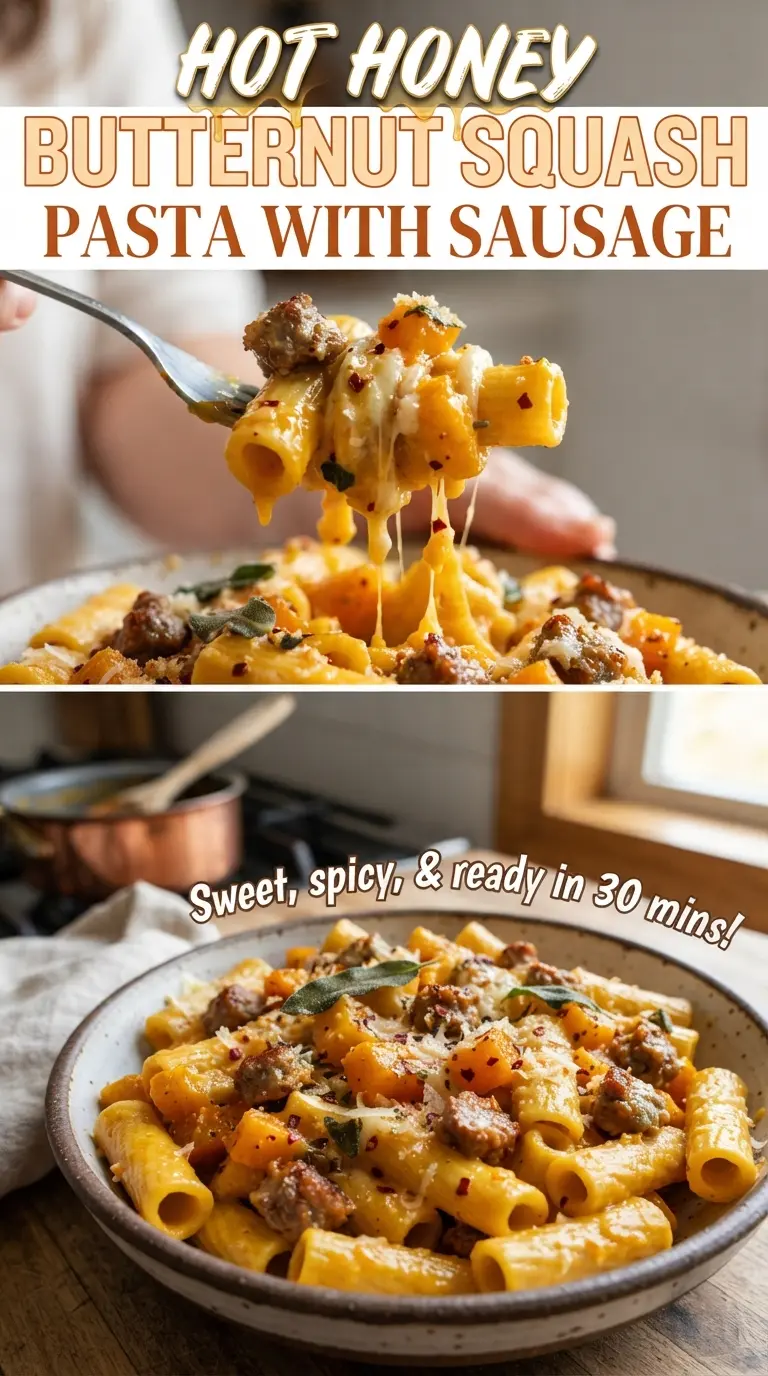
Save this Hot Honey Butternut Squash Pasta with Sausage for the nights you want creamy squash sauce, browned sausage, and a sweet-spicy drizzle in one bowl.
The Squash Needs to Mash Before It Can Make a Sauce
The most important texture decision happens before the cream and Parmesan go in. Butternut squash won’t become sauce just because it’s simmered; the cubes need to be tender enough to collapse under a potato masher. If they’re still firm in the middle, you’ll end up chasing stubborn chunks through an otherwise creamy pasta. Use the fork test as your signal: it should slide easily into a cube.
Mashing in the skillet gives you control. Stop when the squash is thick and mostly smooth rather than trying to make it perfectly uniform. A few soft bits are welcome, and you don’t need to transfer hot squash to a blender. The cream and finely grated Parmesan finish the sauce, while reserved pasta water loosens it to a consistency that coats the rigatoni.
That pasta water matters most at the end. The starch in it helps the sauce cling as you toss everything together over medium heat for 1 to 2 minutes. Start with the specified half cup, then add more a little at a time if the sauce looks tight. If you pour in too much at once, the sauce can turn thin; gradual additions make it easier to stop when the pasta is glossy and coated.
Why Rigatoni, Squash, and Hot Honey Each Matter
- Mild Italian pork sausage — Browning it first gives the pasta savory, meaty bites and leaves flavorful browned bits in the skillet for the onion and squash. Remove the casings so the sausage can break into small pieces as it cooks. The important doneness cue is a center temperature of 160°F.
- Butternut squash — The squash supplies the body of the sauce, not just its sweetness. Cutting it into 1/2-inch cubes helps it become tender during the covered simmer, and peeling it keeps the sauce smooth when mashed. Don’t rush past the fork-tender cue.
- Rigatoni — Its wide tubes and ridged surface hold onto the thick squash sauce. Cook it only until al dente according to the package directions; it gets another 1 to 2 minutes in the skillet, where it finishes absorbing sauce.
- Chicken broth — The broth gives the squash liquid to simmer in and helps it soften beneath the lid. Once the squash is tender, that cooking liquid becomes part of the sauce rather than something to drain away.
- Heavy cream and finely grated Parmesan — Cream rounds out the mashed squash, and finely grated cheese melts into it more readily than large shreds. Stir until the Parmesan has melted and the sauce looks creamy before adding the sausage and pasta.
- Hot honey and fresh parsley — Hot honey is the sweet-spicy finish, so it goes over the pasta in the bowls rather than into the skillet. Chopped parsley adds a fresh contrast at serving; both toppings are most noticeable when added just before eating.
From Browning the Sausage to Coating Every Rigatoni Tube
Brown the sausage in the skillet
Heat the olive oil in a 12-inch skillet over medium-high heat, then add the sausage without its casings. Break it into small pieces as it cooks for 6 to 8 minutes, until browned and the center reaches 160°F. If the pieces are still pale, give them time to brown rather than rushing to the next step. Transfer the cooked sausage to a plate and leave the skillet ready for the vegetables.
Soften the onion, then simmer the squash
Add the finely chopped onion to the skillet and cook over medium heat for 3 to 4 minutes, stirring until softened. Stir in the squash, minced garlic, and kosher salt, then pour in the chicken broth. Cover and simmer over medium-low heat for 12 to 15 minutes. Check the largest squash pieces with a fork; if they resist, keep simmering until they’re easily pierced.
Cook the rigatoni while the squash softens
Bring a large pot of water to a boil, add the salt for the pasta water, and cook the rigatoni according to the package directions until al dente. Before draining, reserve 1 cup of pasta water; it’s easy to forget once the pasta is ready. Drain the rigatoni, but don’t rinse it. The reserved water is for adjusting the sauce when everything comes together.
Mash the squash into a creamy base
Use a potato masher to mash the tender squash in the skillet until the sauce is thick and mostly smooth. Stir in the heavy cream, black pepper, and finely grated Parmesan. Keep stirring until the cheese melts and the mixture looks creamy, with no unmelted clumps of Parmesan. If the squash hasn’t softened enough to mash, give it more covered simmering time instead of trying to force it smooth.
Toss until the sauce clings, then finish in the bowls
Add the cooked sausage and drained rigatoni to the skillet with 1/2 cup of the reserved pasta water. Toss over medium heat for 1 to 2 minutes, adding more pasta water as needed until the sauce coats the pasta. Don’t judge the final thickness before tossing; the movement helps the sauce distribute around the ridges and inside the tubes. Divide into bowls, drizzle with the hot honey, sprinkle with parsley, and serve hot.
Small Changes for Heat, Texture, and Dietary Needs
Put the hot honey on each bowl
Keep the listed hot honey as a finishing drizzle and divide it among the bowls to suit the people eating. That lets you keep the pasta itself creamy and savory while giving each serving its own sweet-spicy finish. The more evenly you drizzle, the more consistently each bite gets a little heat.
Leave a little more squash texture
For a more rustic sauce, stop mashing when some small, tender squash pieces remain instead of pressing it to mostly smooth. The sauce will be less uniform, but the squash bites make its texture more pronounced. Keep the fork-tender test the same; this changes how much you mash, not how long the squash needs to cook.
A dairy-free-minded bowl
For a dairy-free adaptation, omit the heavy cream and Parmesan. The mashed squash will still make a thick base, but the result won’t be as rich or creamy; use the reserved pasta water gradually while tossing to help it coat the rigatoni. Check the labels on the sausage and chicken broth as well, since packaged products can vary.
Storage and Reheating
- Refrigerator: Store leftovers in an airtight container for 3 to 4 days. The pasta will absorb some sauce and soften as it sits.
- Freezer: Freeze in an airtight container for up to 2 months. The pasta may be softer and the creamy sauce may change texture after thawing, so it’s best fresh if texture matters most.
- Reheating: Reheat covered in the microwave in short intervals, stirring between them, until steaming hot throughout. Avoid heating it for a long stretch without stirring, which can leave the edges hot and the center cool.
The Questions That Come Up While the Squash Simmer
Hot Honey Butternut Squash Pasta with Sausage
Ingredients
Equipment
Method
- Heat the olive oil in a 12-inch skillet over medium-high heat.
- Add the sausage and cook for 6 to 8 minutes, breaking it into small pieces, until browned and the center reaches 160°F.
- Transfer the sausage to a plate.
- Add the onion to the skillet and cook over medium heat for 3 to 4 minutes, stirring, until softened.
- Stir in the squash, garlic, and 1/2 teaspoon kosher salt.
- Pour in the chicken broth, cover, and simmer over medium-low heat for 12 to 15 minutes, until the squash is easily pierced with a fork.
- While the squash simmers, bring a large pot of water to a boil.
- Add the 1 tablespoon kosher salt and rigatoni, and cook according to package directions until al dente.
- Reserve 1 cup of pasta water, then drain the rigatoni.
- Mash the squash in the skillet with a potato masher until it forms a thick, mostly smooth sauce.
- Stir in the heavy cream, black pepper, and Parmesan until the cheese melts and the sauce is creamy.
- Add the cooked sausage and drained pasta to the skillet with 1/2 cup of the reserved pasta water.
- Toss over medium heat for 1 to 2 minutes, adding more pasta water as needed, until the sauce coats the pasta.
- Divide the pasta among serving bowls.
- Drizzle with the hot honey and sprinkle with the parsley; serve while hot.