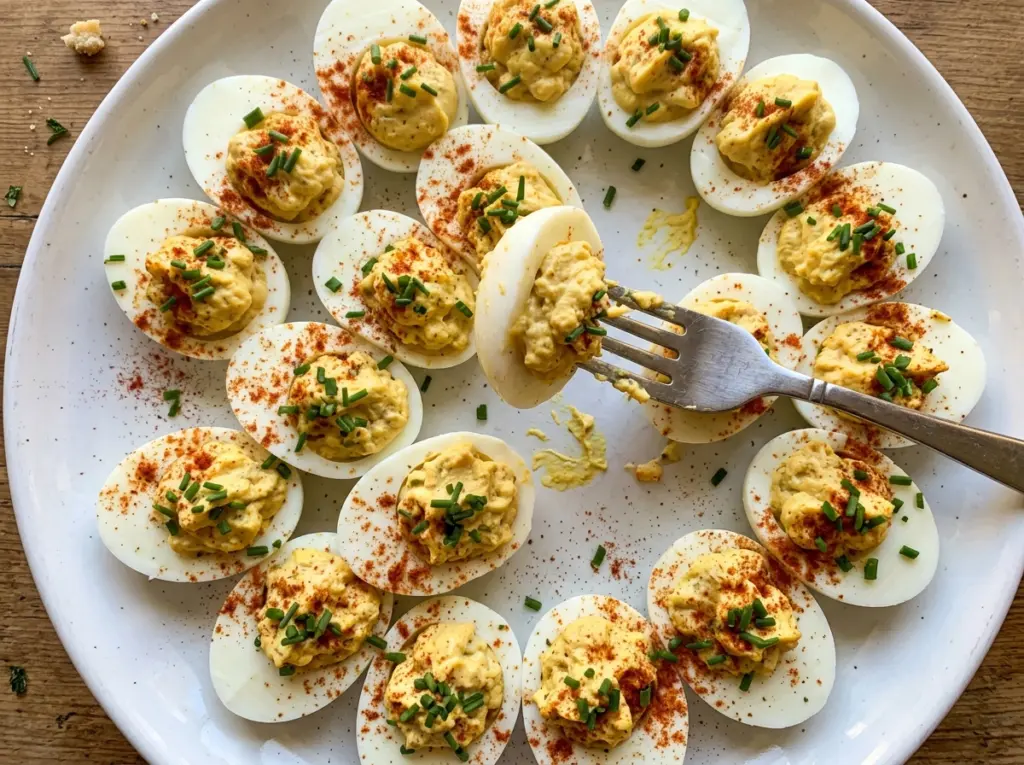
The first thing I noticed when I cut into one of these was how much the sage changes the usual deviled-egg filling. It brings a warm, savory note that sits right between the sweet pickle relish and the cranberry on top. These Thanksgiving Deviled Eggs still have the creamy, tangy center I want, but the garnish gives each bite a bright little contrast.
I use the covered, off-the-heat method for the eggs, then cool them in an ice bath before peeling. That gives the yolks time to cook without leaving the pan bubbling away on the burner. Once the filling is smooth, a small dab of whole-berry cranberry sauce and a dusting of paprika make each half look festive without adding extra work. The finished eggs are best served cold, with the cranberry distinct against the savory filling.
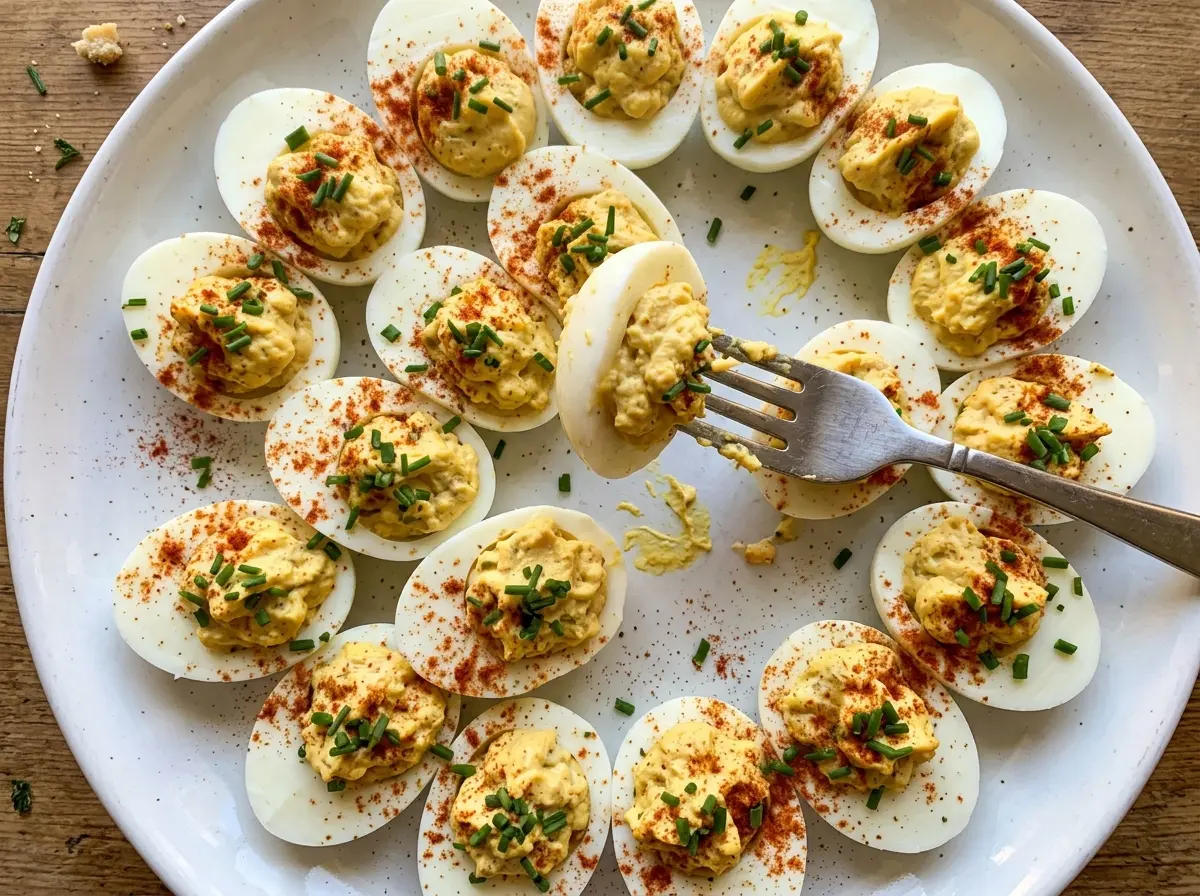
Kitchen Note
Mash the yolks until they’re smooth before adding the mayonnaise and seasonings. I used to stop when they looked mostly broken up, but the last little lumps show up in the finished filling.
Save these Thanksgiving Deviled Eggs for a holiday spread: sage-seasoned filling, a cranberry finish, and a paprika-dusted top.
Why These Eggs Stop Cooking Before the Timer Starts
Hard-boiled eggs are easy to overdo when they keep simmering after the water reaches a boil. The whites can turn firm and rubbery, and the yolks can develop a dry texture or a green-gray ring. Here, the pan comes off the heat as soon as the water boils. Covered, the eggs sit in the hot water for 12 minutes, which cooks them gently without an active boil.
That timing also makes the process easier to control: you don’t have to keep adjusting the burner or watch a rolling boil. Start with the eggs in a single layer and enough cold water to cover them by an inch. Once the water boils, cover the pan and move it off the heat; don’t leave it on the burner while the eggs stand. The ice bath then cools them quickly, halting the cooking so the yolks stay tender enough to mash into a creamy filling.
How Sage and Cranberry Give These Deviled Eggs Their Thanksgiving Character

- Large eggs — Large eggs give you sturdy whites with enough room for a generous spoonful of filling. Fresh eggs can be harder to peel than eggs that have been in the refrigerator for a while, so work gently around the shell rather than pulling off big pieces of white.
- Mayonnaise — Mayonnaise binds the yolks into a smooth, rich filling and balances the sharper seasonings. Its thickness matters here; a thinner dressing won’t hold the same shape in the egg whites, so stick with regular mayonnaise rather than a pourable salad dressing.
- Dijon mustard and apple cider vinegar — Dijon gives the filling a mild mustard bite, while vinegar sharpens the richness of the yolks and mayonnaise. Both contribute their own kind of tang, so I wouldn’t replace one with more of the other; the balance is cleaner when you use both.
- Sweet pickle relish — Relish adds small bits of sweetness and pickle tang throughout the filling. Drain off any excess liquid clinging to the relish before mixing it in; extra brine can loosen the filling. If you leave it out, the center will be smoother and less sweet.
- Rubbed sage — Rubbed sage is the savory note that makes these taste at home on a Thanksgiving table. Its soft, crumbled texture disperses evenly through the yolks. Ground sage is more concentrated and can make the filling taste harsher, so use rubbed sage for the intended balance.
- Whole-berry cranberry sauce — The berries give the garnish texture and a tart-sweet pop against the seasoned yolks. A small dab keeps the cranberry flavor distinct rather than taking over. If you don’t have whole-berry sauce, leave off the garnish rather than using a dry cranberry that won’t sit neatly on the filling.
- Paprika — A light sprinkle adds color and a gentle earthy finish. It doesn’t need to be expensive or especially fresh for this small garnish; use a fine shake so it doesn’t cover the cranberry or dominate the filling.
From Covered Pan to Cranberry-Topped Egg Halves
Let the Covered Eggs Finish Gently
Arrange the eggs in a single layer in a 3-quart saucepan, then add 8 cups of cold water, or enough to cover them by 1 inch. Bring the water to a boil over high heat. As soon as it boils, cover the pan, take it off the heat, and let the eggs stand for 12 minutes; leaving them over the heat can push them past the tender texture you’re after.
Cool Before Peeling and Halving
Transfer the eggs to a large bowl with the remaining 4 cups of cold water and 2 cups of ice, and let them sit for 10 minutes. The chilled eggs are easier to handle, and the rapid cooling stops the cooking. Peel them carefully, halve each one lengthwise, and put the yolks in a medium bowl. Arrange the whites on a serving plate as you go so they’re ready to fill.
Mix, Fill, and Add the Cranberry Finish
Mash the yolks until smooth, then mix in the mayonnaise, Dijon, apple cider vinegar, sweet pickle relish, rubbed sage, kosher salt, and black pepper. The filling should look creamy and hold together on a spoon, not have visible dry chunks of yolk. Spoon it into the egg-white halves, add a small dab of whole-berry cranberry sauce to each, and sprinkle with paprika. Cover and refrigerate for at least 20 minutes before serving, and keep the eggs chilled until they’re ready for the table.
Two Ways to Adjust the Filling Without Losing Its Character
Swirl the Cranberry Through the Filling
For a more blended cranberry taste, fold the whole-berry cranberry sauce into the finished yolk mixture instead of putting a dab on each egg. The filling will have a softer pink tint and a more even tart-sweet flavor, rather than a separate cranberry bite on top.
Make a Lower-Sodium Batch
Use a lower-sodium sweet pickle relish and leave out the kosher salt. The filling will taste a little less seasoned, but the Dijon, vinegar, sage, and pepper still give it plenty of character. Keep the other ingredients and the method unchanged.
Storage and Serving
- Refrigerator: Cover and refrigerate the assembled eggs. They’re best within 2 days; the whites may release a little moisture over time.
- Freezer: Freezing isn’t a good fit. The whites turn rubbery after thawing, and the mayonnaise-based filling can lose its smooth texture.
- Serving: Serve cold and keep the platter chilled until it’s time to eat. Don’t leave the eggs sitting out while the rest of the meal is served.
Questions That Come Up When Making Thanksgiving Deviled Eggs
Thanksgiving Deviled Eggs
Ingredients
Method
- Arrange the eggs in a single layer in a 3-quart saucepan.
- Add 8 cups cold water, or enough to cover them by 1 inch.
- Bring the water to a boil over high heat.
- Cover the pan and remove it from the heat.
- Let the eggs stand for 12 minutes.
- Transfer them to a large bowl with the remaining 4 cups cold water and 2 cups ice.
- Let the eggs cool in the ice bath for 10 minutes.
- Peel the eggs and halve them lengthwise.
- Place the yolks in a medium bowl.
- Arrange the whites on a serving plate.
- Mash the yolks until smooth.
- Mix in the mayonnaise, Dijon mustard, apple cider vinegar, sweet pickle relish, rubbed sage, kosher salt, and black pepper.
- Spoon the filling into the egg-white halves.
- Top each with a small dab of whole-berry cranberry sauce.
- Sprinkle with paprika.
- Cover and refrigerate for at least 20 minutes before serving.
- Keep the eggs chilled until ready to serve.


