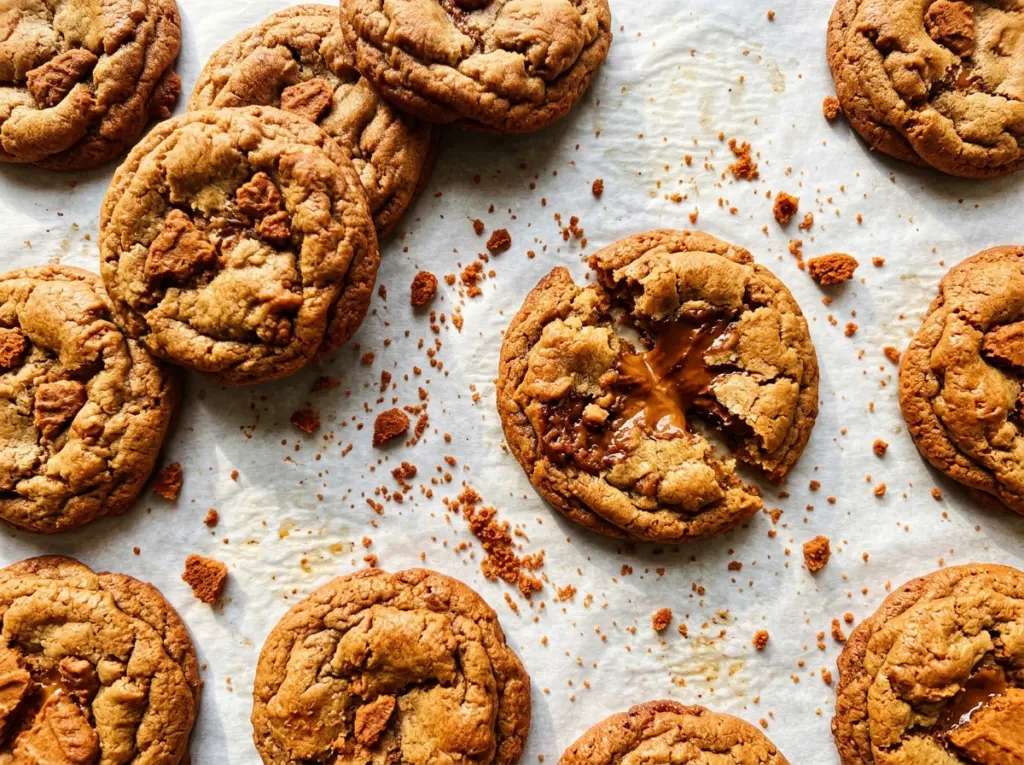
The mixer starts with a dense, sticky-looking blend of butter, cookie butter, and sugar. After a couple of minutes, it turns smooth and creamy, with that warm spiced-cookie aroma that lets you know these Biscoff Cookie Butter Cookies are going to taste like more than a plain sugar cookie. That first mixing stage gives the cookie butter time to blend evenly into the butter instead of leaving streaks in the dough.
I keep the rest of the method straightforward: add the egg and vanilla, then mix in the dry ingredients just until the flour disappears. Cookie butter already brings plenty of flavor, so there’s no need to add extra spices or toppings to make these cookies stand out. A short chill makes the dough easier to portion, and the cookies come out with set edges and centers that stay slightly soft.
Kitchen Note
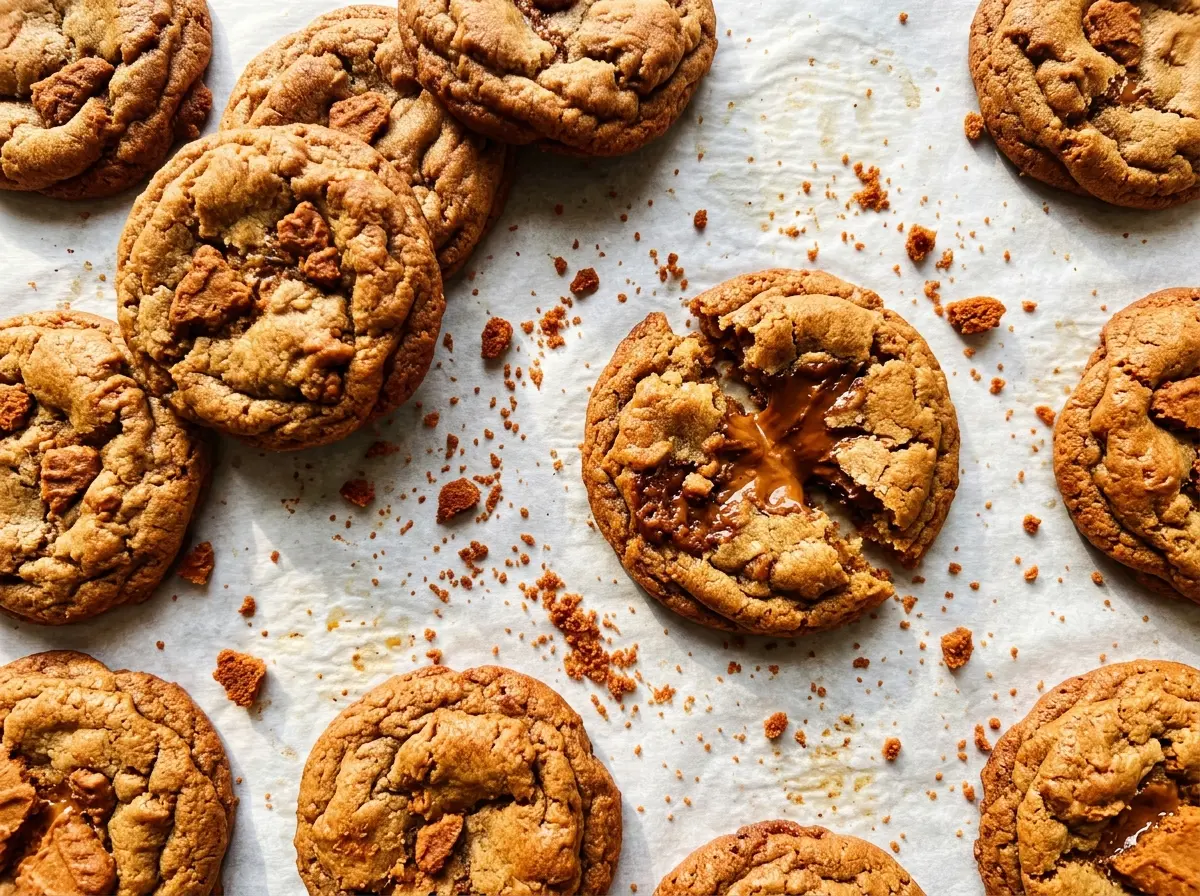
Give the covered dough its full 30 minutes in the refrigerator. It firms up enough to scoop neatly, so you can portion the cookies without fighting a sticky dough.
Save these Biscoff Cookie Butter Cookies for a cookie-butter craving: creamy dough, warm speculoos flavor, and soft centers.
Why Scooping the Flour Can Make These Cookies Dry
Cookie butter makes the dough rich and soft, so the flour measurement has a bigger effect than it might in a leaner cookie dough. If you dip the measuring cup straight into the flour bag, the cup packs in extra flour. That can leave you with a stiff dough and cookies that bake up dense or crumbly instead of tender.
Spoon the flour into the measuring cup, then level the top without pressing it down. That gives the dough enough structure to hold its shape while still letting the cookie butter come through in the texture. Once the flour goes into the bowl, stop mixing as soon as you can’t see dry patches. A little care at those two points keeps the dough balanced without adding anything to it.
What Biscoff, Butter, and the Two Sugars Each Bring

- Creamy Biscoff cookie butter — This is the main source of the cookies’ toasted, spiced-cookie flavor. A different creamy speculoos spread can stand in at the same amount, though the exact spice and sweetness will vary by brand. Skip a chunky spread here; pieces change the dough’s texture.
- Unsalted butter — Softened butter creams smoothly with the cookie butter and sugars. A basic grocery-store butter works well; it doesn’t need to be a specialty brand. Keep it softened rather than melted so the mixture can become creamy when beaten.
- Light brown and granulated sugar — The brown sugar brings moisture and a soft chew, while granulated sugar helps keep the edges from feeling heavy. Dark brown sugar can replace light brown sugar in the same amount for a deeper molasses note, though that swap gives the cookies a slightly richer flavor.
- All-purpose flour — It gives the dough enough structure to hold a soft center. Spoon and level it rather than packing the cup. If you need a gluten-free version, see the adaptation below; ordinary Biscoff products contain wheat, so a flour swap alone won’t make the cookies gluten-free.
- Egg and vanilla — The egg binds the dough and adds moisture, while vanilla rounds out the cookie-butter flavor. Use a large egg as listed so the dough stays in the right proportion.
Mixing and Baking the Dough Without Overworking It
Cream the Butter, Cookie Butter, and Sugars
Beat the softened butter, cookie butter, brown sugar, and granulated sugar in a large bowl with an electric mixer on medium speed for about 2 minutes. The mixture should look creamy and evenly blended, with no obvious streaks of butter. If it still looks lumpy, scrape down the bowl and continue briefly. Starting with softened butter helps it blend without needing extra mixing.
Add the Egg Before the Flour
Beat in the egg and vanilla until they’re combined with the creamy mixture. The bowl may look a little looser after the egg goes in; that’s expected. Scrape the sides if any butter mixture is clinging above the dough. Don’t add the flour until the egg is worked through.
Bring the Dough Together Gently
Whisk the flour, baking soda, and salt in a separate medium bowl, then add them to the butter mixture. Mix on low speed just until no dry flour remains. Stop as soon as the dough comes together; continuing to beat it can make the cookies tougher. Cover the bowl and refrigerate the dough for 30 minutes.
Portion the Chilled Dough
While the dough chills, heat the oven to 350°F and line a large baking sheet with parchment paper. Scoop the dough into 1 1/2-tablespoon portions and arrange them about 2 inches apart. The cookies need room to spread, so bake in batches if they won’t fit with that spacing. Keep the portions even so they finish baking at about the same time.
Bake Until the Edges Set
Bake one batch at a time for 10–12 minutes. Look for edges that appear set while the centers are still slightly soft; they’ll continue to settle as they cool. Leave the cookies on the baking sheet for 5 minutes, then transfer them to a wire rack to cool completely. Let the baking sheet cool before adding the remaining dough, or the next batch will start baking on a warm pan.
Two Simple Ways to Adapt These Biscoff Cookies
Use Dark Brown Sugar for More Molasses Flavor
Replace the light brown sugar with the same amount of dark brown sugar. The cookies keep their soft texture, but the molasses note comes forward more strongly alongside the spiced cookie butter.
Make a Dairy-Free Batch
Replace the softened butter with the same amount of firm dairy-free baking sticks, and use a cookie butter whose ingredients are dairy-free. Avoid soft tub spreads, which have a different consistency. The cookies may be a little less rich, and the texture can vary by baking-stick brand.
Swap in Another Creamy Speculoos Spread
Use another creamy cookie butter in place of Biscoff in the same amount. The dough method stays the same, but the finished cookies will take on that spread’s particular balance of spice and sweetness.
Storage and Reheating
- Refrigerator: Keep the cookies in an airtight container for up to 5 days. They’ll firm up in the cold, so room-temperature storage is better if you’ll eat them soon.
- Freezer: Freeze fully cooled cookies in an airtight container for up to 2 months. Thaw them at room temperature before serving.
- Reheating: Warm cookies in a 300°F oven for 3–4 minutes. Don’t leave them in until the centers feel firm; that can dry them out.
Questions That Come Up When Baking Biscoff Cookies
Biscoff Cookie Butter Cookies
Ingredients
Equipment
Method
- Beat the butter, cookie butter, brown sugar, and granulated sugar in a large bowl with an electric mixer on medium speed until creamy, about 2 minutes.
- Beat in the egg and vanilla until combined.
- Whisk the flour, baking soda, and salt in a medium bowl.
- Mix the flour mixture into the butter mixture on low speed just until no dry flour remains.
- Cover the dough and refrigerate for 30 minutes.
- Meanwhile, heat the oven to 350°F.
- Line a large baking sheet with parchment paper.
- Scoop the dough into 1 1/2-tablespoon portions and arrange them about 2 inches apart on the prepared baking sheet, working in batches if needed.
- Bake one batch at a time for 10–12 minutes, until the edges look set and the centers are still slightly soft.
- Let the cookies cool on the baking sheet for 5 minutes.
- Transfer the cookies to a wire rack to cool completely.
- Let the baking sheet cool before baking the remaining dough.


