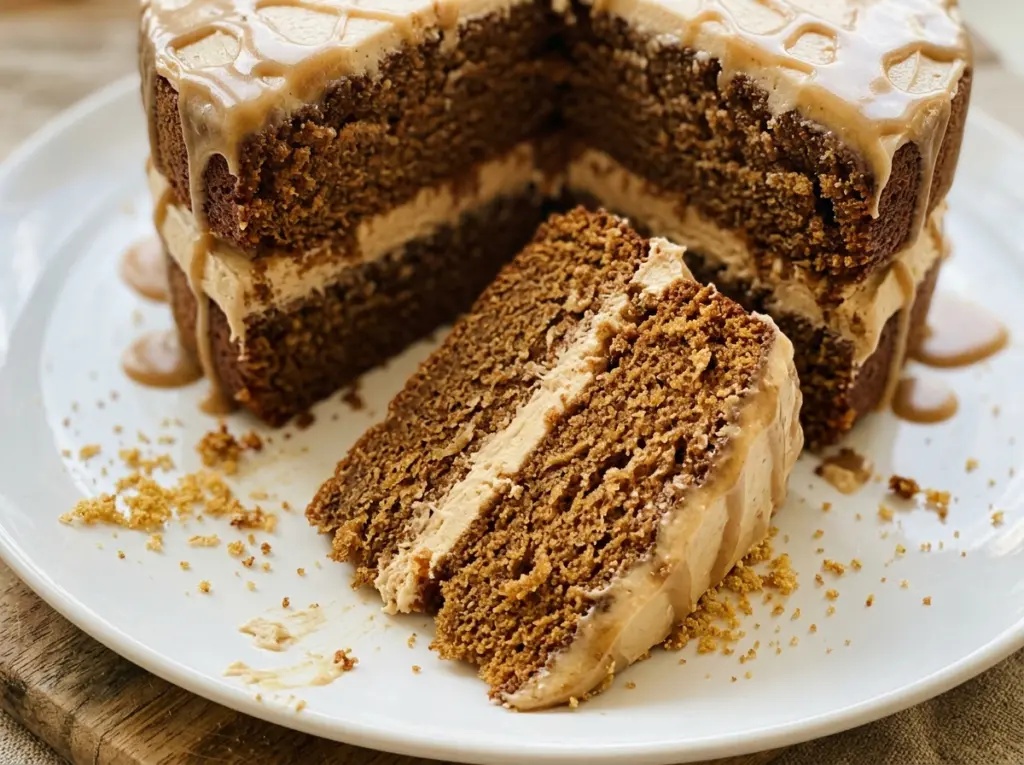
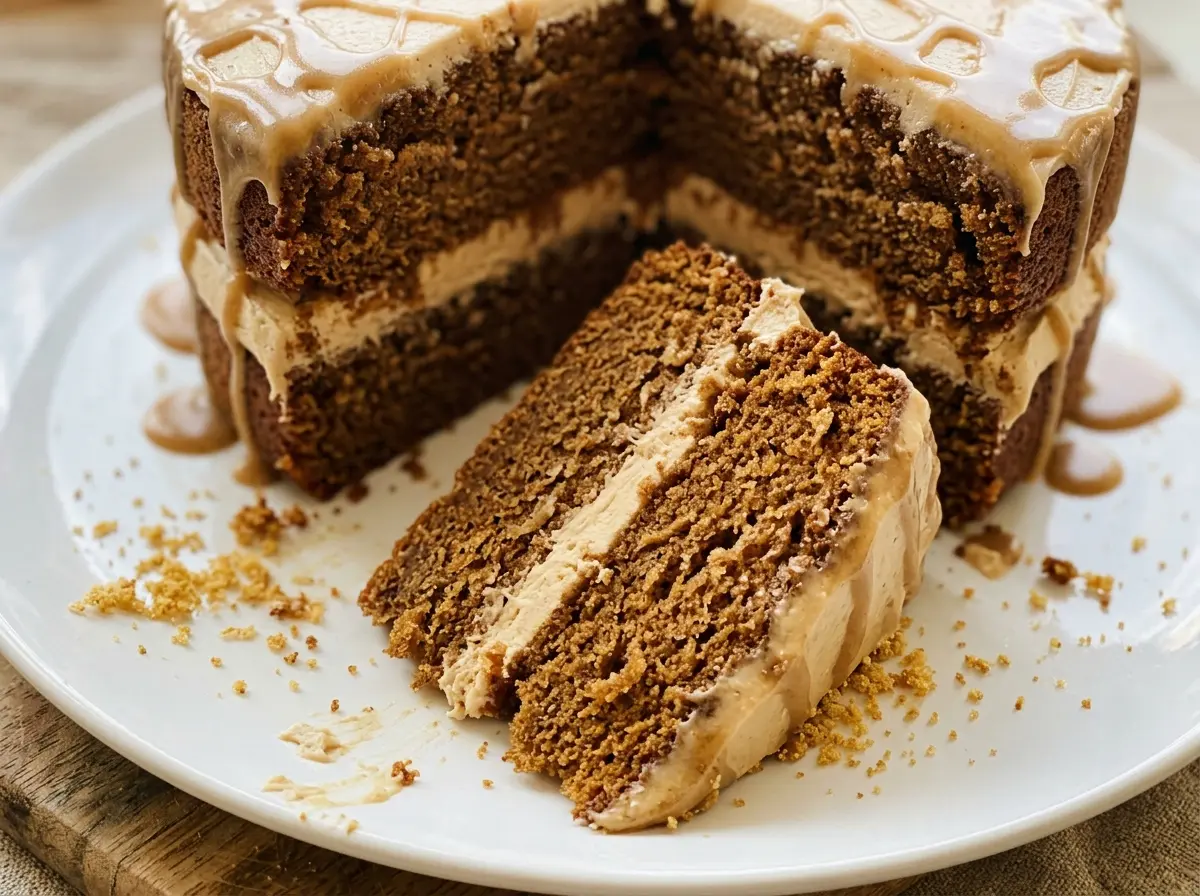
The batter turns dark and glossy as the molasses meets the coffee, and the whole kitchen starts to smell like ginger and cinnamon before the cake even goes into the oven. That deep color can make it tricky to judge by sight, so I rely on a toothpick rather than waiting for the top to look dry. This Gingerbread Latte Cake bakes up tender, with warm spice in the crumb and espresso cream cheese frosting on top.
I like that the coffee is brewed into the batter while the espresso goes into the frosting. The two flavors land in different places: the cake stays rooted in molasses and spice, and the topping brings a clear coffee note. Mixing the flour in alternating additions with the cooled coffee also keeps the batter from getting worked more than it needs to. Each slice has a soft, close crumb under a smooth layer of frosting.
Kitchen Note
Let the espresso mixture cool before it goes into the frosting. Warm liquid can soften the butter and cream cheese, leaving the frosting looser than you want for spreading.
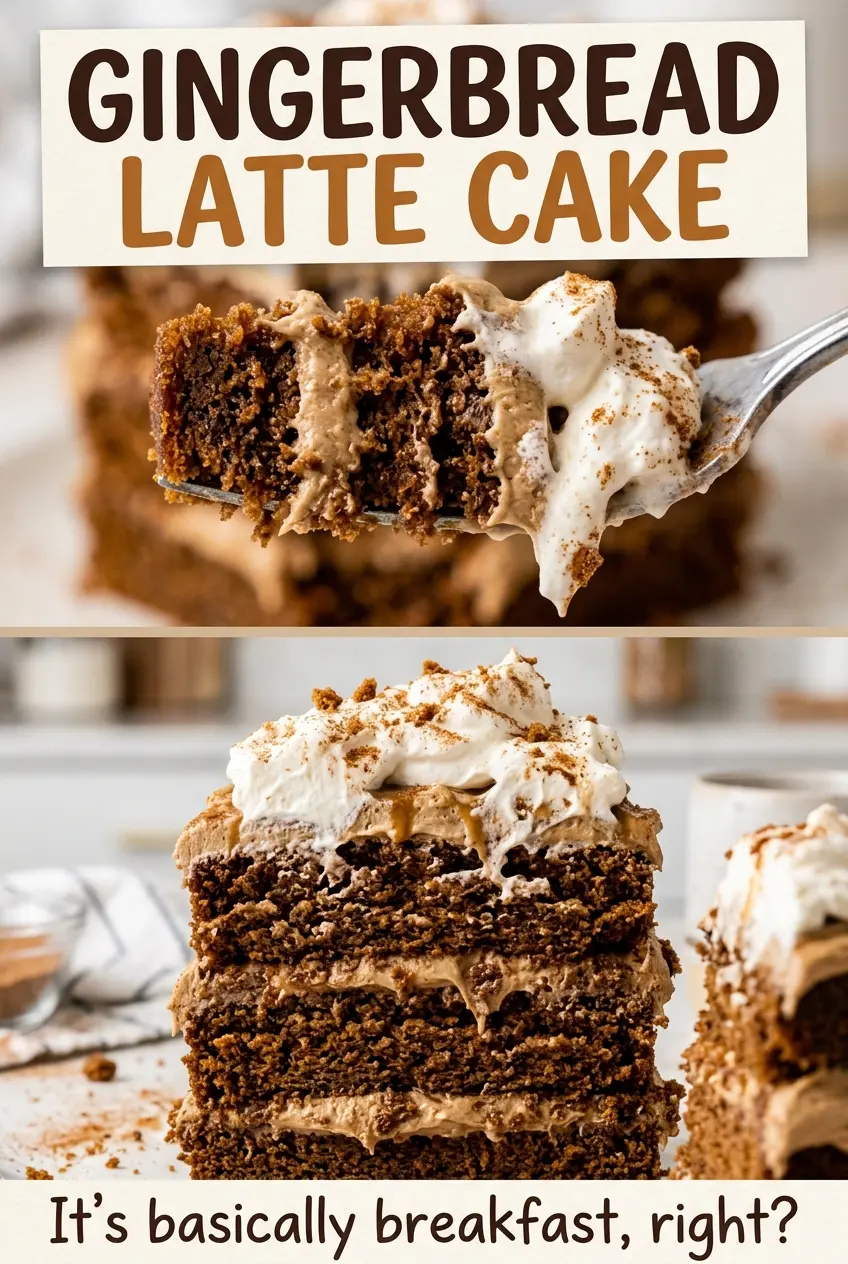
Save this Gingerbread Latte Cake for its soft molasses-spice crumb and espresso cream cheese frosting.
Why the Coffee Goes in the Cake Batter, Not Just the Frosting
When a cake is called a latte cake, it’s easy to expect coffee to lead every bite. Here, the brewed coffee is part of the batter, but it doesn’t have to drown out the gingerbread. Its roasted edge sits alongside the molasses and ground spices, giving the crumb depth without turning it into a plain coffee cake. The espresso powder in the frosting has a different job: it makes the coffee note more noticeable right at the finish.
Keeping those two coffee components separate also helps the cake taste layered rather than one-note. Strong brewed coffee carries through the whole cake, while the small amount of espresso in the topping is concentrated into each frosted bite. That balance is why I don’t pour espresso directly into the batter or try to get all the coffee flavor from the frosting. Use strong coffee that you enjoy drinking, and let the ginger, cinnamon, and cloves stay clearly present.
The Molasses, Coffee, and Espresso Each Have a Different Job
- Unsulphured molasses — It gives the cake its characteristic deep sweetness and dark color. Choose a regular unsulphured molasses rather than blackstrap, which tastes much more assertive and can make the spice feel harsh.
- Strong brewed coffee — Brew it ahead and let it reach room temperature before mixing. A coffee you like drinking is a good choice; decaf works in the batter if you want to avoid the caffeine from the brewed coffee.
- Ground ginger, cinnamon, and cloves — These are the backbone of the cake, so spices that still smell fragrant when you open the jars make a difference. If your ground ginger has been sitting in the pantry for years, replace it rather than adding extra to compensate.
- Butter, brown sugar, and eggs — Softened butter creams smoothly with the packed brown sugar, and room-temperature eggs blend into that mixture more easily than cold ones. Let them lose their chill before you begin; melted butter isn’t a substitute here because it won’t cream the same way.
- Instant espresso powder — It dissolves in a little hot water and adds concentrated coffee flavor without adding much liquid to the frosting. Instant coffee can stand in if that’s what you have, though its coffee flavor may be less pronounced.
- Cream cheese and powdered sugar — For frosting that spreads easily, block-style cream cheese is a better choice than a softer tub-style spread. Add the powdered sugar in portions so it incorporates without puffing out of the bowl.
Mix the Batter Without Toughening the Crumb
Whisk the dry ingredients evenly
Whisk the flour, baking soda, baking powder, ginger, cinnamon, cloves, and salt together in a medium bowl. A thorough whisk distributes the leaveners and spices, so you don’t get a pocket of baking soda or a bite heavy with cloves. Break up any visible lumps in the flour before you move on. Set the bowl nearby so the alternating additions are easy to manage.
Cream the butter and build the batter
Beat the softened butter and packed brown sugar until fluffy, about 2 minutes, then add the eggs one at a time. Beat in the molasses before alternating the flour mixture with the cooled coffee, beginning and ending with flour. Divide the dry mixture into three additions and mix just until combined after each one. Stop when no dry flour remains; a few seconds of extra beating can make the finished crumb less tender.
Bake until the center tests clean
Spread the batter evenly in a greased 9-inch square pan and bake at 350°F for 35 to 40 minutes. Because molasses makes the top dark, color alone isn’t a reliable doneness cue. Insert a toothpick into the center; it should come out clean or with a few moist crumbs, not streaked with wet batter. Let the cake cool completely in the pan before adding any frosting.
Finish with espresso cream cheese frosting
Stir the espresso powder into the hot water until dissolved and set the mixture aside. Beat the softened cream cheese and butter until smooth, then beat in the powdered sugar in additions until fluffy. Add the vanilla and espresso mixture, then spread the frosting over the completely cooled cake. If the frosting drags or tears the surface, pause and let the cake cool longer rather than pressing harder.
Two Easy Ways to Adapt This Gingerbread Latte Cake
Make the cake dairy-free
Use plant-based butter in place of the butter in both the cake and frosting, and use an equal amount of dairy-free cream cheese for the frosting. Choose products designed for baking and frosting; the topping may be a little softer, and the cake’s crumb can vary slightly by butter substitute.
Use dark brown sugar for a deeper note
Swap the packed light brown sugar for the same amount of packed dark brown sugar. It gives the cake a more pronounced caramel-molasses character, so the gingerbread flavor comes across a little richer without changing the mixing method.
Storage and Serving
- Refrigerator: Cover the frosted cake and refrigerate it for up to 4 days. The crumb firms up when cold, so let a slice stand briefly before serving if you prefer it less chilled.
- Freezer: Freeze the unfrosted cake, wrapped tightly, for up to 2 months. Thaw it in the refrigerator before frosting.
- Serving: Serve the cake chilled or let slices take the chill off at room temperature. Avoid leaving the cream cheese frosting out for an extended stretch.
Questions That Come Up When Baking Gingerbread Latte Cake
Gingerbread Latte Cake
Ingredients
Equipment
Method
- Heat the oven to 350°F and grease a 9-inch square baking pan.
- Whisk the flour, baking soda, baking powder, ginger, cinnamon, cloves, and salt in a medium bowl.
- Beat the butter and brown sugar in a large bowl until fluffy, about 2 minutes.
- Beat in the eggs one at a time.
- Beat in the molasses.
- Mix in the flour mixture in three additions, alternating with the coffee and beginning and ending with the flour mixture; mix just until combined.
- Spread the batter in the prepared pan.
- Bake for 35 to 40 minutes, until a toothpick inserted in the center comes out clean or with a few moist crumbs.
- Cool the cake completely in the pan.
- Stir the espresso powder into the hot water until dissolved.
- Let the espresso mixture cool.
- Beat the cream cheese and butter in a bowl until smooth.
- Beat in the powdered sugar in additions until fluffy.
- Beat in the vanilla and cooled espresso mixture.
- Spread the frosting over the cooled cake.


