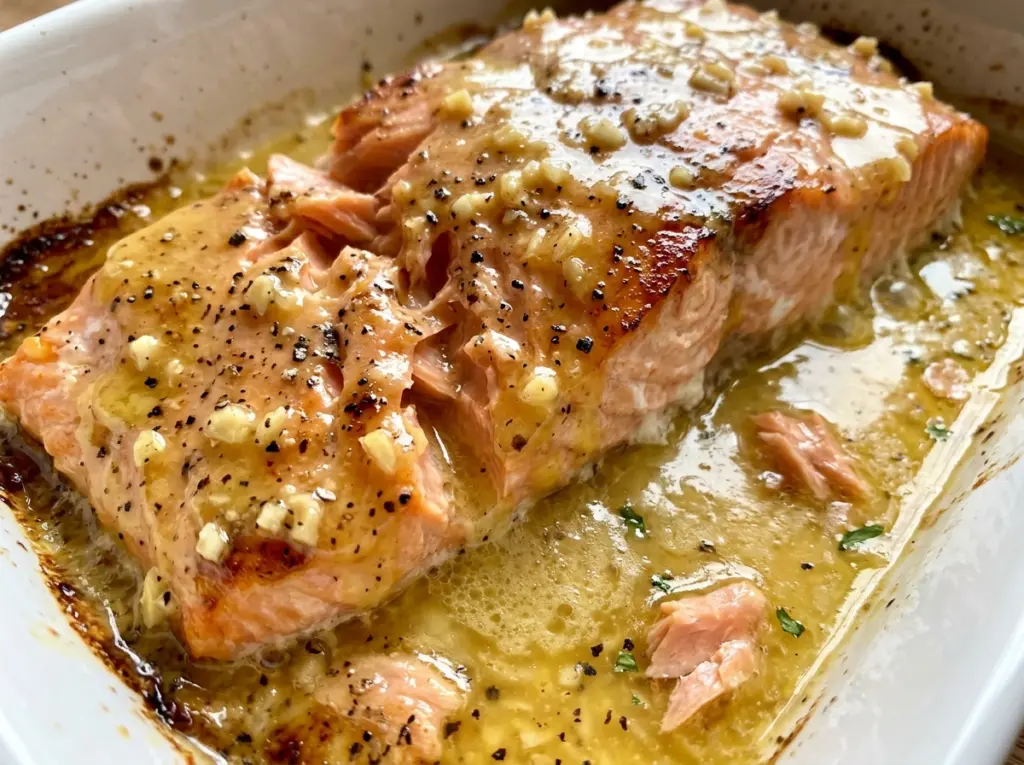
The thin end of a salmon fillet can turn opaque while the thick center still looks glossy, and that’s the moment when an oven-baked dinner needs a little attention. I like this Buttered Honey Mustard Oven Baked Salmon because the sauce comes together in one bowl and goes straight over the fish before baking. There’s no separate pan of glaze to watch, and the skin gives the fillet a steady base on the baking sheet.
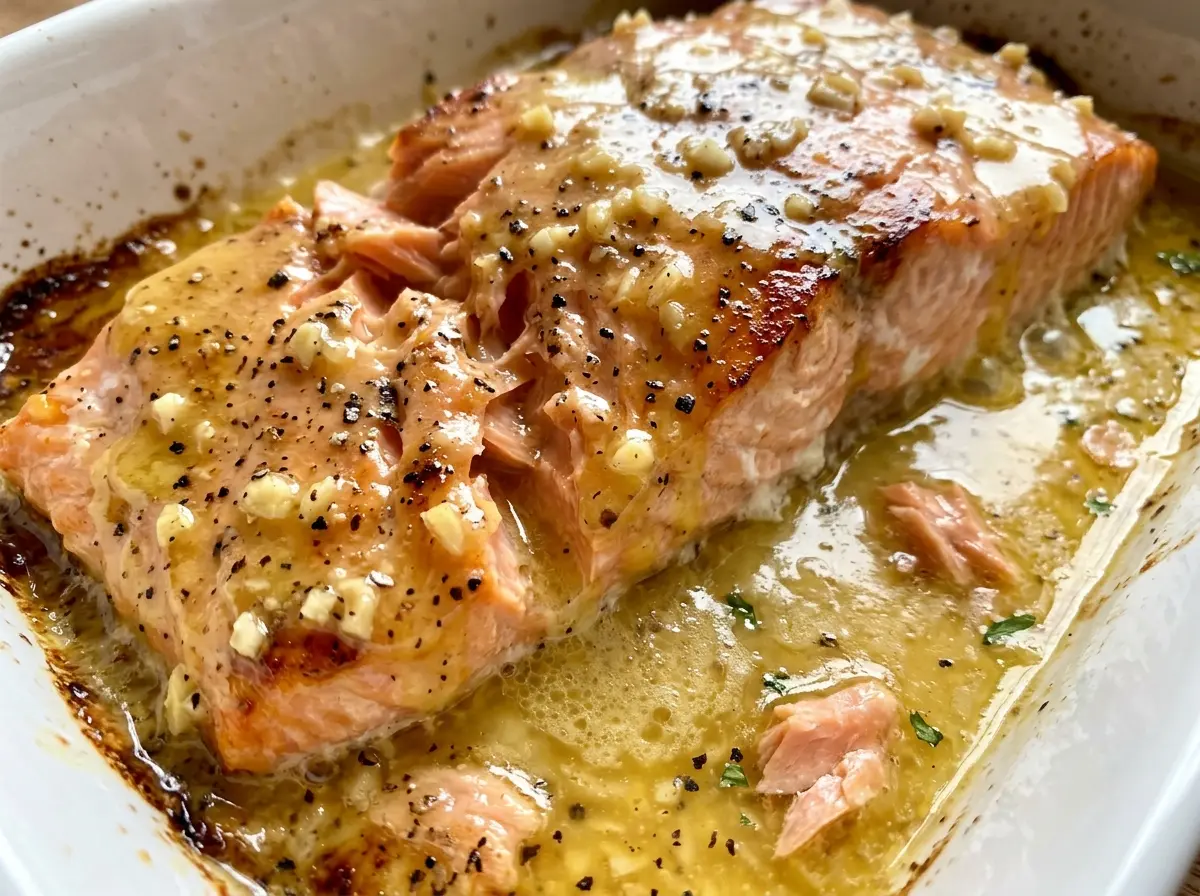
The butter softens Dijon’s sharp edge, while honey brings a gentle sweetness that doesn’t hide the salmon. I pat the fish dry first, then spoon the mixture across the top so it seasons the surface from the first minute in the oven. The finished salmon has a tender center and a tangy, buttery coating that gathers in the flakes, with just enough sweetness to round everything out.
Kitchen Note
Give the narrow tail end a deliberate spoonful of the butter mixture, not just the thick middle. That small extra pass keeps the thinner part from going into the oven nearly bare.
Save this Buttered Honey Mustard Oven Baked Salmon for a dinner with a buttery, tangy-sweet coating and tender flakes.
Why the Butter, Honey, and Mustard Go on Before Baking
This sauce works as a single coating rather than a finishing drizzle. Stirring the melted butter together with the honey and Dijon spreads the sharper mustard through the sweeter, richer ingredients; the garlic and seasoning then get mixed through that same base. Spoon it on before the salmon goes into the oven, and the top cooks with all of those flavors in place.
That timing also makes the sauce easy to distribute without an extra step at the stove. It doesn’t need to be reduced or cooked separately. Just stir until the mixture looks combined, then spoon it over the fish. If a little butter starts to separate while you’re working, give the mixture another stir before you finish coating the salmon. The goal is an even layer across the top, not a thick pool on the parchment.
What the Salmon and Mustard Bring to the Sauce

- Skin-on salmon — The skin gives the fillet a sturdy side to rest on, and a piece with an even thickness tends to cook more evenly than one that tapers sharply. If salmon isn’t available, skin-on steelhead trout is a close stand-in; choose a similar thickness because its cooking time depends on the shape of the fillet.
- Unsalted butter — Butter makes the coating round and rich, while unsalted butter leaves the seasoning in your hands. If you only have salted butter, use it in its place and leave out the added kosher salt. The sauce will taste more seasoned, so don’t add extra salt before tasting.
- Honey — Honey gives the mustard a soft sweetness and helps the coating cling to the fish. A mild, everyday honey is fine here; a strongly flavored one will be more noticeable. Agave syrup can replace it one-for-one, though the finished sauce will taste less like honey.
- Dijon mustard — Dijon adds a smooth texture and a clean, tangy bite. Spicy brown mustard can take its place one-for-one for a sharper, more assertive mustard flavor. Avoid a coarse mustard if you want the coating to stay smooth.
- Fresh garlic — Mince the clove finely so the pieces disperse through the butter mixture instead of landing in one concentrated bite. Garlic paste can replace minced garlic in the same amount; dried garlic won’t give the sauce quite the same fresh pungency.
From Dry Fillet to Buttery Mustard Coating
Set Up the Pan and Dry the Salmon
Heat the oven to 400°F and line a rimmed baking sheet with parchment paper. Pat the salmon dry, then place it skin-side down on the prepared sheet. Drying the surface gives the butter mixture a less slippery place to sit. Keep the fish flat rather than folding a thin end underneath, so the exposed top can be coated evenly.
Stir the Butter Mixture Until Combined
Melt the butter in a small microwave-safe bowl. Stir in the honey, Dijon mustard, minced garlic, kosher salt, and black pepper until the ingredients are distributed through the melted butter. A few small streaks of butter are fine, but you don’t want all the garlic or seasoning settled at the bottom. If it sits while you arrange the salmon, stir it again before spooning.
Coat the Top Evenly
Spoon the butter mixture over the top of the salmon, spreading it across the length of the fillet. Keep the sauce on the fish instead of pouring it around the sides; the skin-side-down position leaves the top exposed for an even coating. This is the point to check that the narrower end has some sauce too. The parchment catches any drips during baking.
Bake Until Flaky, Then Rest
Bake for 12 to 16 minutes, until the thickest part reaches 145°F and flakes easily with a fork. The exact point within that range depends on the thickness of your fillet, so check the center rather than judging by the edges alone. Once it’s ready, let the salmon rest for 3 minutes before serving. The flesh should separate into moist flakes without crumbling into dry pieces.
Easy Swaps for a Different Version
Make It Dairy-Free with Olive Oil
Replace the butter with the same amount of olive oil. The sauce will lose the rounded, buttery taste, but the oil still carries the honey, mustard, and garlic across the salmon.
Use Maple Syrup for a Deeper Sweetness
Swap the honey for the same amount of pure maple syrup. It brings a darker, woodsy sweetness that stands out more against the Dijon, so the sauce tastes less floral and more robust.
Try Whole-Grain Mustard for Texture
Replace the Dijon with the same amount of whole-grain mustard for a seed-studded coating and a slightly more rustic bite. Stir it thoroughly into the melted butter so the seeds are spread across the salmon instead of gathering in one spot.
Storage and Reheating
- Refrigerator: Store leftovers in an airtight container for 3 to 4 days. The chilled butter coating will firm up, and the salmon will be less delicate after refrigeration.
- Freezer: Freeze cooked salmon in an airtight freezer-safe container for up to 2 to 3 months for best quality. Thaw it in the refrigerator before reheating; the texture will be softer than freshly baked salmon.
- Reheating: Warm covered in the microwave at reduced power in short bursts, stopping as soon as the fish is warm. High power or prolonged reheating dries salmon quickly.
Questions That Come Up While Making This Salmon
Buttered Honey Mustard Oven Baked Salmon
Ingredients
Equipment
Method
- Heat the oven to 400°F.
- Line a rimmed baking sheet with parchment paper.
- Pat the salmon dry.
- Place it skin-side down on the prepared baking sheet.
- Melt the butter in a small microwave-safe bowl.
- Stir in the honey, Dijon mustard, garlic, salt, and pepper.
- Spoon the butter mixture evenly over the top of the salmon.
- Bake for 12 to 16 minutes, until the thickest part reaches 145°F and flakes easily with a fork.
- Rest for 3 minutes before serving.


