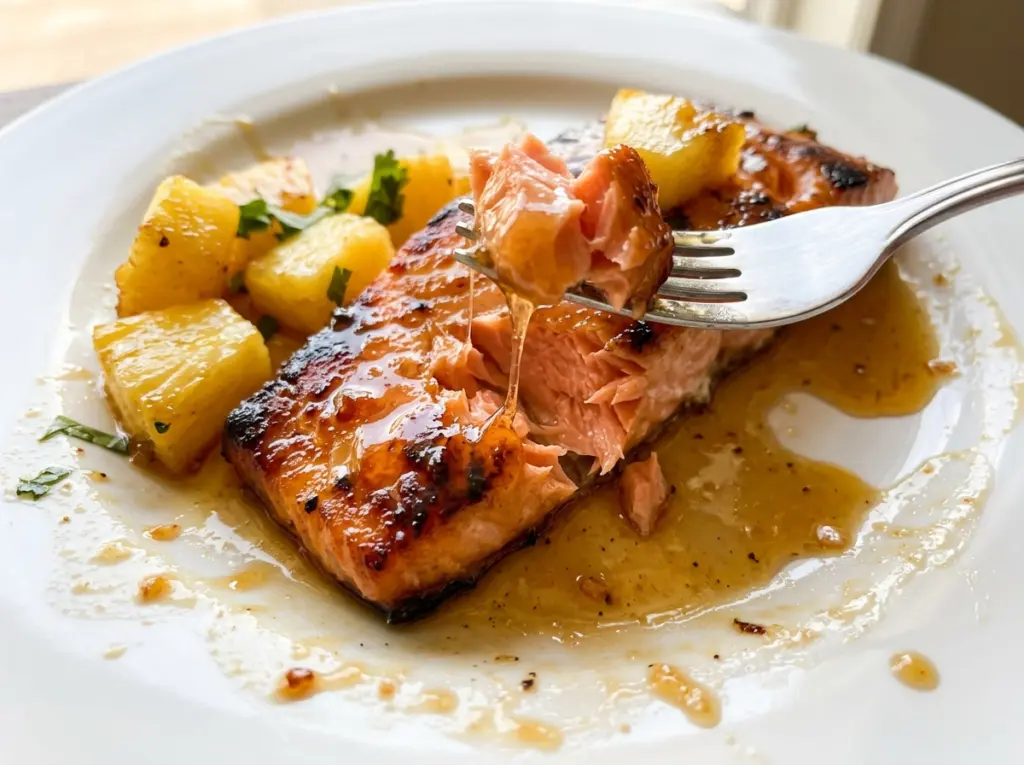
When the pineapple juice first hits the saucepan, it looks too thin to cling to salmon. I used to brush it on straight from the cup, and most of it slid off before the fish had baked through. For this Honey Pineapple Glazed Salmon, I simmer the juice with honey, soy sauce, garlic, and ginger before it goes near the fish. The glaze turns glossy and lightly coats a spoon, giving each portion a sweet-savory finish without burying the salmon under a thick layer.
Skin-on portions make this especially forgiving: laid skin-side down on an oiled, foil-lined sheet, the flesh stays supported while the top takes on the glaze. I keep the seasoning restrained so the salty soy sauce has room to balance the honey and pineapple. At 400°F, dinner moves quickly, and the salmon comes out with a shiny top, tender flakes, and just enough ginger and garlic to keep each bite from tasting one-note. The short simmer is the only stovetop work, and it gives the glaze time to come together.
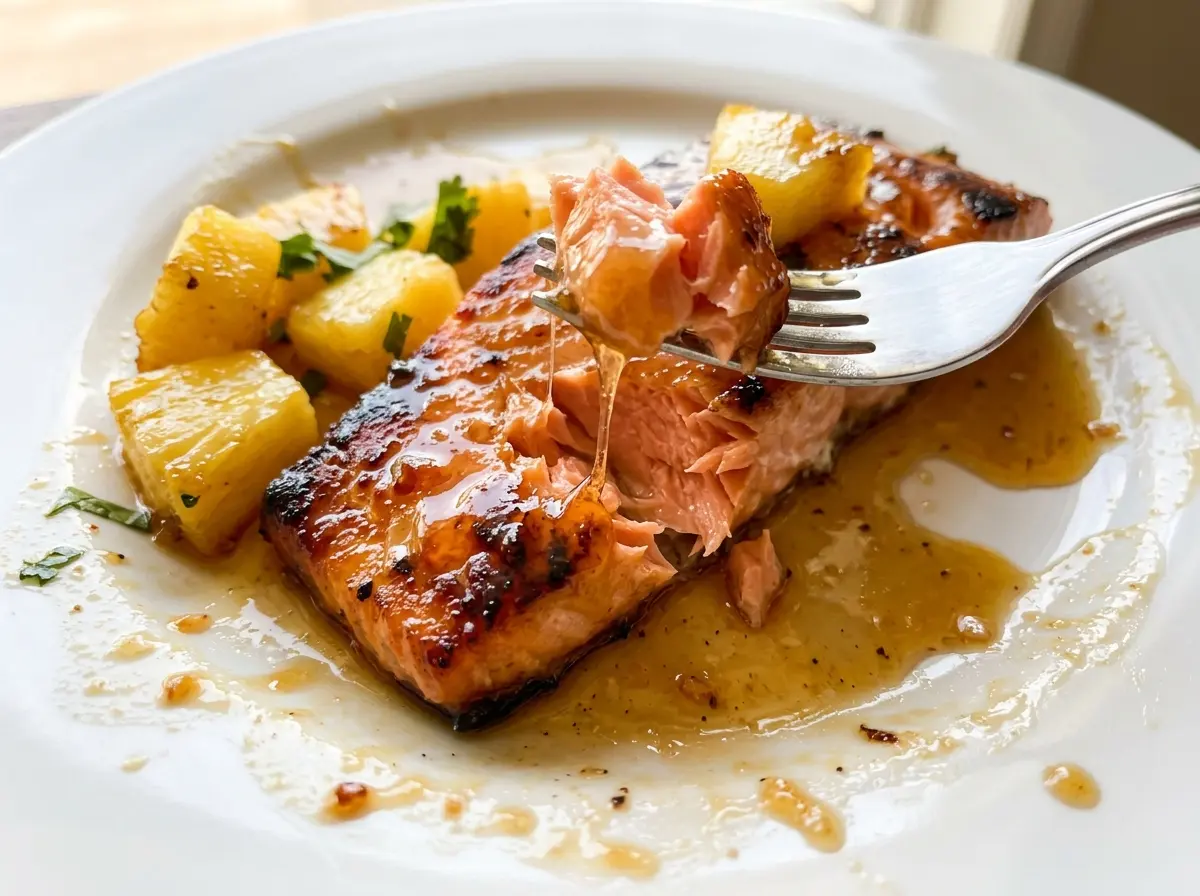
Kitchen Note
Pat the salmon dry before seasoning it. A wet surface lets moisture collect around the portions, while a dry top gives the glaze a better surface to cling to.
Save Honey Pineapple Glazed Salmon for a night when you want tender, flaky fish under a bright, glossy pineapple-honey glaze.
Why Pineapple Juice Needs a Head Start in the Saucepan
Pineapple juice brings plenty of liquid, so brushed on straight from the carton it tends to run off the fish instead of leaving a glaze behind. A short simmer gives some of that water time to evaporate. Honey adds body, while soy sauce brings savory salt that keeps the finish from tasting like a dessert topping.
Keep the goal modest: the glaze should be slightly thickened, not reduced to a sticky candy syrup. It will tighten a little more as it sits, and the oven will concentrate it further on the salmon. Stirring occasionally while it simmers helps the honey and seasonings stay blended and keeps the mixture from catching on the bottom of the pan.
The glaze doesn’t need to cling like a thick barbecue sauce to do its job. A light coating is enough to flavor the top of each portion, and the fish stays the main event. If it looks pourable but leaves a thin sheen on a spoon, it’s ready for the brush.
What the Pineapple, Honey, and Aromatics Bring to This Glaze
- Salmon — Similar thickness across the four portions helps them finish at about the same time. Fresh or fully thawed fish both work; steelhead trout is a close alternative, with a slightly richer taste.
- Pineapple juice — Use plain juice rather than pineapple nectar or a sweetened drink, which can make the glaze overly sweet. If you only have orange juice, it can replace the pineapple juice in the same amount; expect a brighter citrus character and less tropical flavor.
- Honey — A mild, everyday honey blends smoothly into the glaze without taking over the fruit. Maple syrup can replace it in the same amount for a darker, less floral sweetness.
- Soy sauce — It supplies the glaze’s savory backbone, so a familiar everyday soy sauce is a good fit. Tamari can replace it in the same amount; choose a gluten-free version if you need the finished dish to be gluten-free.
- Garlic and ginger — Fresh garlic and freshly grated ginger give the glaze a lively, clean aroma. If fresh ginger isn’t available, use 1/8 teaspoon ground ginger in its place; the flavor will be warmer and less bright. Mince the garlic finely so the small pieces distribute through the glaze.
Reduce the Glaze Before the Salmon Goes in the Oven
Get the Foil-Lined Pan Ready
Heat the oven to 400°F and line a rimmed baking sheet with foil. Lightly coat the foil with olive oil so the skin has a little protection against sticking. Pat the salmon dry, then set the portions skin-side down on the sheet. Season the tops with kosher salt and black pepper, keeping the pieces in a single layer.
Simmer Until the Glaze Turns Glossy
Combine the pineapple juice, honey, soy sauce, minced garlic, and grated ginger in a small saucepan. Set it over medium heat and let it simmer for 6 to 8 minutes, stirring occasionally. Watch for the liquid to look a little more concentrated and leave a light coating on a spoon. Don’t wait for it to become thick like syrup; it should still be easy to brush.
Brush the Tops, Not the Pan
Brush the glaze over the salmon portions, covering the exposed flesh. Keep the fish skin-side down, and don’t pour all the glaze around the sheet; the liquid is meant to season the fish, not boil the portions. If the glaze cools while you’re getting the salmon ready, stir it before brushing so the aromatics are evenly distributed.
Bake to a Flaky Center
Bake for 12 to 15 minutes, checking the thickest part of a portion with an instant-read thermometer. The salmon is ready when that spot reaches 145°F and the flesh flakes easily with a fork. Thin pieces may finish sooner than thick ones, so use the thermometer and the texture together rather than relying only on the clock. The top should look glossy, not dry or darkened at the edges.
Three Useful Ways to Adjust the Salmon or Glaze
Make the Glaze Gluten-Free
Use gluten-free coconut aminos in place of the soy sauce, keeping the same amount. The glaze will taste sweeter and less salty, with a softer savory note, so keep the pineapple and honey unchanged for balance.
Use Skinless Salmon Portions
Skinless salmon works with the same glaze and oven method. The oiled foil helps protect the underside, but check the portions toward the early end of the baking window because skinless pieces may cook more quickly.
Give It a Citrus Edge
Replace half of the pineapple juice with orange juice before simmering the glaze. The result keeps a hint of pineapple but tastes brighter and more citrus-forward, with the same honey and soy balance.
Storage and Reheating
- Refrigerator: Store cooked salmon in an airtight container for 3 to 4 days. The glaze may lose some of its shine as it chills.
- Freezer: Freeze individual portions in an airtight container for up to 2 to 3 months for best quality. Thaw overnight in the refrigerator; the texture may be a little softer after freezing.
- Reheating: Warm gently in the microwave in short bursts, checking that leftovers reach 165°F. High heat for too long is the usual culprit when reheated salmon turns dry.
Questions That Come Up While Making Honey Pineapple Salmon
Honey Pineapple Glazed Salmon
Ingredients
Equipment
Method
- Heat the oven to 400°F.
- Line a rimmed baking sheet with foil.
- Lightly coat the foil with the olive oil.
- Pat the salmon dry and arrange it skin-side down on the baking sheet.
- Season the salmon with the salt and black pepper.
- Combine the pineapple juice, honey, soy sauce, garlic, and ginger in a small saucepan.
- Simmer over medium heat for 6 to 8 minutes, stirring occasionally, until slightly thickened.
- Brush the glaze over the salmon.
- Bake for 12 to 15 minutes, until the thickest part reaches 145°F and flakes easily with a fork.


