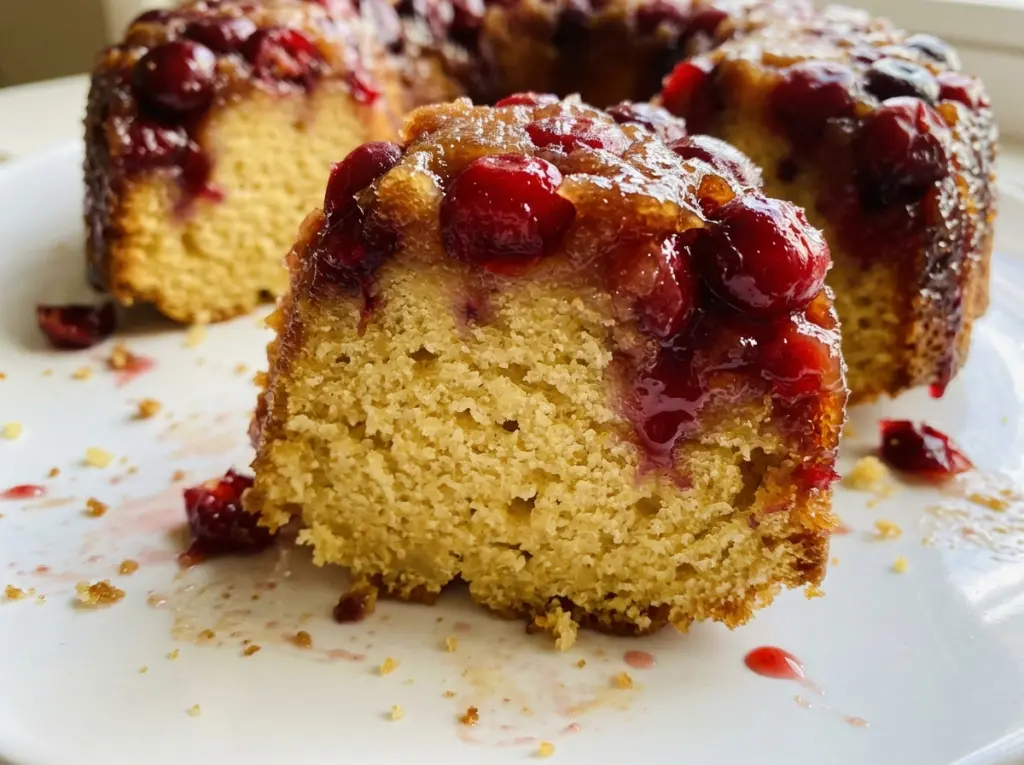
The cranberries go into the Bundt pan first, so when the cake is turned out, they’re sitting on top in a glossy layer instead of disappearing into the crumb. The butter and brown sugar bubble together with orange juice, then the berries settle into that warm mixture before the batter goes in. It’s a small change in order that makes this Cranberry Upside Down Bundt Cake look special without asking you to decorate a thing.
There are two different kinds of orange here: juice in the cranberry topping and finely grated zest in the cake. The juice blends into the buttery brown sugar, while the zest carries a brighter citrus note through the crumb. Together, they keep the tart berries from tasting one-dimensional.
The cake itself is tender and sturdy enough to hold that fruit layer. Let it cool in the pan for 15 minutes before turning it out, and you’ll have a Bundt that slices neatly with cranberries and topping still in place.
Kitchen Note
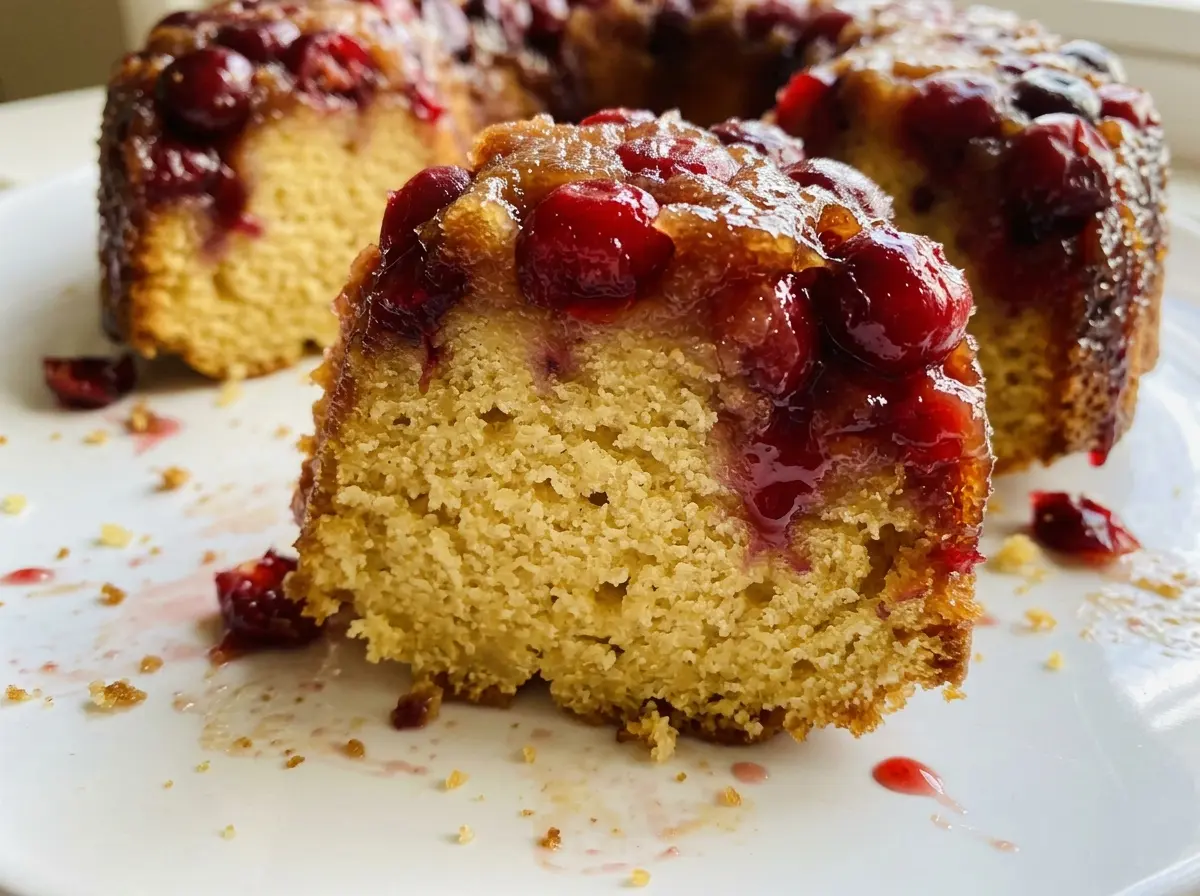
I let the cake sit in the pan for 15 minutes before inverting it. That short rest helps the cake settle, but the topping is still warm enough to release cleanly.
Save this Cranberry Upside Down Bundt Cake for its tart cranberry topping, soft orange-scented crumb, and simple fresh-or-frozen berry option.
Why Orange Belongs in Both the Cranberry Topping and the Cake
Orange isn’t just a background note here. The juice goes into the butter and brown sugar for the topping, where it loosens the mixture and brings citrus into the glossy layer that will sit over the cranberries. The zest is finely grated into the cake batter, so its fragrant oils are spread through the crumb rather than concentrated in the fruit topping.
That separation makes each bite feel balanced: you get a sharp cranberry note, a mellow sweetness from the brown sugar, and orange in both the top and the cake. Using juice and zest in separate parts also means the orange doesn’t have to do one job twice. Keep the zest fine so you don’t end up with chewy strips in the crumb, and grate only the colored outer peel; the white pith underneath can taste bitter.
The other useful contrast is texture. Cranberries stay distinct in the topping, while the cake underneath is soft and fine-crumbed. That’s why I keep the batter mixing gentle once the flour goes in: a few remaining streaks disappear as you fold, but extra mixing can make the cake tougher than it needs to be.
What the Cranberries, Sour Cream, and Oil Each Bring to This Bundt

- Cranberries — Fresh or frozen berries both work in the topping. Choose firm fresh berries when they’re available; frozen berries are a practical option when fresh ones aren’t in season. If you use frozen, thaw them and pat them dry before they go in the pan.
- Sour cream — It adds moisture and a gentle tang to the cake. Use it at room temperature so it blends smoothly into the sugar, oil, and eggs; there isn’t a direct swap in this formula that keeps the same balance.
- Neutral oil — Canola is one suitable choice, and another neutral oil works too. The mild taste lets the citrus and cranberries come through. A strongly flavored oil would change the cake’s taste, so stick with a neutral one.
- All-purpose flour and leaveners — These give the cake enough structure to hold its shape in the Bundt pan. Measure the flour without packing it into the cup, and check that your baking powder and baking soda are fresh for reliable lift.
- Eggs — Room-temperature eggs blend more evenly into the oil and sugar mixture than cold eggs straight from the refrigerator. Set them out before you start measuring the other ingredients.
- Orange juice and zest — Use finely grated zest, taking care not to grate the white pith. The juice goes into the topping, while the zest is mixed into the cake batter; keep each in its own part of the recipe.
Building the Topping and Batter for a Clean Bundt Release
Coat the Pan and Bubble the Brown-Sugar Topping
Heat the oven to 350°F and generously coat a 12-cup Bundt pan with baking spray, including the center tube and the curves around it. Melt the butter in a small saucepan over medium heat, then stir in the brown sugar and orange juice. Keep stirring until the mixture is smooth and bubbling, about 2 minutes; it should look glossy, not grainy. Pour it into the pan, then arrange the cranberries evenly over the mixture.
Whisk the Dry Ingredients and Make the Wet Base
Whisk the flour, baking powder, baking soda, and kosher salt together in a medium bowl so the leaveners are distributed throughout. In a large bowl, whisk the granulated sugar and oil until combined. Add the eggs one at a time, whisking after each addition, then mix in the sour cream, orange zest, and vanilla until smooth. Room-temperature ingredients help the wet mixture come together without stubborn cold lumps.
Fold the Batter Without Overworking It
Add the flour mixture to the wet ingredients in three additions, folding after each one. Stop when no dry streaks remain; the batter doesn’t need vigorous beating to become smooth. If you keep mixing once the flour has disappeared, the cake can turn dense instead of tender. Spoon the batter evenly over the cranberries and smooth the top gently.
Bake Until the Center Gives a Moist Crumb
Bake for 55 to 65 minutes, until the cake is golden and a toothpick inserted into the cake comes out with a few moist crumbs. A wet streak of batter means it needs more time, while a few damp crumbs are the cue to stop. Cool the cake in the pan for 15 minutes, then carefully invert it onto a serving plate and lift off the pan. Let it cool for at least 20 minutes before slicing so the crumb has time to settle.
Two Simple Ways to Adapt the Cranberry Bundt
Use frozen cranberries when fresh aren’t available
Frozen cranberries keep this cake on the table outside fresh-cranberry season. They work in the same topping and batter as fresh berries, so you don’t need to change the cake mixture or its citrus balance. Thaw the berries and pat them dry before arranging them in the pan.
Choose the neutral oil you already have
Canola is a good option, but another neutral oil fits this batter too. Keep the oil mild rather than using one with a strong taste, so it won’t compete with the orange and tart cranberry topping. The cake method stays the same.
Storage and Reheating
- Refrigerator: Cover the cake or place slices in an airtight container and refrigerate for up to 4 days. The crumb will feel firmer when cold; let a slice sit briefly at room temperature if you prefer it softer.
- Freezer: Freeze individual slices, wrapped tightly and placed in a freezer-safe container, for up to 2 months. Thaw in the refrigerator before serving.
- Reheating: Warm an individual slice in the microwave in short bursts, just until it’s no longer cold. Long heating can dry the crumb and make the sugary topping overly hot.
Questions That Come Up When Baking This Cranberry Bundt
Cranberry Upside Down Bundt Cake
Ingredients
Equipment
Method
- Heat the oven to 350°F and generously coat a 12-cup Bundt pan with baking spray, including the center tube.
- Melt the butter in a small saucepan over medium heat, then stir in the brown sugar and orange juice until smooth and bubbling, about 2 minutes.
- Pour the brown sugar mixture into the prepared pan and arrange the cranberries evenly over it.
- Whisk the flour, baking powder, baking soda, and salt together in a medium bowl.
- In a large bowl, whisk the granulated sugar and oil until combined, then whisk in the eggs one at a time; whisk in the sour cream, orange zest, and vanilla until smooth.
- Add the flour mixture to the wet mixture in 3 additions, folding just until no dry streaks remain.
- Spoon the batter evenly over the cranberries and smooth the top.
- Bake for 55 to 65 minutes, until the cake is golden and a toothpick inserted into the cake comes out with a few moist crumbs.
- Let the cake cool in the pan for 15 minutes, then carefully invert it onto a serving plate and lift off the pan; cool for at least 20 minutes before slicing.


