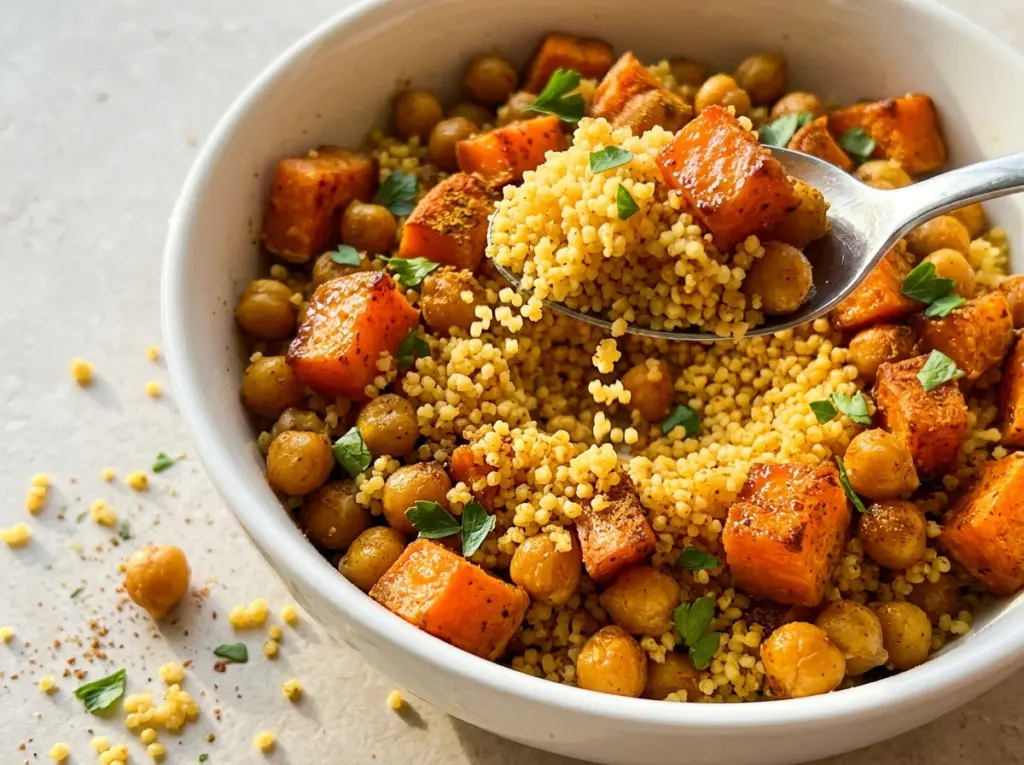
At 425°F, the sweet potato corners turn brown while the chickpeas dry out enough to pick up the cumin and cinnamon. That contrast is what makes this Moroccan couscous with roasted sweet potatoes and chickpeas feel like a full meal rather than a bowl of plain grains with vegetables on top.
I roast the vegetables and chickpeas on one pan, then let the couscous steam off the heat while they finish. The timing keeps the grains tender without taking attention away from the oven, and the dried apricots soften right in the covered saucepan. Fresh parsley and lemon juice go in at the end, where they cut through the sweet, warm spices.
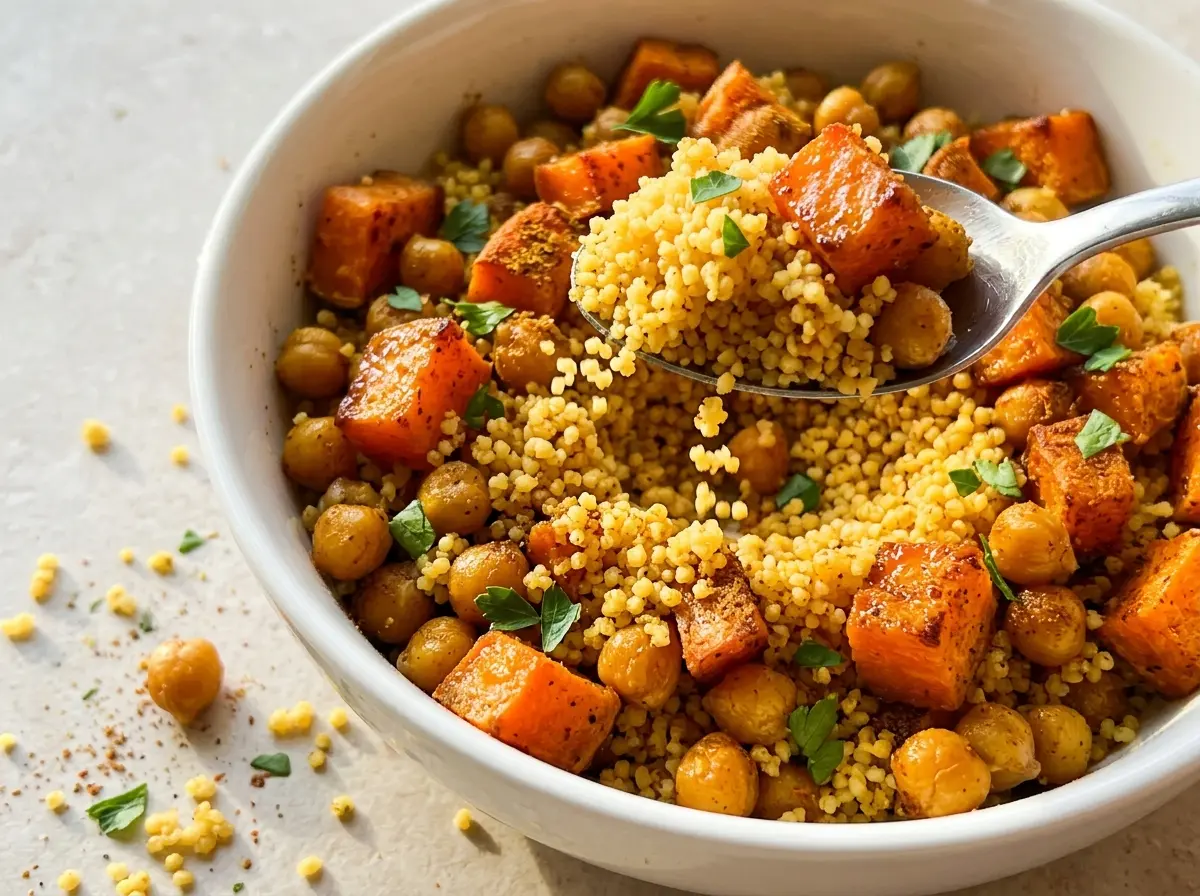
Each plate gets fluffy couscous under a generous spoonful of golden sweet potatoes and chickpeas, with little bites of apricot throughout.
Kitchen Note
Leave the couscous covered for the full five minutes after you take the pan off the heat. That quiet rest gives the grains time to absorb the broth and soften the apricots without turning the couscous to mush.
Save this Moroccan couscous with roasted sweet potatoes and chickpeas for a meatless dinner with warm spices, fluffy grains, and sweet apricot in every serving.
Why the couscous steams while the sweet potatoes roast
The vegetables need direct oven heat to brown, but couscous needs trapped steam to turn tender. Cooking them together would put the grains in the path of moisture released by the sweet potatoes, and you’d miss the crisp-edged, deeply browned bits that make the topping interesting. Keeping the two parts separate gives each one the conditions it needs.
The couscous doesn’t need a simmer. Once the broth and butter boil, stirring in the grains and dried apricots, covering the pan, and taking it off the burner gives the couscous a gentle, even steam. It also means the apricots soften without needing a separate pot or extra prep. When the five-minute rest is over, a fork loosens the grains before parsley and lemon go in.
There’s a useful bit of flexibility built into the timing: the vegetables can stay in the oven for their full roasting window while the couscous steams on the counter. Start the saucepan when the sweet potatoes are close to tender, and both parts will be ready to plate while warm.
How the spice blend, dried fruit, and broth shape the bowl
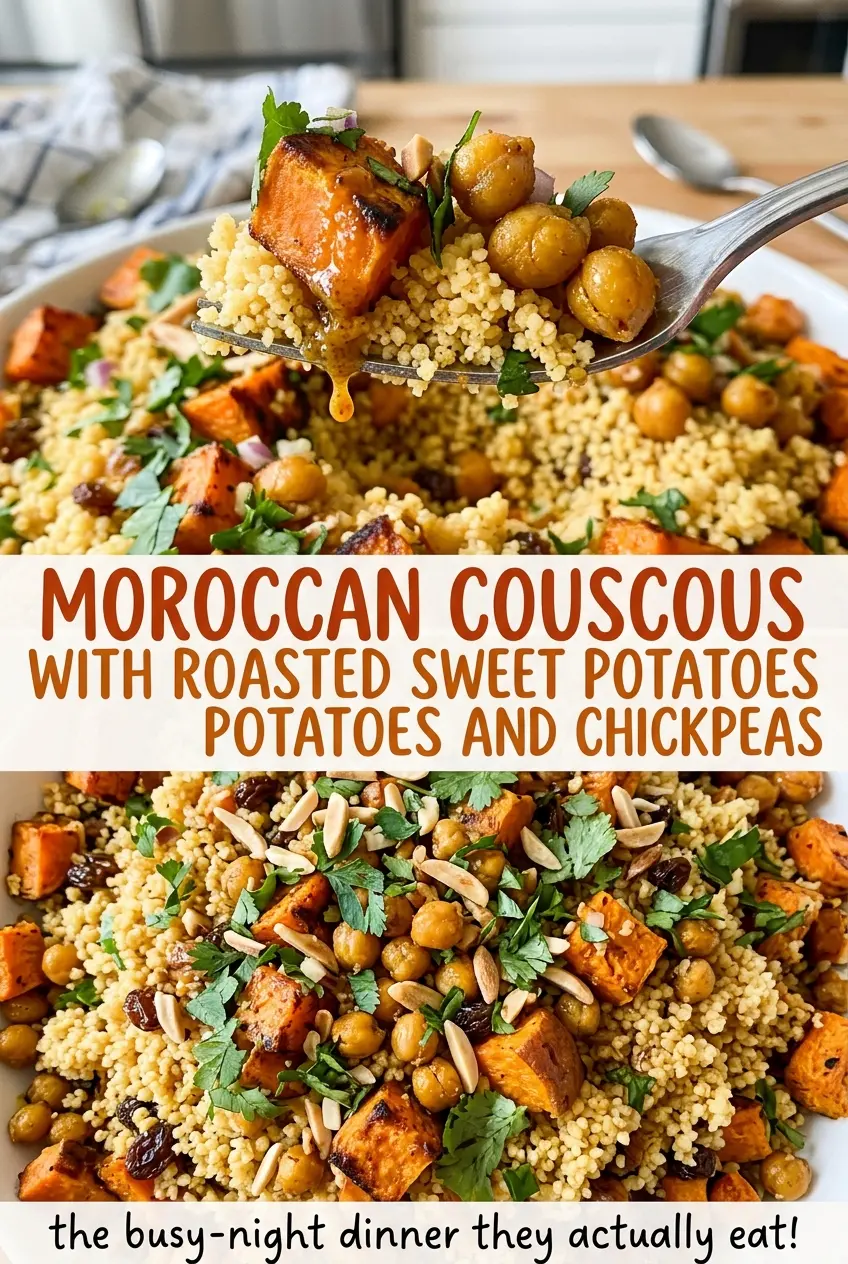
- Sweet potatoes — Cut them into similar 3/4-inch cubes so the pieces roast at about the same pace. Any standard sweet potato works; consistent sizing matters more than choosing a particular variety.
- Canned chickpeas — A can is convenient and dependable here. Drain, rinse, and pat them dry before they go on the pan; water clinging to the chickpeas slows browning.
- Cumin, coriander, paprika, and cinnamon — Together they make the vegetables warmly spiced without turning the dish hot. Fresh spices smell more fragrant when opened, but everyday supermarket jars work well; stale spices simply taste flatter.
- Plain couscous — Use the small, quick-cooking kind for this covered, off-heat method. A different shape of couscous doesn’t absorb the broth on the same schedule, so it needs its own cooking method.
- Vegetable broth and unsalted butter — Broth seasons the grains from the inside, while butter rounds out the flavor. Water can replace the broth in the same amount, but the couscous will taste milder; unsalted butter gives you better control over the salt already in the dish.
- Dried apricots — Chopped pieces bring a soft, tangy sweetness that balances the spices. Choose pliable fruit rather than hard, dry pieces, and chop it small enough to distribute through the grains. Chopped raisins are a straightforward swap, though they make the bites sweeter.
- Parsley and lemon juice — Fresh parsley keeps the finish lively, and lemon brightens the rich, sweet elements. Flat-leaf or curly parsley is fine; squeeze the lemon shortly before using it for the cleanest flavor.
Roast the vegetables, steam the couscous, then bring them together
Get browned edges on the sweet potatoes and chickpeas
Heat the oven to 425°F and line a large rimmed baking sheet with parchment paper. Toss the sweet potato cubes and dried chickpeas on the sheet with olive oil, cumin, coriander, paprika, cinnamon, kosher salt, and black pepper, then spread everything in an even layer. Roast for 25 to 30 minutes, stirring halfway through. The sweet potatoes should be tender when pierced, with browned edges; if they’re still firm in the middle, give them the remaining time in the oven.
Let the couscous absorb the hot broth
Bring the vegetable broth and unsalted butter to a boil in a medium saucepan over medium-high heat. Stir in the plain couscous and chopped dried apricots, cover the saucepan, and remove it from the heat. Let it stand covered for five minutes so the grains can take up the liquid. Keep the lid on during that rest; lifting it releases the steam the couscous needs.
Fluff and finish with herbs and lemon
After the covered rest, fluff the couscous with a fork rather than pressing or stirring it into a paste. Stir in the chopped fresh parsley and lemon juice, distributing them through the grains. Divide the couscous among serving plates and spoon the roasted sweet potatoes and chickpeas over the top. Serve while the vegetables and couscous are warm.
Easy changes that keep the couscous bowl balanced
Make the couscous vegan
Replace the unsalted butter with the same amount of olive oil when bringing the broth to a boil. The grains will be a little less buttery, but they’ll still steam and fluff properly, and the dish stays entirely plant-based.
Add a little harissa heat
Stir a small spoonful of harissa into the olive oil before tossing it with the sweet potatoes and chickpeas. The roasted topping will have a warm chile kick alongside the cumin and coriander; harissa brands vary in heat and salt, so start modestly.
Storage and Reheating
- Refrigerator: Store leftovers in an airtight container for 3 to 4 days. The couscous firms up as it chills, while the sweet potatoes soften slightly.
- Freezer: Freeze cooled portions in airtight containers for up to 2 months. The couscous may be softer after thawing, so freezing the couscous and roasted topping separately gives you the best texture.
- Reheating: Microwave a portion covered with a splash of water, stirring once, or warm it in a saucepan over low heat. Reheat leftovers to 165°F, and avoid high heat or a dry pan, which can toughen the couscous.
Questions that come up when making this couscous
Moroccan Couscous with Roasted Sweet Potatoes and Chickpeas
Ingredients
Equipment
Method
- Heat the oven to 425°F.
- Line a large rimmed baking sheet with parchment paper.
- Toss the sweet potatoes and chickpeas with the olive oil, cumin, coriander, paprika, cinnamon, salt, and pepper on the baking sheet.
- Spread the mixture in an even layer.
- Roast for 25 to 30 minutes, stirring halfway through, until the sweet potatoes are tender and browned at the edges.
- Bring the vegetable broth and butter to a boil in a medium saucepan over medium-high heat.
- Stir in the couscous and dried apricots, cover the saucepan, and remove it from the heat.
- Let stand for 5 minutes.
- Fluff the couscous with a fork, then stir in the parsley and lemon juice.
- Divide the couscous among serving plates and top with the roasted sweet potatoes and chickpeas.


