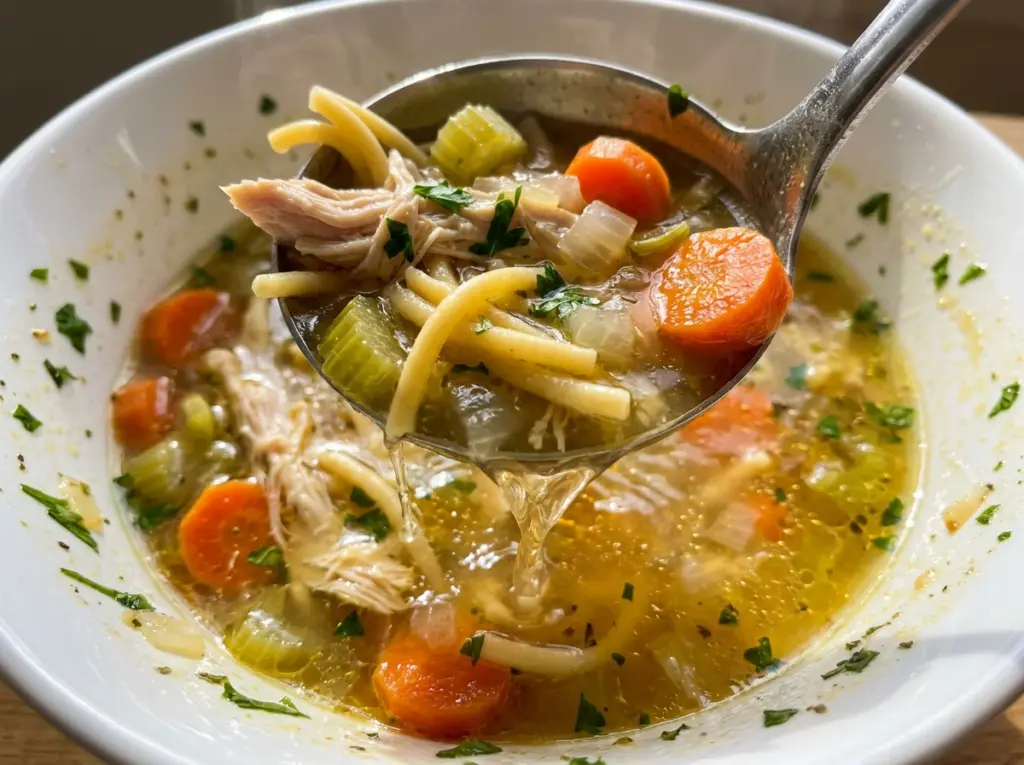
The onion, carrots, and celery should soften in the pot before the broth goes in, not brown at the edges. That gentle start gives this gluten-free chicken noodle soup its familiar savory base without asking the broth to do all the work. I like that the chicken cooks right in the soup, so its juices become part of the broth as it simmers.
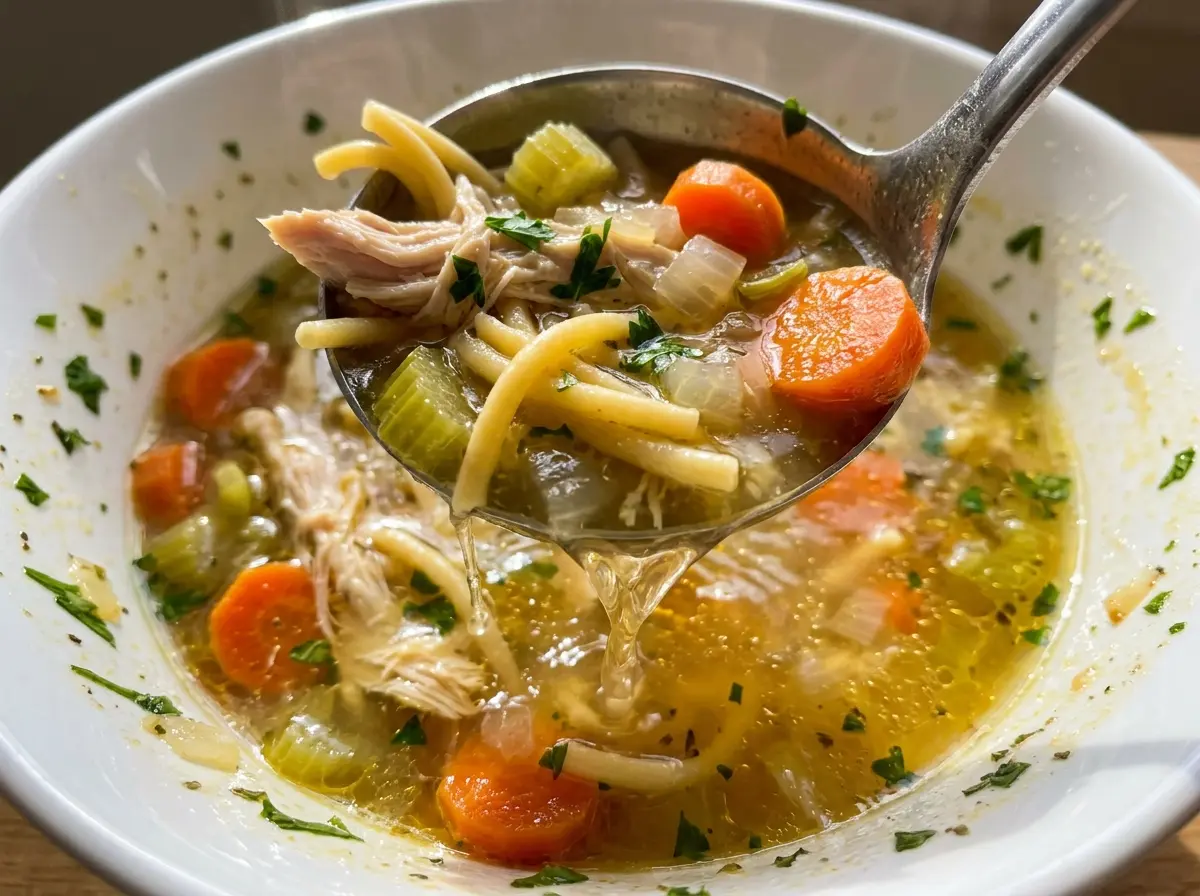
Gluten-free egg noodles need a little different handling from wheat noodles: cooked in their own pot, they don’t send a cloud of starch into the soup or soak up the broth while they cook. Once they’re drained, they only need a short warm-up with the shredded chicken and parsley. The result is a clear, comforting bowl with tender chicken, soft vegetables, and noodles that still have a little bite.
Kitchen Note
Give the chicken its full five-minute rest before shredding. It’s easier to pull into tender strands instead of breaking into little bits while it’s still steaming hot.
Save this gluten-free chicken noodle soup for a cozy bowl with tender chicken and noodles that keep their bite.
Why Gluten-Free Noodles Need Their Own Pot in This Soup
Gluten-free noodles can release more surface starch into cooking liquid than you want in a clear chicken soup. If they boil directly in the broth, that starch can make it cloudy, while the noodles drink up some of the liquid as they soften. A separate pot of water keeps both problems in check: the soup stays broth-forward, and the noodles reach al dente without competing with the chicken and vegetables.
There’s a second benefit to cooking them separately. Noodle brands and shapes don’t always cook at the same pace, so you can check them on their own and drain them as soon as they’re just tender. The final minute or two in the soup is only to bring everything back to serving temperature. Don’t leave the finished pot simmering while you set the table; those noodles keep softening in hot broth.
This small bit of separation also gives you more control over leftovers. Once noodles sit in soup, they continue taking in liquid, which is especially noticeable with gluten-free varieties. If you know you’ll have extra, hold back the portion you expect to eat later rather than letting every noodle sit in the broth for hours.
What Keeps This Gluten-Free Broth Bright Instead of Starchy

- Gluten-free low-sodium chicken broth — The broth is the soup’s main liquid, so choose one labeled gluten-free. Low-sodium broth lets the measured kosher salt and black pepper season the pot without relying on a highly salted base. A less expensive carton works well here; the onion, carrots, celery, garlic, and chicken build extra savoriness as they cook.
- Boneless, skinless chicken breasts — These cook directly in the broth and shred easily once rested. Choose evenly sized breasts when possible so they cook at a similar pace. I’d keep this cut for the stated simmer timing; a different cut would need its own timing check.
- Gluten-free egg noodles — Their tender, familiar texture is what makes this a noodle soup rather than a broth with pasta. Different gluten-free egg noodle brands are fine, but follow the package timing because shapes and ingredients vary. The most useful swap is another gluten-free egg noodle brand, cooked to its own package directions until just al dente.
- Yellow onion, carrots, celery, and garlic — These vegetables make the aromatic base, and their freshness matters more than choosing a premium brand. Dice the onion and slice the carrots and celery before heating the oil so they’re ready to go into the pot together. Mince the garlic separately; it cooks quickly and goes in after the vegetables have softened.
- Bay leaves and dried thyme — They add the quiet herbal background that makes the broth taste like chicken soup. Keep the bay leaves whole so you can remove them before shredding the chicken, and use dried thyme as listed rather than adding it at the finish.
- Fresh parsley — Chopped parsley goes in at the very end, where its fresh, grassy note stays distinct instead of simmering away. Choose crisp leaves; limp parsley won’t bring the same fresh finish. I keep it fresh here rather than substituting dried parsley.
- Olive oil — It carries the flavor of the vegetables as they soften. A standard everyday olive oil is a good fit; there’s no need for a specialty finishing oil because it cooks with the soup base.
Build the Soup in Two Pots, Then Bring Them Together
Soften the vegetables before adding broth
Heat the olive oil in a 6-quart pot over medium heat, then add the diced onion, sliced carrots, and sliced celery. Cook for 6–8 minutes, stirring occasionally, until the vegetables have softened. You’re looking for the onion to lose its raw, crisp look while the carrots and celery begin to give when pressed. If the vegetables start taking on deep brown edges, lower the heat; the goal is a soft base, not a hard sear.
Let the garlic turn fragrant, not brown
Stir in the minced garlic and cook for 30 seconds, just until fragrant. Keep it moving around the pot so it doesn’t sit against the hot bottom. Garlic goes from fragrant to scorched quickly, and browned garlic can leave a bitter note in a mild broth. Add the liquid and seasonings as soon as that fresh garlic aroma rises.
Simmer the chicken gently in the seasoned broth
Add the gluten-free chicken broth, chicken breasts, bay leaves, dried thyme, kosher salt, and black pepper. Bring the pot to a boil, then reduce the heat to maintain a gentle simmer rather than a rolling boil. Cook for 18–22 minutes, until the thickest part of the chicken reaches 165°F. A calm simmer keeps the chicken cooking steadily; if the surface is churning hard, lower the heat.
Cook the noodles separately until just al dente
While the soup simmers, bring 4 quarts of water to a boil in a separate large pot. Add the gluten-free egg noodles and cook according to the package directions, typically 7–10 minutes, until just al dente. Taste one near the end of the package range instead of waiting for it to turn very soft. Drain the noodles well so extra cooking water doesn’t dilute the broth when they go in.
Rest, shred, and warm everything through
Transfer the chicken to a plate and let it rest for 5 minutes. Remove and discard the bay leaves while the chicken rests, then shred the chicken with two forks and return it to the soup. Stir in the drained noodles and chopped parsley, and heat for 1–2 minutes, just until hot. The noodles should be warmed through, not left bubbling in the pot.
Three Small Changes That Keep This Soup Useful All Week
Make a noodle-free chicken and vegetable soup
Leave out the gluten-free egg noodles and skip their separate cooking step. The chicken, vegetables, and seasoned broth still make a complete soup, with a lighter, more broth-centered texture. This is the simplest way to serve a bowl without noodles while keeping the rest of the ingredient list intact.
Leave out the thyme for a softer herb note
Omit the dried thyme and keep the bay leaves in the simmering broth, removing them before shredding the chicken. The soup will have a simpler, more direct chicken-and-vegetable flavor. This is a useful adjustment if you prefer less herbal character without bringing in another seasoning.
Storage and Reheating
- Refrigerator: Store leftovers in an airtight container for 3–4 days. The noodles will continue absorbing broth and soften, so the soup will be thicker the next day.
- Freezer: The soup can be frozen in airtight portions for up to 2–3 months, though the gluten-free noodles may become softer or break after thawing. For the best texture, freeze the soup before stirring in the noodles and cook a fresh batch when serving.
- Reheating: Warm gently in a saucepan over low to medium-low heat until steaming throughout. Avoid a hard boil, which can make the noodles mushier and cause them to break apart.
Questions That Come Up With Gluten-Free Chicken Noodle Soup
Gluten-Free Chicken Noodle Soup
Ingredients
Method
- Heat the olive oil in a 6-quart pot over medium heat. Add the onion, carrots, and celery and cook for 6–8 minutes, stirring occasionally, until softened.
- Stir in the garlic and cook for 30 seconds, until fragrant.
- Add the broth, chicken, bay leaves, thyme, salt, and pepper, and bring to a boil.
- Reduce the heat to maintain a gentle simmer and cook for 18–22 minutes, until the thickest part of the chicken reaches 165°F.
- While the soup simmers, bring the water to a boil in a separate large pot.
- Add the noodles and cook according to the package directions, typically 7–10 minutes, until just al dente; drain.
- Transfer the chicken to a plate and let it rest for 5 minutes.
- Remove and discard the bay leaves, then shred the chicken with two forks.
- Return the chicken to the soup and stir in the drained noodles and parsley.
- Heat for 1–2 minutes, just until hot, and serve.


