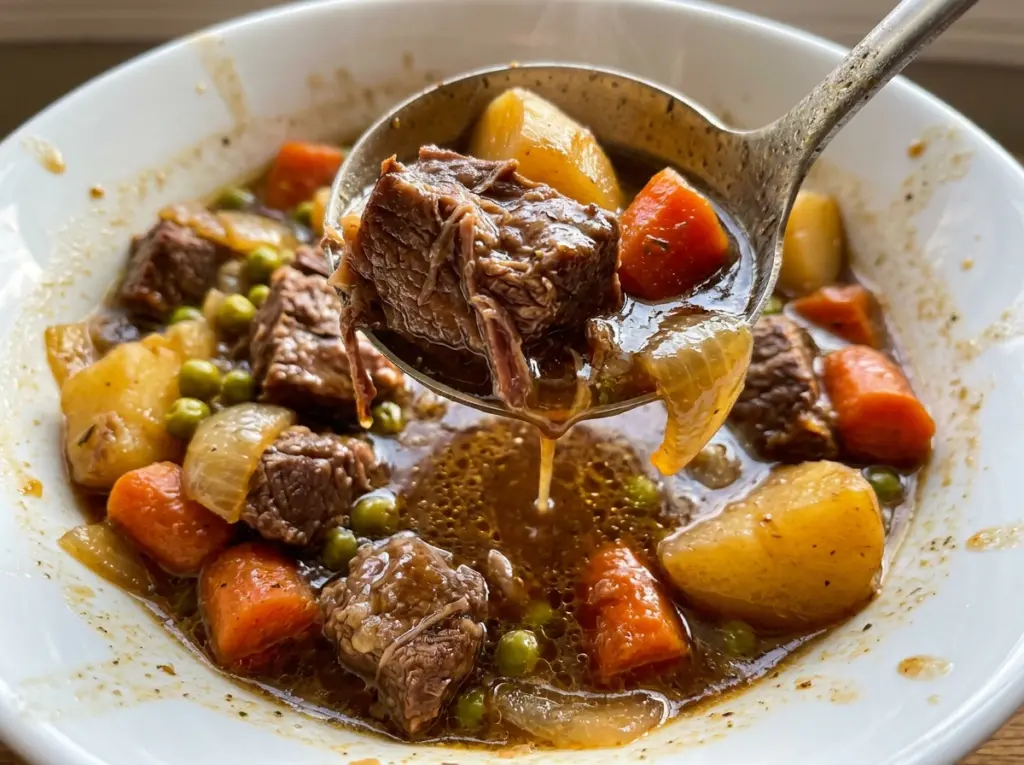
The beef starts to smell different once it has a proper brown crust: deeper, savory, and a little sweet around the edges. I brown it in batches before it goes anywhere near the slow cooker, because a crowded skillet steams the meat instead of giving it that color. It takes a few extra minutes, but those browned pieces bring a lot to this Pioneer Woman Crockpot Beef Stew.
Cutting the beef and vegetables into similar-sized pieces helps each spoonful feel balanced. Yukon Gold potatoes hold their shape while they cook, and the broth gets its body from the flour-coated beef rather than a separate thickener stirred in at the end.
After a long, gentle cook, the chuck turns fork-tender and the potatoes soften without disappearing into the broth. The carrots and celery keep their shape, and tomato paste, Worcestershire, thyme, and bay leaf make the slow-cooked liquid taste rounded and savory. It’s a hearty bowl with tender beef and vegetables in every scoop.
Kitchen Note
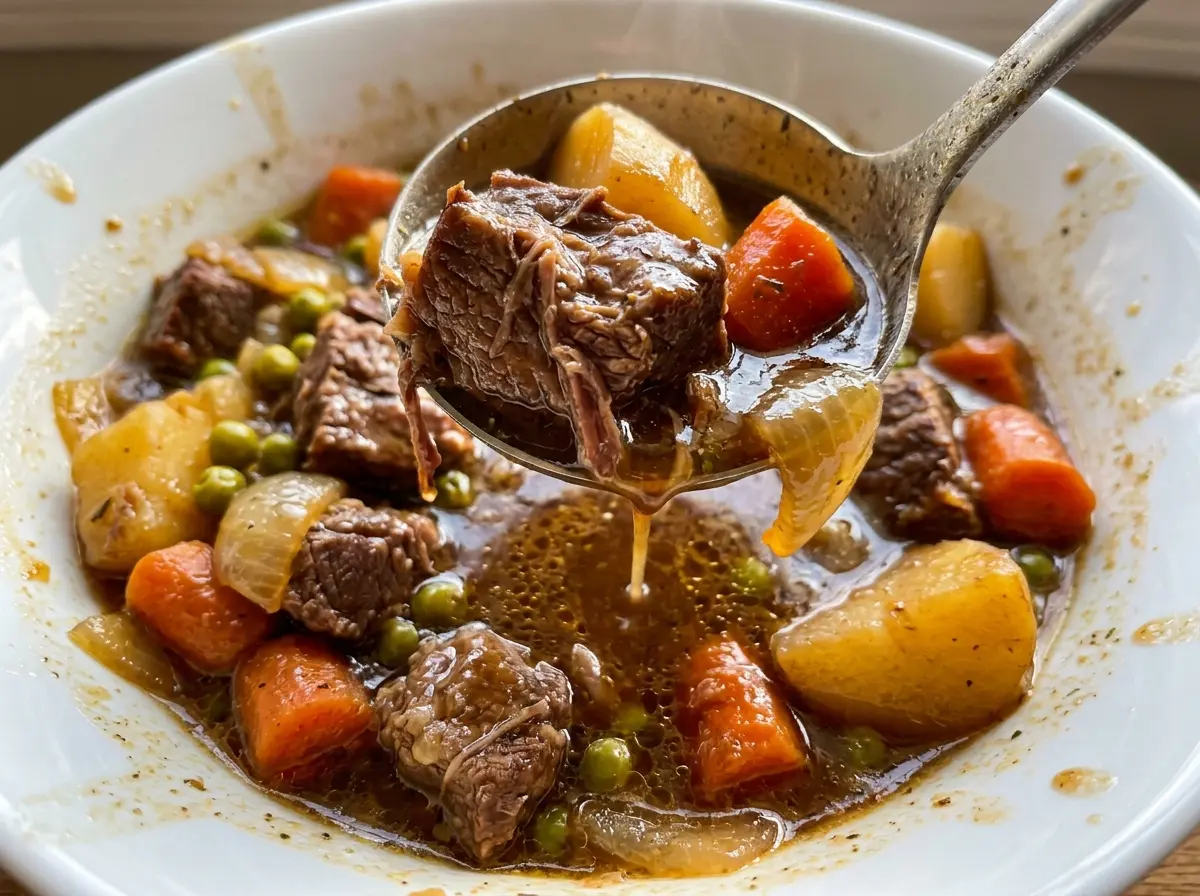
Give the finished stew its full 10-minute rest before serving. The wait lets the bubbling settle, so you can ladle it without the broth sloshing everywhere.
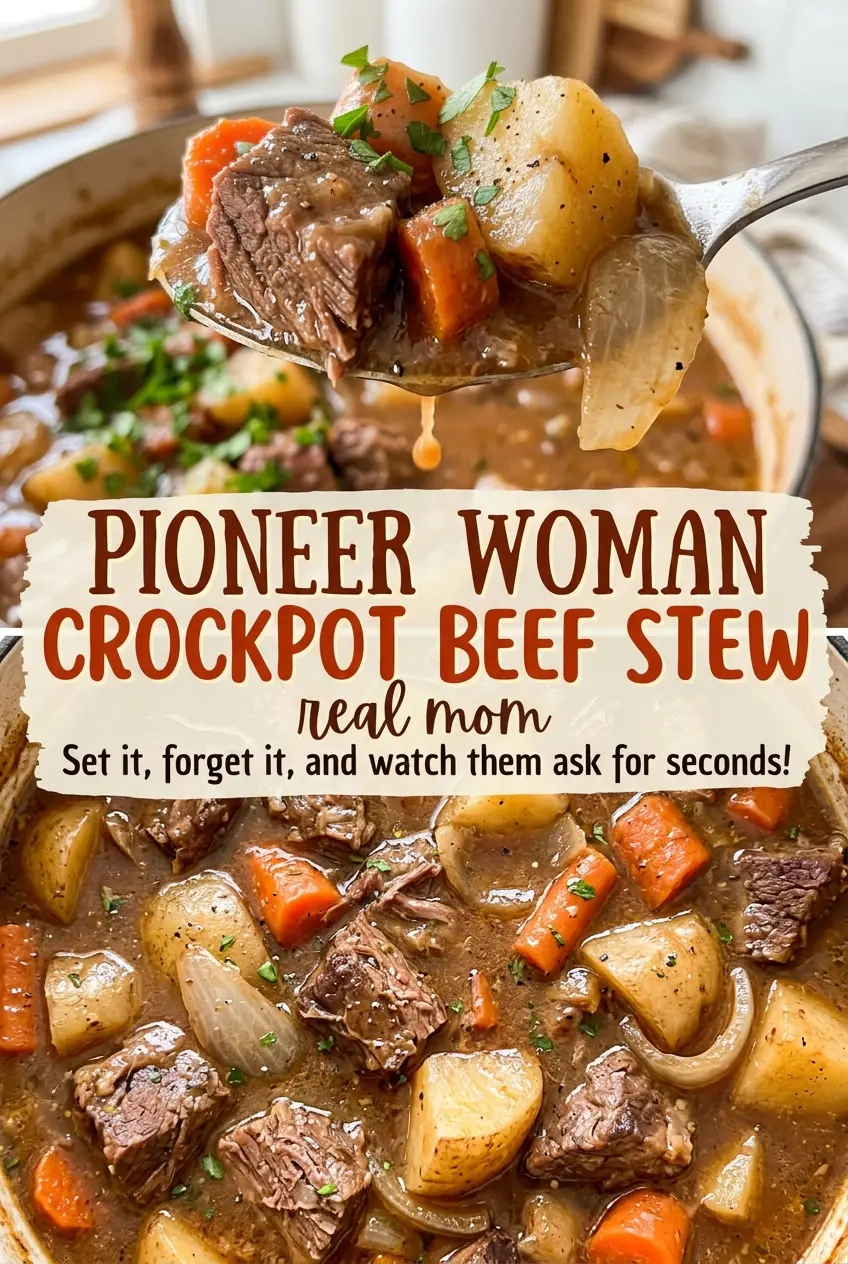
Save this crockpot beef stew for a slow-cooked supper with fork-tender beef, Yukon Gold potatoes, and a savory thyme broth.
Why the Beef Needs a Skillet Before the Slow Cooker
A slow cooker makes beef tender, but it won’t brown the surface of the meat. That’s why the skillet step matters here: browning develops savory flavor that the broth alone can’t create. When the finished stew has a deeper, roasted taste rather than tasting only of cooked broth and vegetables, those browned edges are part of the reason.
The flour coating has a job beyond helping seasoning cling. It gives the beef a thin surface layer that browns along with the meat and adds a little body to the cooking liquid. Keep the pieces in a single layer while they brown, working in batches instead of piling them together. If the pan is crowded, moisture builds up and the beef turns gray before it has a chance to develop color. Let each batch make contact with the hot skillet, then turn the cubes as they brown; you’re looking for browned patches, not a fully cooked center. The beef finishes cooking slowly with the vegetables, so the goal in the skillet is color, not doneness.
What Chuck, Flour, and Yukon Gold Potatoes Bring to This Stew
- Beef chuck — Chuck has connective tissue that softens during a long cook, giving you tender cubes and a richer-tasting broth. Buy it already cut if that’s convenient, but check that the pieces are close to the same size so they cook at a similar pace. Patting the beef dry before seasoning helps it brown instead of shedding moisture into the skillet.
- All-purpose flour — The light coating supports browning and lends the broth some body. It’s worth using fresh flour that hasn’t picked up stale pantry odors; there’s no need for a specialty brand. For a gluten-free version, use a cup-for-cup gluten-free flour blend in the same coating role.
- Yukon Gold potatoes — Their creamy texture and ability to hold together suit a long braise. Choose potatoes that feel firm, with no soft spots or green patches, and cut them into even pieces. Red potatoes are a useful swap if that’s what you have; they tend to keep a slightly firmer bite.
- Beef broth, tomato paste, and Worcestershire — Broth carries the stew, while tomato paste brings concentrated savoriness and Worcestershire adds a tangy, savory note. Store-brand broth works well here, so save the splurge for another ingredient. Whisk the tomato paste thoroughly into the broth so it doesn’t sit in a dense lump in the cooker.
- Thyme and bay leaf — Dried thyme disperses through the broth as it cooks, while the bay leaf adds a gentle herbal background. The leaf should come out before serving; it seasons the liquid but isn’t meant to be eaten.
From a Hot Skillet to Fork-Tender Crockpot Beef
Coat the Beef Evenly
Pat the thawed beef dry, season it with kosher salt and black pepper, then toss it with flour until the cubes have an even, light coating. Break up any clumps so bare spots aren’t left beside thick patches of flour. If the meat looks wet, take another moment to blot it before coating; a damp surface makes browning harder. Keep the pieces ready to go before heating the skillet.
Brown in Uncrowded Batches
Heat the vegetable oil in a 12-inch skillet over medium-high heat. Brown the beef in batches, turning occasionally, for about 8 to 10 minutes total. The cubes should show browned patches on more than one side, while the centers remain uncooked. If you fill the skillet edge to edge, the beef will release moisture and steam rather than sear.
Layer the Vegetables and Mix the Broth
Put the chopped onion, carrots, celery, and potatoes in a 6-quart slow cooker, then add the browned beef. Whisk the beef broth with the tomato paste, Worcestershire sauce, and dried thyme until the paste is dispersed through the liquid. Pour that mixture into the cooker and add the bay leaf. Arrange the vegetables and beef in the cooker without trying to stir them into a skillet sauce.
Cook Until the Chuck Yields Easily
Cover and cook on LOW for 8 to 9 hours or on HIGH for 4 to 5 hours. The beef should be fork-tender, and the potatoes should be cooked through; check both instead of relying on the clock alone, since slow cookers can vary. If the beef still resists a fork, it needs more time to soften. Remove and discard the bay leaf before serving.
Easy Swaps That Keep the Stew Comforting
Make the Coating Gluten-Free
Replace the all-purpose flour with a cup-for-cup gluten-free flour blend, using it to coat the beef before browning. The crust and broth may be a little less silky, but the stew still gets its flavor from the browned meat and slow-cooked vegetables. Choose gluten-free beef broth and Worcestershire sauce, too.
Trade Yukon Golds for Red Potatoes
Use red potatoes cut into the same 1-inch pieces in place of the Yukon Golds. They keep their shape well, with a slightly firmer, less creamy bite. Avoid cutting them much smaller, since small pieces soften faster during the long cook.
Storage and Reheating
- Refrigerator: Store the stew in a covered container for 3 to 4 days. The potatoes may soften a little as they sit.
- Freezer: Freeze cooled portions in airtight containers for up to 3 months. Potatoes can turn softer after thawing, but the stew’s flavor holds up well.
- Reheating: Warm portions gently in a saucepan over medium-low heat, stirring now and then, or heat individual servings in the microwave. Reheat to 165°F; avoid a hard boil, which can break up the potatoes.
Questions That Come Up With Slow Cooker Beef Stew
Pioneer Woman Crockpot Beef Stew
Ingredients
Equipment
Method
- Pat the beef dry, season it with the salt and pepper, and toss it with the flour until evenly coated.
- Heat the vegetable oil in a 12-inch skillet over medium-high heat and brown the beef in batches, turning occasionally, about 8 to 10 minutes total.
- Put the onion, carrots, celery, and potatoes in a 6-quart slow cooker.
- Add the browned beef to the slow cooker.
- Whisk the beef broth with the tomato paste, Worcestershire sauce, and thyme.
- Pour the broth mixture into the slow cooker and add the bay leaf.
- Cover and cook on LOW for 8 to 9 hours or on HIGH for 4 to 5 hours, until the beef is fork-tender and the potatoes are cooked through.
- Remove and discard the bay leaf.
- Let the stew stand for 10 minutes before serving.


