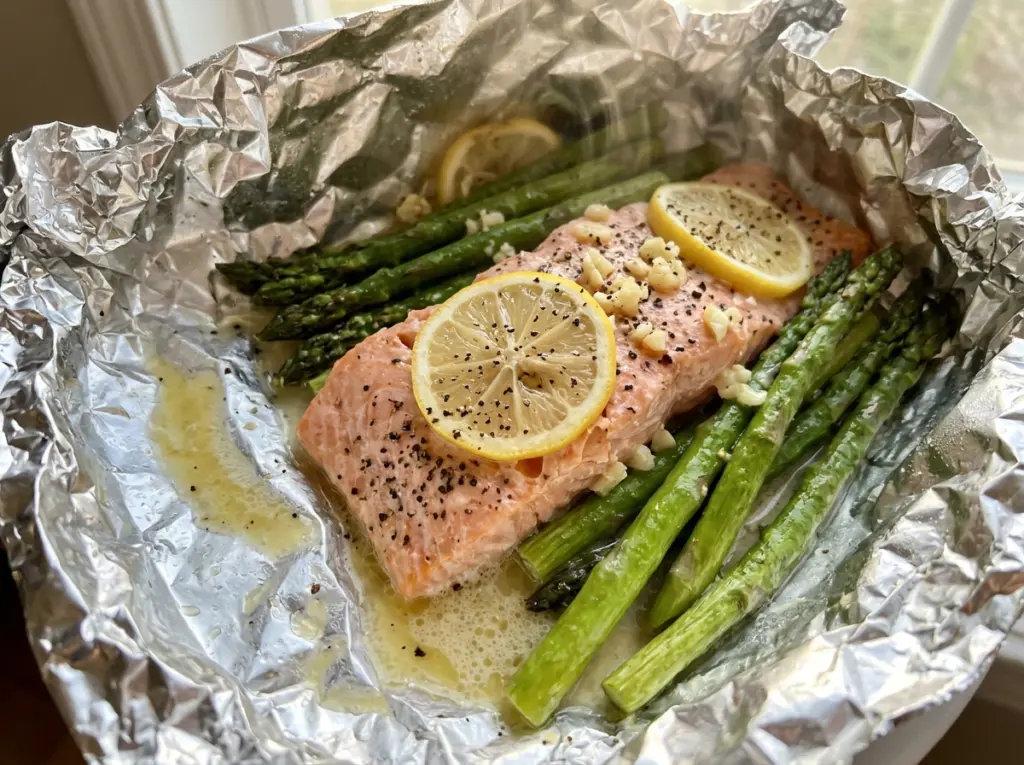
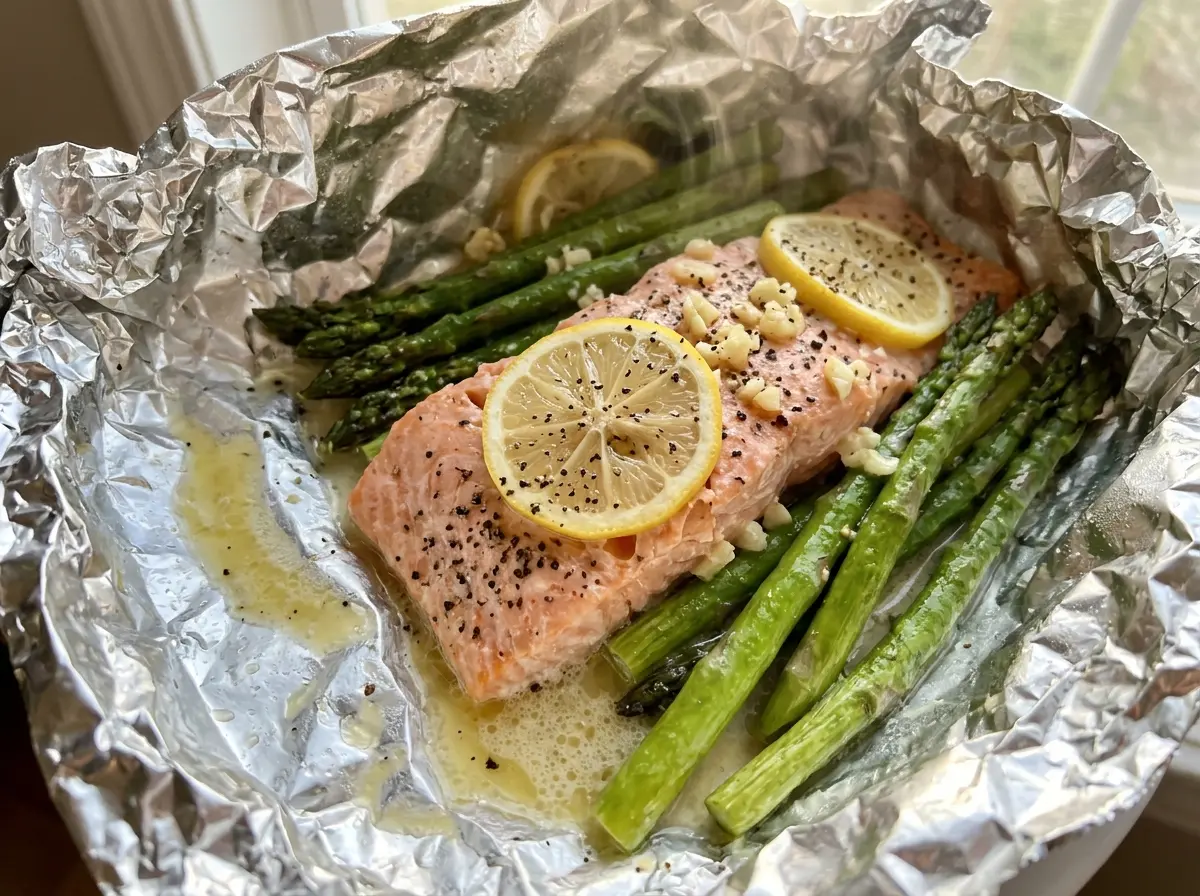
The first thing you notice when a foil pack opens is the rush of lemony steam. Under the salmon, the asparagus has softened in the buttery juices, while the fish stays moist inside its own little packet. That’s what makes these baked salmon foil packs with asparagus such a practical dinner: the fish and vegetables cook together, and there’s no pan of sauce to tend.
I keep the fillets close to the same thickness—about an inch—so they finish in a similar window. The asparagus goes underneath, and the foil closes around everything without pressing against the food. That gives the packet room to steam while the salmon cooks gently. A thermometer takes the guesswork out of the timing, and lemon slices, minced garlic, and melted butter do the rest.
Kitchen Note
I always set the sealed packets on a rimmed baking sheet, even when the folds look secure. If a little butter or fish juice escapes, it stays on the pan instead of landing on the oven floor.
Save these baked salmon foil packs with asparagus for a no-fuss dinner with tender fish, buttery garlic, and bright lemon.
Why the Salmon and Asparagus Cook Better as One Foil Pack
Salmon and asparagus don’t need the same kind of heat exposure. Salmon can dry out when it’s left uncovered too long, while asparagus benefits from enough time to soften. In a sealed foil packet, moisture stays close to both, so the fish cooks gently as the vegetables steam beneath it. The asparagus bed also keeps the fillet from sitting directly against the foil.
That enclosed cooking has one tradeoff: you won’t get browned salmon or crisp asparagus tips. This isn’t a roasting method, and opening the packets to chase browning lets the steam escape. Instead, look for doneness in the thickest part of the fish. The stated 15-to-20-minute range gives you a window, but the thermometer reading—not a browned top or a guess based on the clock—is what tells you the salmon is ready.
Keeping the fillets close to one inch thick helps all four packets finish at about the same pace. If one piece is noticeably thicker, check that piece carefully rather than assuming every packet is done at once. The foil does the gentle cooking; the thermometer gives you control over the finish.
What the Salmon, Butter, and Lemon Each Bring to the Packet
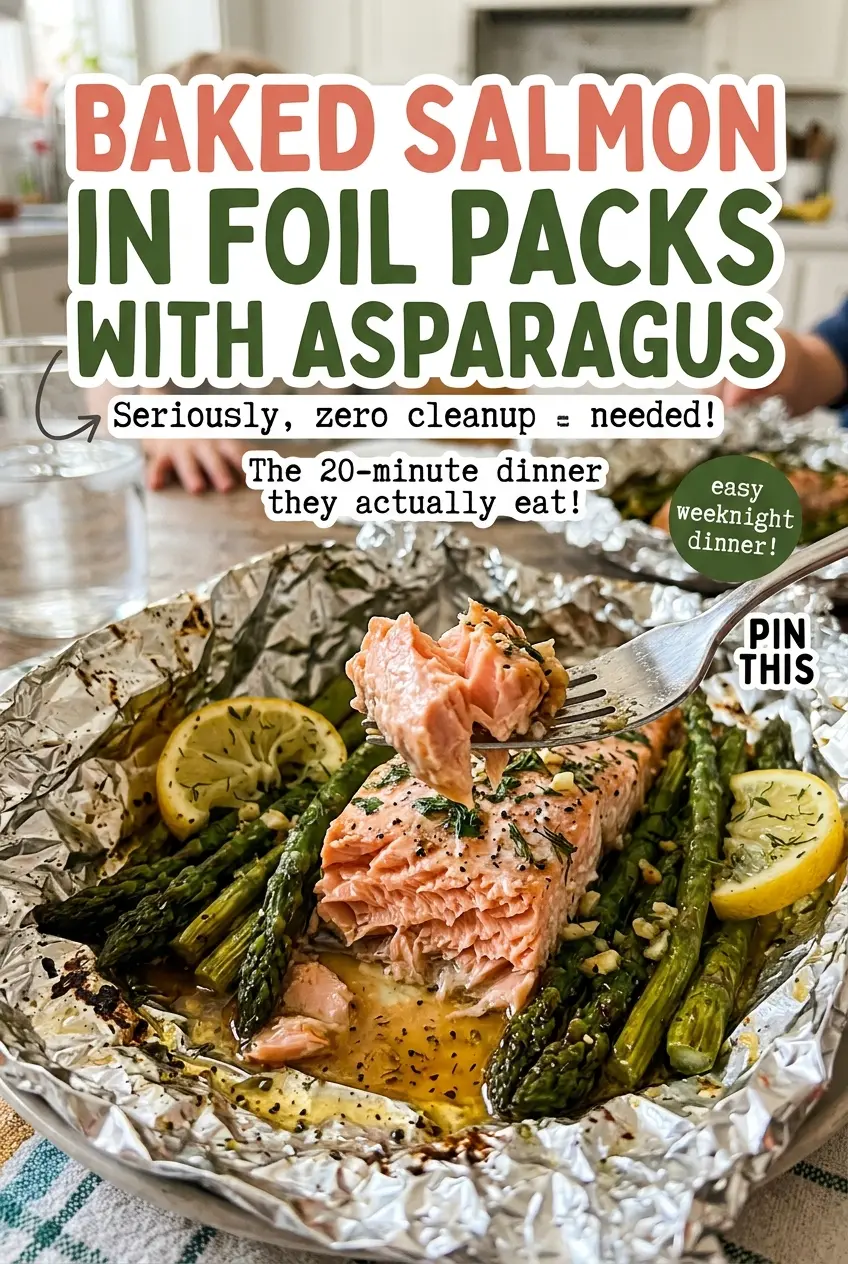
- Salmon fillets — Skinless fillets about one inch thick fit this timing and are easy to serve straight from the packet. Choose pieces of similar thickness; that matters more here than buying a premium cut. A different fish won’t necessarily cook on the same schedule, so salmon is the reliable choice for this method.
- Asparagus — Trim off the woody ends before tossing the spears with olive oil and part of the seasoning. The oil helps coat the vegetables, while the asparagus catches the buttery juices as it cooks. Choose firm spears without limp stems; very thin ones will turn softer than thicker spears during the same bake.
- Unsalted butter and garlic — Melted butter carries the minced garlic over the fish and keeps its flavor in the packet. Regular unsalted butter works well; there’s no need for a specialty butter. Mince the garlic finely so it spreads across each fillet instead of leaving a large, sharp-tasting piece in one bite.
- Lemon — Thin slices sit on top of each fillet and perfume the butter as the packets cook. A fresh lemon is useful here because it needs to slice neatly; thick pieces won’t lie as evenly over the fish. Keep the slices thin, as listed, rather than replacing them with a different citrus or adding extra ingredients.
How to Seal Each Pack and Cook the Fish Without Guessing
Cut the Foil Before You Season
Heat the oven to 400°F, then cut four 12-by-18-inch sheets of heavy-duty aluminum foil. Lay the sheets out where you can reach them before handling the salmon; assembling each packet goes more smoothly when the foil is ready. Heavy-duty foil is sturdy enough to fold over twice along the long sides and close at the ends. Set a rimmed baking sheet nearby for the finished packs.
Season and Divide the Asparagus
Toss the trimmed asparagus with the olive oil and half of the kosher salt and black pepper. Turn the spears until they look lightly coated rather than slick with oil. Divide the asparagus among the centers of the four foil sheets, keeping each bed in a compact layer. The salmon will sit on top, so spread the spears enough to support a fillet without piling them into a tall mound.
Top the Fillets and Fold the Packets
Set one salmon fillet on each bed of asparagus, then season the fish with the remaining salt and pepper. Add one-quarter of the minced garlic to each fillet, followed by one tablespoon of melted butter and lemon slices. Bring the long sides of the foil together and fold them over twice, then fold the ends closed. Seal the edges while leaving a little room around the food; don’t press the foil tightly against the salmon.
Bake to Temperature, Then Rest
Arrange the packets on the rimmed baking sheet and bake for 15 to 20 minutes. Check the thickest part of each fillet with an instant-read thermometer; it should reach 145°F. If a packet needs more time, close it again and return it to the oven, then check the fish rather than relying on appearance through the foil. Let the packets rest for 2 minutes, then carefully open them away from you so the hot steam escapes in the opposite direction.
What to Change for Softer Garlic or Snappier Asparagus
Choose asparagus spears for the texture you like
For softer asparagus, use thinner spears; they’ll cook through quickly inside the packet. If you prefer more bite, choose thicker spears, which hold their shape better while the salmon reaches its temperature. Keep the fish as the doneness guide, since its temperature—not the asparagus—is the endpoint for the bake.
Make the garlic less direct
For a gentler garlic flavor on the salmon, scatter the same minced garlic across the asparagus bed instead of putting it directly on top of the fillets. The garlic still cooks with the butter and lemon in the sealed packet, but its flavor is spread through the vegetables rather than concentrated on the fish. Keep the listed amount of garlic and butter the same.
Storage and Reheating
- Refrigerator: Refrigerate leftovers in a covered container within 2 hours and use them within 3 to 4 days. The asparagus will soften more as it sits.
- Freezer: Cooked salmon can be frozen in an airtight container, though the fish and asparagus will be softer after thawing. For best quality, use within 2 to 3 months and thaw in the refrigerator.
- Reheating: Reheat covered in the microwave in short intervals, checking until the leftovers reach 165°F. Avoid a long, high-power blast; it can make the salmon dry and the asparagus limp.
Questions That Come Up While the Foil Packs Bake
Baked Salmon in Foil Packs with Asparagus
Ingredients
Equipment
Method
- Heat the oven to 400°F.
- Cut four 12x18-inch sheets of heavy-duty aluminum foil.
- Toss the asparagus with the olive oil and half of the salt and pepper.
- Divide the asparagus among the centers of the foil sheets.
- Place one salmon fillet on each bed of asparagus and season with the remaining salt and pepper.
- Top each fillet with one-quarter of the garlic, 1 tablespoon melted butter, and lemon slices.
- Bring the long sides of each foil sheet together and fold them over twice.
- Fold the ends closed to seal each packet, leaving a little room around the food.
- Arrange the packets on a rimmed baking sheet.
- Bake for 15 to 20 minutes, until the thickest part of each fillet reaches 145°F on an instant-read thermometer.
- Let the packets rest for 2 minutes.
- Carefully open them away from you to release the steam.


