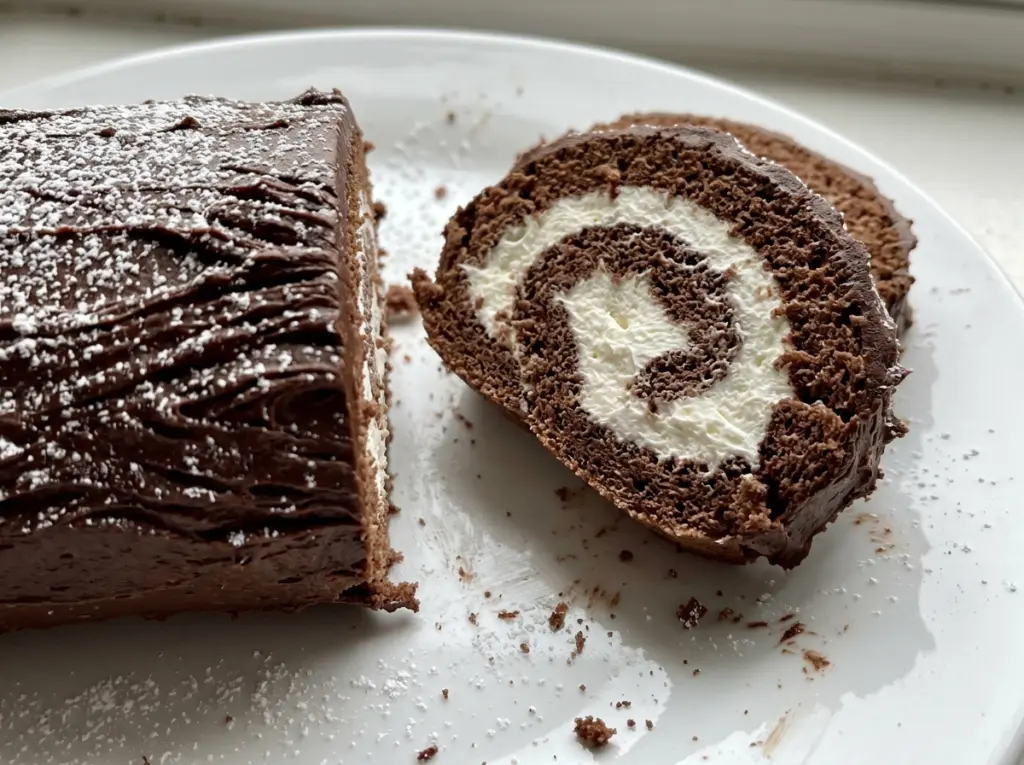
A thin chocolate sponge can look almost too soft to roll when it first comes out of the oven. Waiting for it to cool before shaping is where cracks often begin: the cake sets in a flat shape and resists the curve. For this Easy Yule Log, I roll the cake while it’s hot, with a clean sheet of parchment around it, so it cools already holding its log shape.
The filling is a simple whipped cream, and the chocolate ganache turns the outside into a bark-like finish. Each part has a texture cue worth watching: a brief ribbon from the beaten eggs, stiff peaks in the cream, and ganache that’s thick enough to stay where you spread it. Put those cues together and you get a tender chocolate roll with a creamy center and a smooth, fork-textured coat.
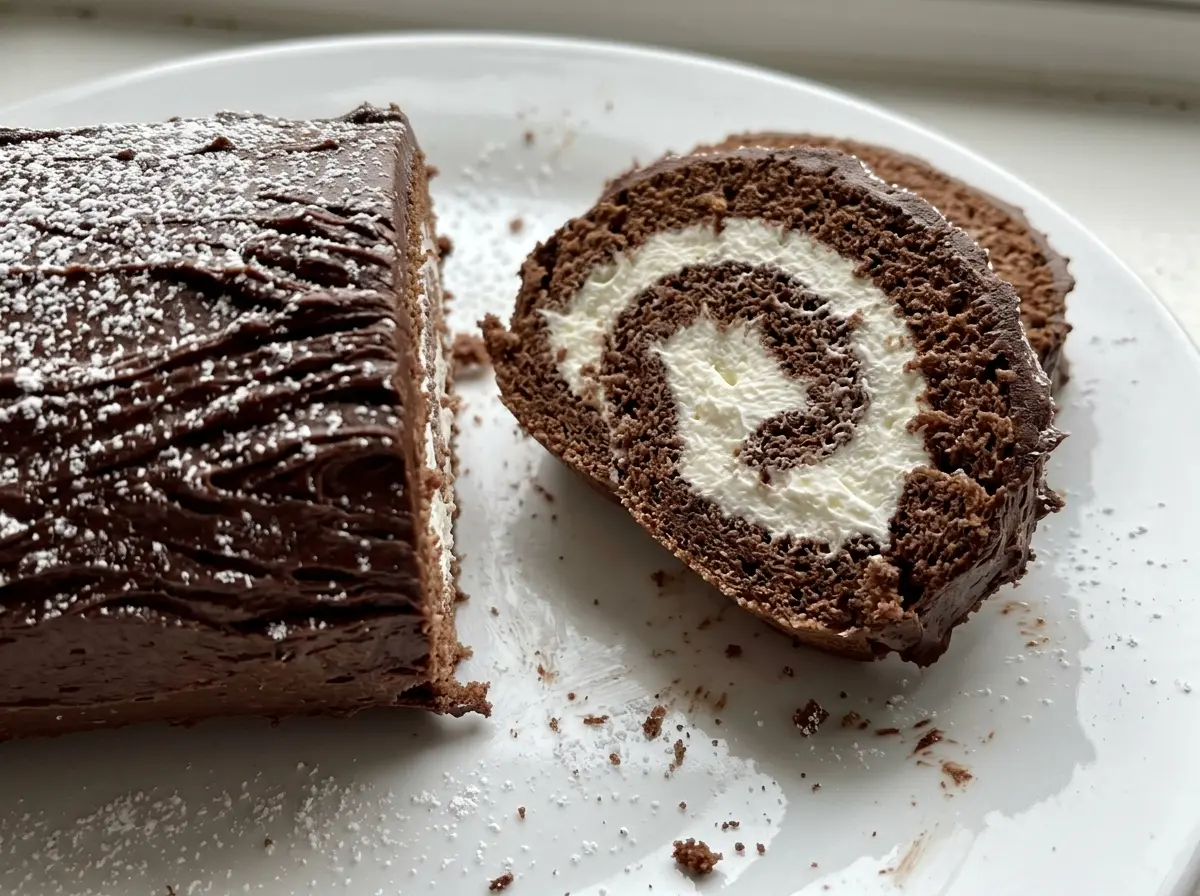
Kitchen Note
Watch the eggs and sugar closely while they beat. They’re ready when the mixture looks pale and thick and a ribbon briefly sits on the surface before sinking back in.
Save this Easy Yule Log for its tender chocolate sponge, whipped cream center, and bark-like ganache finish.
Why Rolling the Sponge While It’s Hot Helps Prevent Cracks
A rolled cake needs to bend before it firms up. This sponge is thin, and its structure comes from whipped eggs along with a little baking powder; once it cools flat, it’s more likely to split when you ask it to curve. Starting the roll while the cake is hot gives it time to cool in that shape instead of forcing it into one later.
The parchment makes that first roll easier to handle. Turn the cake out onto a clean sheet, peel off the parchment it baked on, then roll the cake and clean parchment together from a short end. Keep the roll snug but don’t crush it. The seam goes underneath while it cools, which helps the shape hold without needing a filling to prop it up.
There’s no need to rush the next part. Let the rolled cake cool until it’s no longer warm before unrolling it to add the cream. It will still be flexible enough to roll back up, but the filling won’t be spread over a warm surface that can soften it.
What Gives This Yule Log Its Sponge, Cream, and Ganache Textures
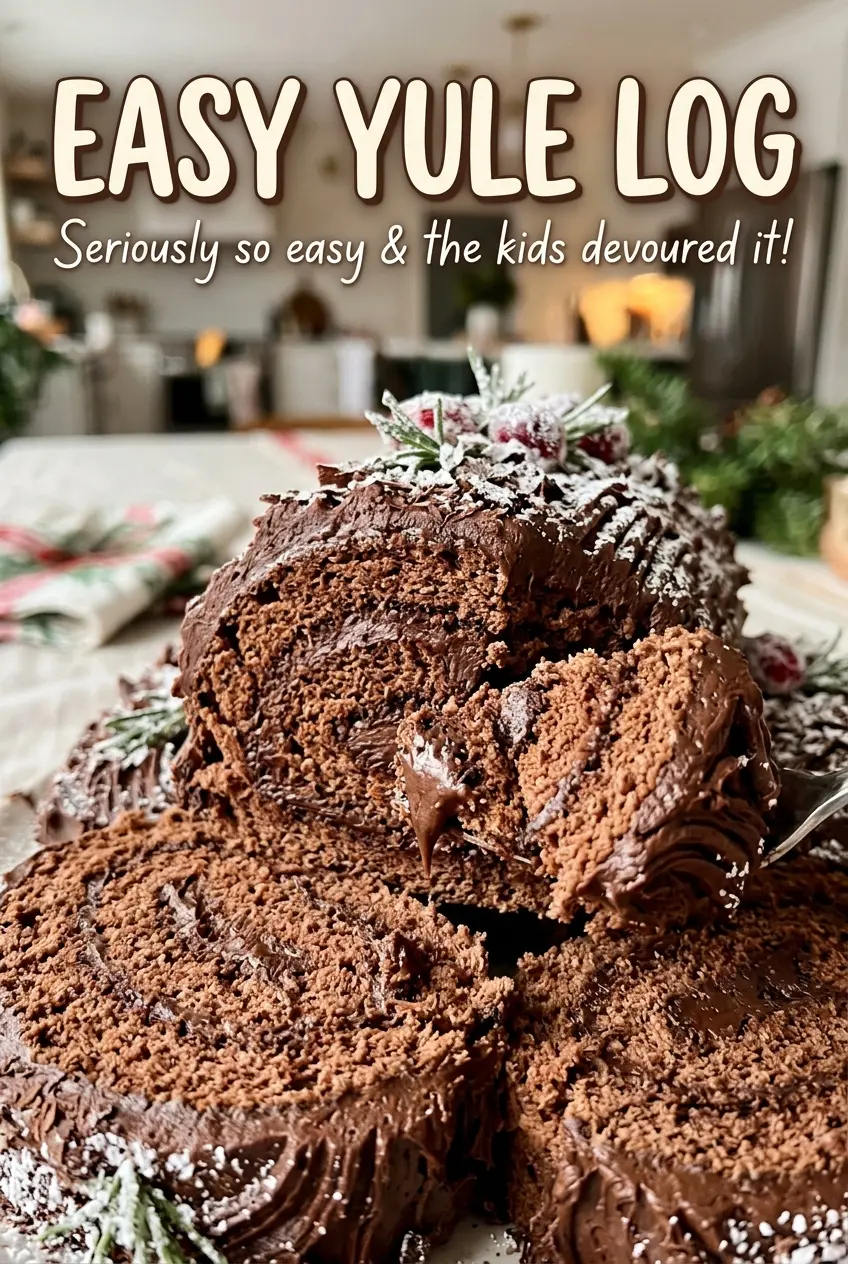
- Eggs and granulated sugar — Beating them together creates the airy base for the sponge. Room-temperature eggs blend and whip readily, so bring them out before you start rather than trying to warm them during mixing.
- All-purpose flour and unsweetened cocoa — These give the cake its structure and chocolate flavor. Sifting them over the egg mixture helps distribute the cocoa without leaving pockets, and folding rather than beating keeps the batter from losing too much of its air.
- Baking powder and fine salt — Baking powder contributes lift, while salt balances the chocolate. Keep the measured dry ingredients together and sift them in; adding them in a clump makes even folding harder.
- Heavy cream — One portion needs to whip to stiff peaks for a filling that stays between the cake layers; the other portion becomes the ganache. Half-and-half or milk won’t whip into the same stable filling, so heavy cream is the right choice for both jobs.
- Semisweet chocolate — Finely chopped chocolate melts evenly when hot cream is poured over it. A chocolate you enjoy eating makes a difference in the ganache, while careful chopping matters more than choosing a costly brand.
- Vanilla extract and confectioners’ sugar — Vanilla rounds out the sponge, and the fine sugar sweetens the whipped cream without leaving a gritty texture. Keep the confectioners’ sugar for the filling rather than swapping in granulated sugar, which won’t dissolve as readily in the cream.
From a Springy Sponge to Bark-Textured Ganache
Build Air Into the Chocolate Batter
Heat the oven to 350°F, then lightly coat a 10×15-inch jelly-roll pan with cooking spray, line it with parchment, and lightly spray the parchment too. Beat the room-temperature eggs and granulated sugar with an electric mixer on high for 5 to 7 minutes, until pale, thick, and able to hold a ribbon briefly on the surface. Beat in the vanilla, then sift the flour, cocoa, baking powder, and salt over the top. Fold gently just until no dry streaks remain; stop before the batter turns flat and loose.
Bake Briefly and Roll Before the Sponge Cools
Spread the batter evenly in the prepared pan so it bakes to a consistent thickness. Bake for 10 to 12 minutes, until the top springs back when lightly touched; leaving it in longer can make a thin sponge dry and less pliable. Set a clean sheet of parchment on the counter, turn the hot cake onto it, and peel away the parchment from the pan. Roll the cake and clean parchment together from a short end, then set it seam-side down to cool for about 45 minutes, until it’s no longer warm.
Fill the Cooled Roll Without Squeezing Out the Cream
Beat 1 cup of the heavy cream with the confectioners’ sugar in a chilled bowl until stiff peaks form. Carefully unroll the cooled cake and peel away the parchment, then spread the cream evenly across the surface while leaving a 1/2-inch border. That uncovered edge gives the filling room as the cake is rolled back up. Roll it without the parchment, place it seam-side down, and refrigerate for 30 minutes.
Set the Ganache Before Drawing the Bark Lines
Put the finely chopped chocolate in a heatproof bowl. Warm the remaining 3/4 cup heavy cream in a small saucepan over medium heat until steaming, with small bubbles forming around the edge, then pour it over the chocolate and let it stand for 5 minutes. Stir until smooth and let the ganache cool for 20 to 30 minutes, stirring occasionally, until thick but spreadable; if it still runs easily off a spoon, give it more time to cool. Trim a thin slice from each end of the cake with a serrated knife, spread on the ganache, and drag a fork lengthwise through it to make bark-like lines. Refrigerate for at least 1 hour before serving and keep the log refrigerated until it’s ready to serve.
Two Useful Ways to Adapt the Chocolate Log
Use bittersweet chocolate for a deeper ganache
Swap bittersweet chocolate for the semisweet chocolate, keeping the same weight. The coating will taste more cocoa-forward and less sweet, while still setting into a spreadable ganache.
Make the sponge gluten-free
Replace the all-purpose flour with a cup-for-cup gluten-free baking blend in the same measure. The sponge may be a little more delicate when you handle it, so turn it out and roll it carefully while it’s hot.
Chilling and Serving
- Refrigerator: Keep the finished log covered and refrigerated; the whipped cream filling is at its best within 2 days.
- Freezer: I don’t recommend freezing the assembled log. The whipped cream can lose its smooth texture as it thaws, and the sponge may soften.
- Serving: Serve chilled, after the ganache has had time to set. A serrated knife helps cut through the coating and sponge without pressing the roll out of shape.
Questions That Come Up While Making an Easy Yule Log
Easy Yule Log
Ingredients
Equipment
Method
- Preheat the oven to 350°F.
- Lightly coat a 10x15-inch jelly-roll pan with cooking spray.
- Line the pan with parchment paper.
- Lightly spray the parchment.
- Beat the eggs and granulated sugar in a large bowl with an electric mixer on high speed for 5 to 7 minutes, until pale, thick, and able to hold a ribbon briefly on the surface.
- Beat in the vanilla extract.
- Sift the flour, cocoa powder, baking powder, and salt over the egg mixture.
- Fold gently until no dry streaks remain.
- Spread the batter evenly in the prepared pan.
- Bake for 10 to 12 minutes, until the top springs back when lightly touched.
- Lay a clean sheet of parchment on the counter.
- Turn the hot cake out onto the parchment.
- Peel away the parchment from the pan.
- Roll the cake and clean parchment together from a short end.
- Set the rolled cake seam-side down.
- Let it cool for about 45 minutes, until no longer warm.
- Beat 1 cup of the heavy cream with the confectioners' sugar in a chilled bowl until stiff peaks form.
- Carefully unroll the cooled cake.
- Peel away the parchment.
- Spread the filling evenly over the cake, leaving a 1/2-inch border.
- Roll the cake back up without the parchment.
- Place it seam-side down.
- Refrigerate the filled cake for 30 minutes.
- Place the chopped chocolate in a heatproof bowl.
- Heat the remaining 3/4 cup heavy cream in a small saucepan over medium heat until steaming and small bubbles form around the edge.
- Pour the hot cream over the chocolate.
- Let stand for 5 minutes.
- Stir until smooth.
- Let the ganache cool for 20 to 30 minutes, stirring occasionally, until thick but spreadable.
- Trim a thin slice from each end of the cake with a serrated knife.
- Spread the ganache over the cake.
- Drag a fork through it lengthwise to make bark-like lines.
- Refrigerate for at least 1 hour before serving.
- Keep refrigerated until ready to serve.


