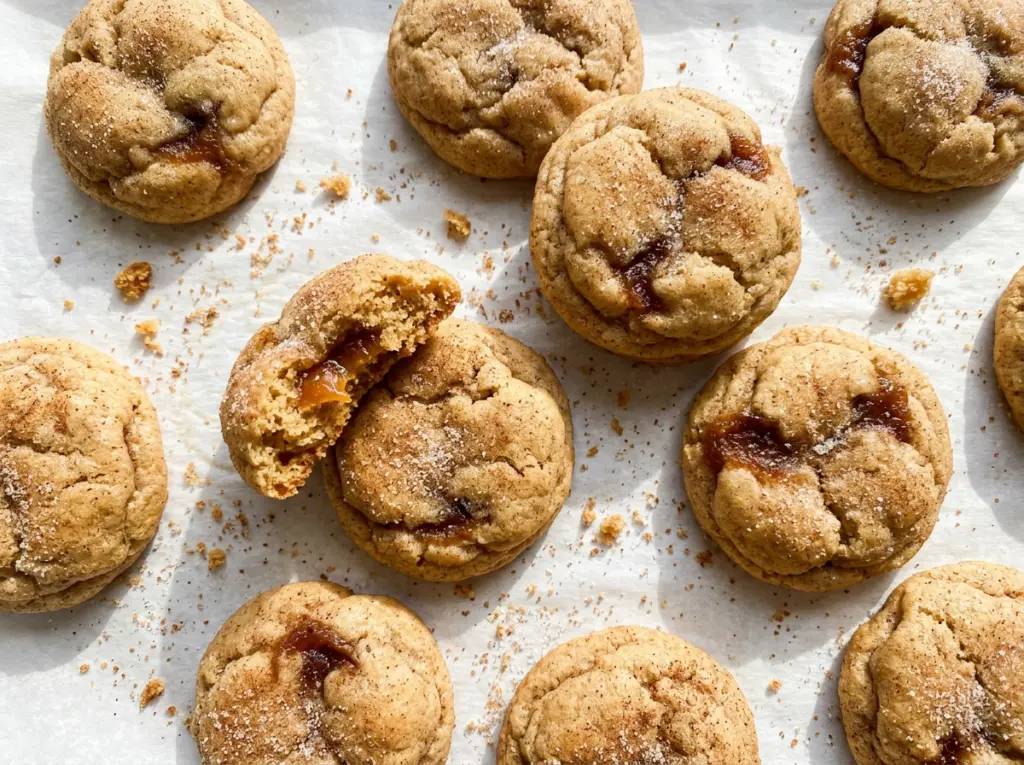
The edges tell you these cookies are ready before the centers do. I pull the pan when the edges look set and the middles are still puffed and soft; a few minutes on the hot sheet finishes the job without drying them out. That’s how I get apple butter cookies with a tender middle instead of a firm, cakey bite.
Apple butter brings concentrated apple flavor and a little natural sweetness, while cinnamon, ginger, and nutmeg make the dough taste warmly spiced. The dough is soft after mixing, so I chill it before scooping. It’s a small pause that makes the portions easier to handle and keeps the cookies looking neat on the pan.
Kitchen Note
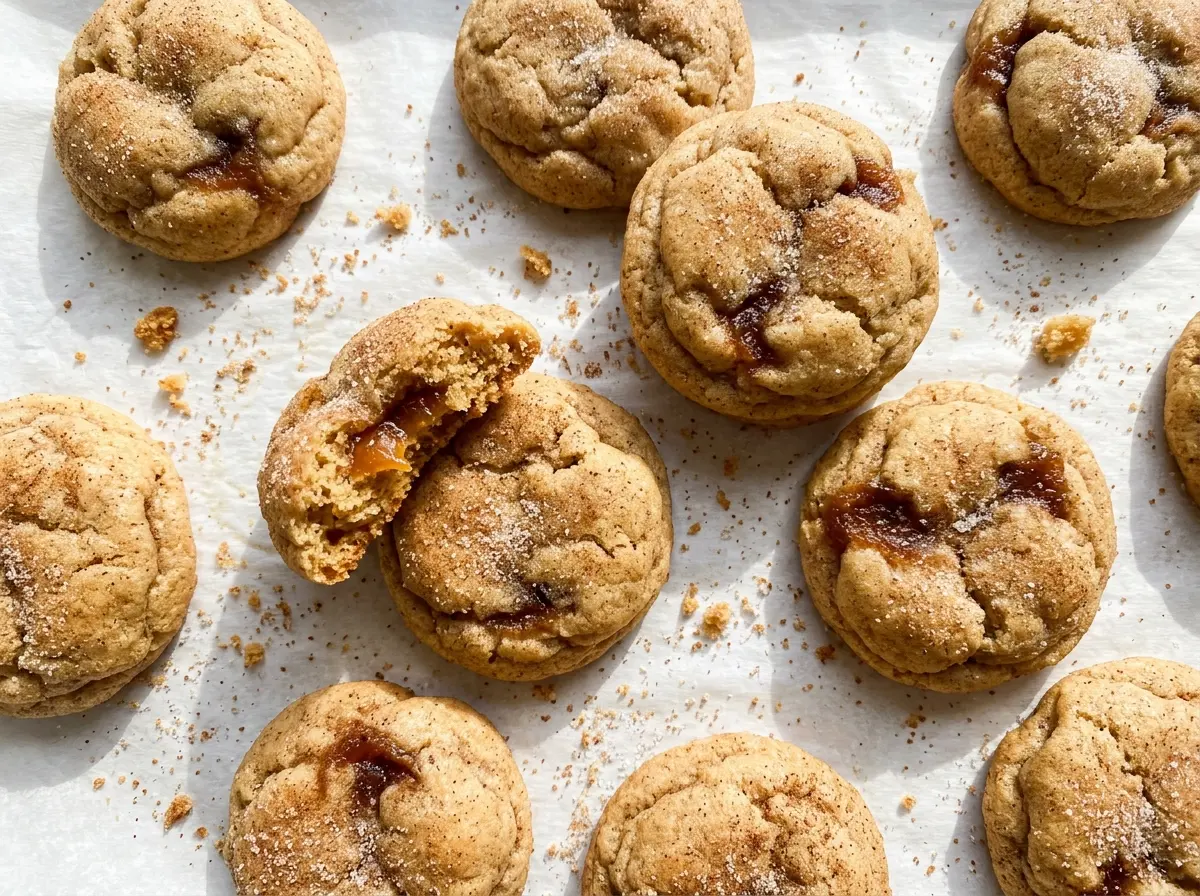
After beating in the egg, apple butter, and vanilla, I scrape around the bowl before adding the flour. Those ingredients can cling to the sides, and a quick scrape keeps the dough evenly mixed without extra beating.
Save these apple butter cookies for a bake when you want soft centers and a cozy cinnamon-ginger spice.
Why Apple Butter Works Better Here Than a Looser Fruit Puree
Apple butter is cooked down until it’s thick and concentrated, so it adds apple flavor without the extra free moisture you’d get from a thinner fruit puree. In cookie dough, that balance matters: too much liquid can make the dough loose and the baked cookies spread more than you want. The apple butter gives these cookies a clear apple note while keeping the dough sturdy enough to scoop.
The sugars help shape the texture, too. Brown sugar brings moisture and a deeper, molasses-like note; granulated sugar keeps the sweetness from leaning too heavily in that direction. Butter adds richness, and the egg helps bind everything together. With the leaveners working alongside the flour, the cookies rise into soft, gently rounded centers rather than baking up thin and crisp.
The Ingredients That Keep These Cookies Soft and Fragrant

- Apple butter — Use a thick, spoonable apple butter so it blends smoothly into the creamed mixture. A standard grocery-store jar works well; there’s no need to seek out a specialty brand. Very loose apple butter can change the dough’s consistency.
- All-purpose flour — Spoon the flour into the measuring cup and level it off rather than packing it down. Too much flour is an easy way to lose the soft texture. For a gluten-free batch, use a cup-for-cup gluten-free baking blend formulated to replace all-purpose flour.
- Butter and sugars — Softened butter should give slightly when pressed, not look shiny or melted. Light brown sugar keeps the flavor gentle and rounded; dark brown sugar works in its place for a stronger molasses note. For a dairy-free version, use dairy-free baking sticks rather than soft tub spread.
- Egg — The egg helps hold the dough together and contributes to its tender structure. Use a large egg, as a smaller one can leave the dough drier and harder to bring together.
- Cinnamon, ginger, nutmeg, and vanilla — Fresh, fragrant spices make a noticeable difference, though ordinary supermarket spices are perfectly fine. You can replace the three ground spices with 1 1/2 teaspoons of pumpkin pie spice; the blend will shift the flavor slightly. Pure or imitation vanilla both work here.
- Baking soda and baking powder — Keep both in the mix; they aren’t interchangeable one-for-one. If either container has been open for a long time, check that it’s still fresh so the cookies rise as intended.
Mixing and Baking the Dough Without Losing Its Soft Texture
Whisk the Dry Ingredients First
Heat the oven to 350°F and line two baking sheets with parchment paper. Whisk the flour, baking soda, baking powder, cinnamon, ginger, nutmeg, and salt in a medium bowl until the spices are evenly distributed. This gives every scoop a consistent seasoning and helps the leaveners blend through the flour. Set the bowl aside while you cream the butter and sugars.
Cream the Butter, Then Add the Apple Butter
Beat the softened butter with the brown sugar and granulated sugar in a large bowl using an electric mixer on medium speed. After about 2 minutes, the mixture should look lighter and fluffy rather than dense. Beat in the egg, apple butter, and vanilla until combined. The mixture may look soft, but that’s expected before the flour goes in.
Bring the Dough Together and Chill It
Add the flour mixture and mix on low just until no dry streaks remain. Stop once the flour disappears; longer mixing can make the cookies tougher. Cover the dough and refrigerate it for 30 minutes. It should feel firmer and easier to scoop afterward.
Scoop, Bake, and Let the Cookies Set
Scoop rounded tablespoons of dough onto the prepared sheets, leaving about 2 inches between portions. Bake one sheet at a time at 350°F for 11 to 13 minutes. Look for set edges with centers that are still puffed and soft; don’t wait for the middles to look firm in the oven. Cool the cookies on the baking sheet for 5 minutes, then move them to a wire rack to cool completely.
Three Small Changes for a Different Batch
Make Them Gluten-Free
Replace the all-purpose flour with the same amount of a cup-for-cup gluten-free baking blend made for cookies or general baking. The cookies may be a little more delicate, so let them cool on the baking sheet before transferring them.
Use Dairy-Free Baking Sticks
Swap the unsalted butter for an equal amount of dairy-free baking sticks. Choose a firm stick-style product rather than spread from a tub, which contains more water and can make the dough harder to handle. The cookies will have a slightly different buttery flavor.
Turn Up the Ginger
For a warmer, more ginger-forward cookie, increase the ground ginger from 1/4 teaspoon to 1/2 teaspoon. Keep the cinnamon and nutmeg the same so the ginger stands out without taking over the apple and cinnamon notes.
Storage and Reheating
- Refrigerator: Keep the cooled cookies in an airtight container for up to 1 week. Chilling firms their soft texture, so let them sit at room temperature before serving.
- Freezer: Freeze fully cooled cookies in a single layer, then transfer them to an airtight freezer container for up to 2 months. Thaw at room temperature.
- Reheating: Warm cookies in a 300°F oven for 3 to 4 minutes. Avoid microwaving for too long, which can make the centers overly soft and steamy.
Questions That Come Up When Baking Apple Butter Cookies
Apple Butter Cookies
Ingredients
Equipment
Method
- Heat the oven to 350°F.
- Line two baking sheets with parchment paper.
- Whisk the flour, baking soda, baking powder, cinnamon, ginger, nutmeg, and salt in a medium bowl.
- Beat the butter, brown sugar, and granulated sugar in a large bowl with an electric mixer on medium speed until fluffy, about 2 minutes.
- Beat in the egg, apple butter, and vanilla until combined, scraping down the bowl as needed.
- Add the flour mixture and mix on low just until no dry streaks remain.
- Cover and refrigerate the dough for 30 minutes.
- Scoop rounded tablespoons of dough onto the prepared baking sheets, spacing them about 2 inches apart.
- Bake one sheet at a time at 350°F for 11 to 13 minutes, until the edges are set and the centers look puffed and soft.
- Cool the cookies on the baking sheet for 5 minutes.
- Transfer them to a wire rack to cool completely.


