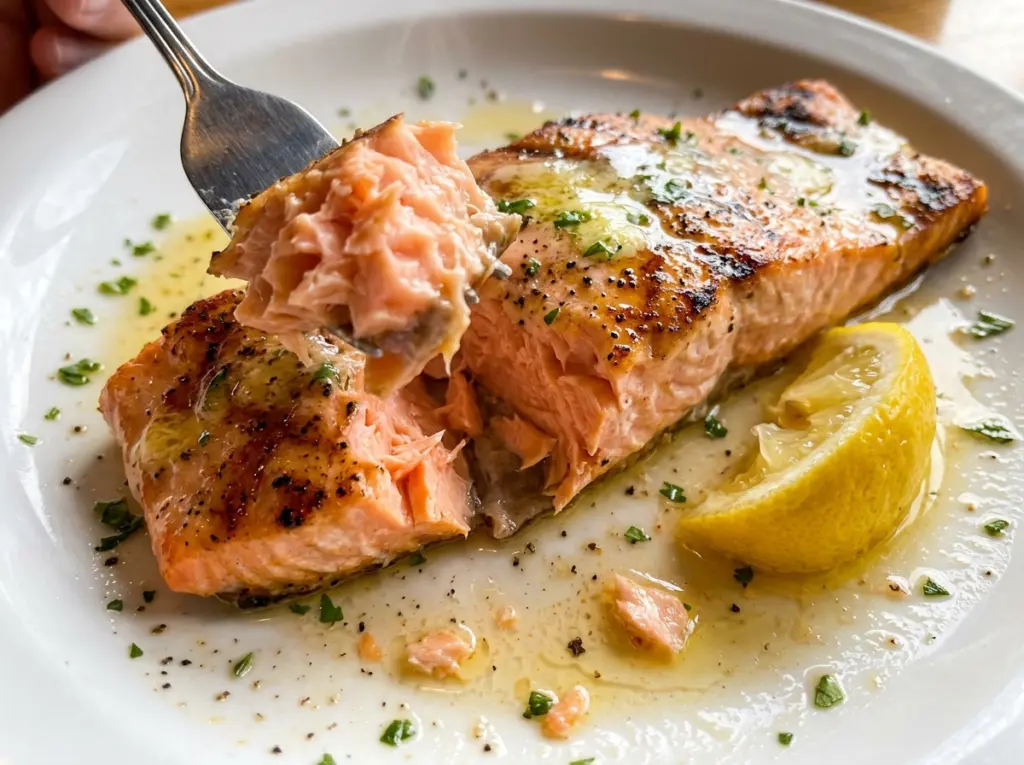
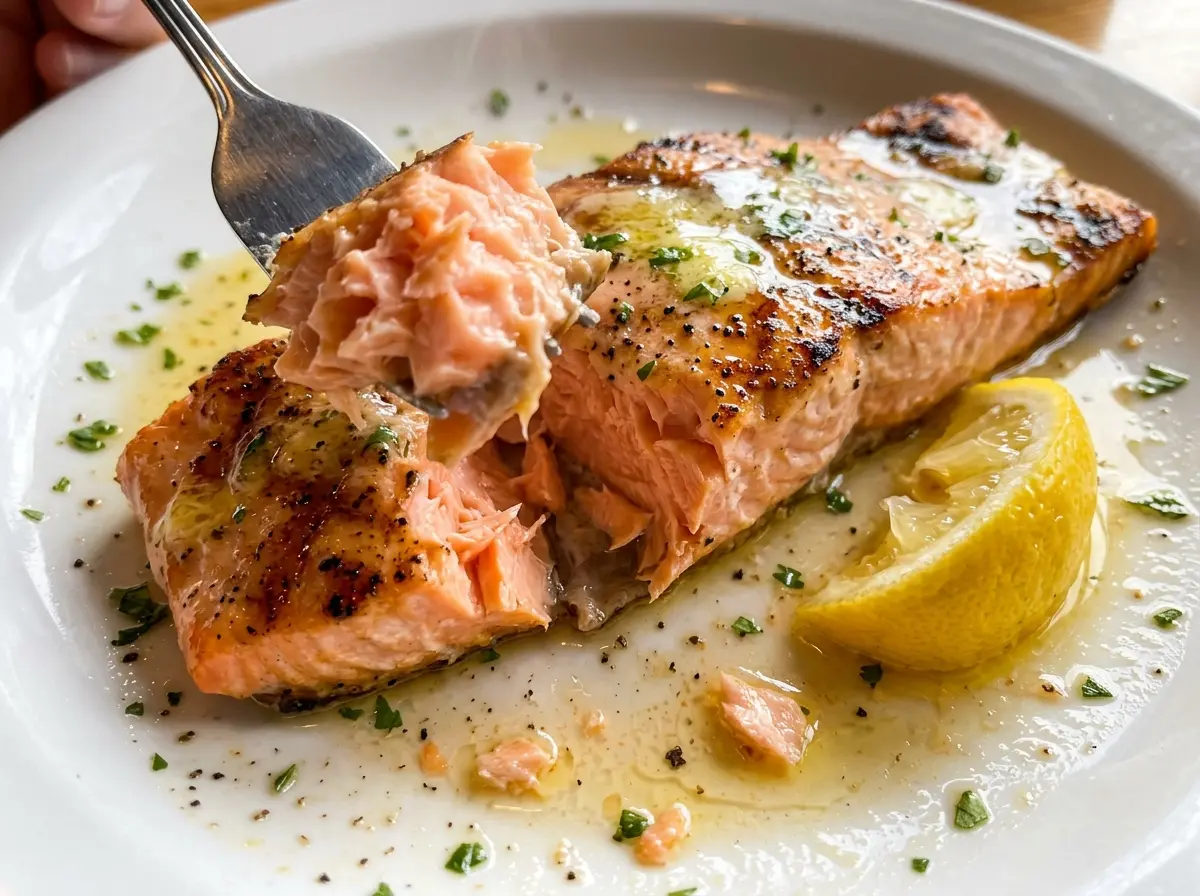
Salmon can look ready at the edges while the thickest part still needs a few minutes. I keep the lid closed and check the center instead of guessing from the color; that’s what makes this grilled Texas Roadhouse Salmon easy to time without drying out the thinner end.
The seasoning goes on the flesh side, while the skin stays against the grill. After cooking, melted butter stirred with lemon juice and parsley goes over the top. That order gives each part a clear job: peppery seasoning on the fish, then a fresh, buttery finish.
I use fillets that are about an inch thick so they cook at a similar pace, and I leave the skin on to help keep each piece intact on the grates. The finished salmon is tender, lemony, and topped with warm lemon butter.
Kitchen Note
Keep the grill lid closed while the salmon cooks. Every peek lets heat escape, so the timing gets harder to judge and the fish cooks less evenly.
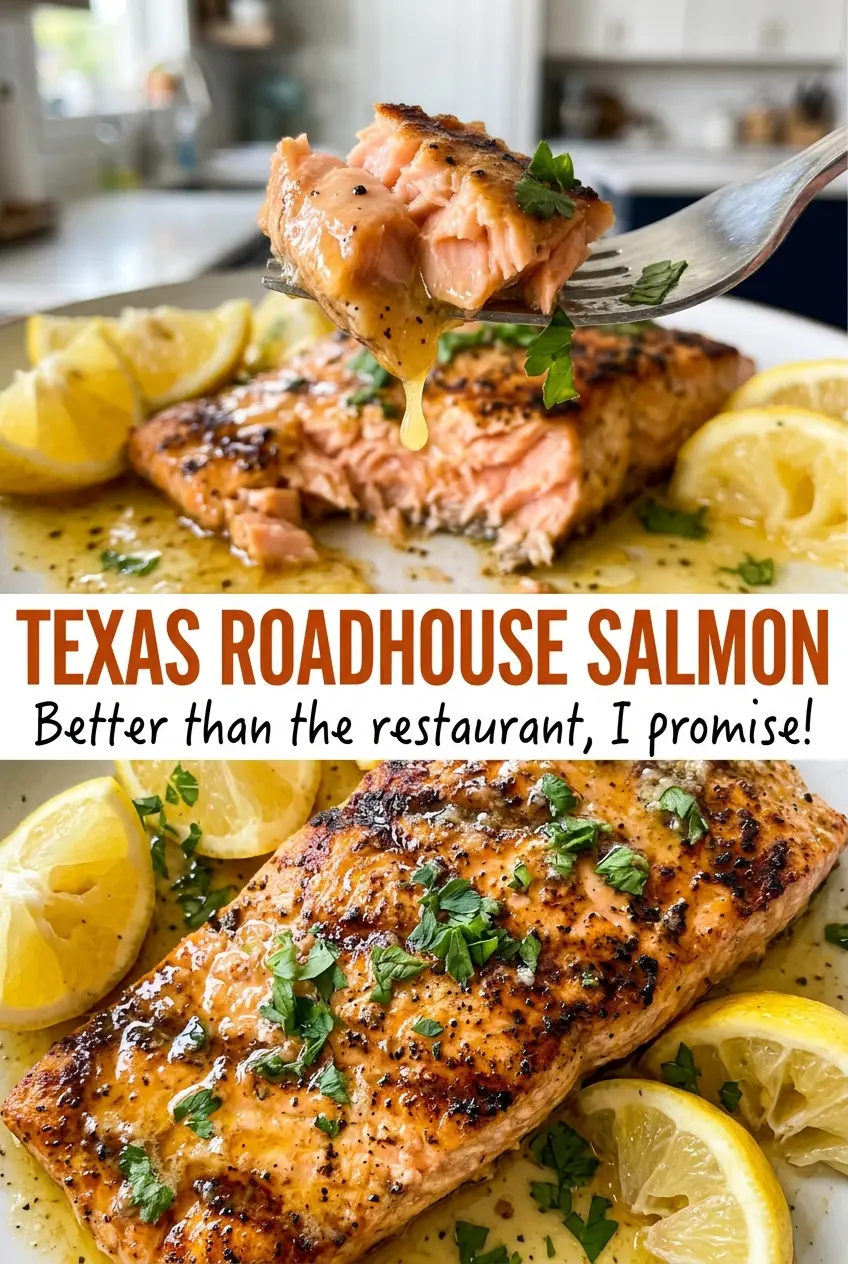
Save this Texas Roadhouse Salmon for its peppery grilled fillets and buttery lemon-parsley finish.
Why the Lemon Butter Goes on After the Grill, Not Before
The lemon pepper seasoning and lemon butter bring citrus in two different ways. The seasoning goes directly on the salmon before cooking, where it creates a peppery, savory layer on the exposed flesh. The butter waits until the fish is off the heat, so its lemon juice and parsley stay part of a soft, bright topping rather than cooking on the grill.
That finish matters because lemon juice can taste sharper after it cooks, and butter can brown or drip if it’s brushed over fish on hot grates. Spoon the lemon butter over the salmon once it’s on the plates. It settles over the warm surface and gives each bite a little of the seasoned fish and a little of the fresh, buttery topping.
The seasoning itself varies by brand, especially in how salty or peppery it tastes. I keep the amount even across the flesh side so the flavor isn’t concentrated in one bite. If your lemon pepper is especially salty, start with a lighter sprinkle next time rather than trying to correct the finished fish.
What Matters Most in the Salmon and the Lemon Butter
- Skin-on salmon — The skin gives you a sturdy side to set against the grill, and the recipe is built around fillets about an inch thick. Choose pieces of similar thickness so they finish at roughly the same time. Skinless fillets are less forgiving directly on the grates, so I’d stick with skin-on for this method.
- Olive oil — It coats the salmon before seasoning and helps oil the hot grates just before cooking. A basic olive oil is fine here; there’s no need for a particularly expensive bottle. Keep the two uses separate so the oil intended for the grates is ready when the grill is hot.
- Lemon pepper seasoning — This provides both the peppery bite and the citrus seasoning in one step. Since blends differ in saltiness, taste the brand you have before deciding whether to use a lighter hand. There isn’t a direct substitute among the other ingredients that gives the same pepper-and-lemon balance.
- Unsalted butter — Butter gives the topping its rounded, rich texture. Unsalted butter lets the lemon pepper remain the main seasoning, while a less expensive butter works well because it’s melted into the finish.
- Fresh lemon juice — It brightens the butter without needing a separate sauce. Freshly squeezed juice has a livelier citrus aroma; bottled lemon juice can stand in when needed, though the finish won’t taste quite as fresh.
- Fresh parsley — Chopped parsley adds a clean herbal note and color to the lemon butter. Use leaves that look fresh and green, and chop them shortly before stirring them in so they don’t turn limp while waiting.
Grilling the Salmon Without Losing the Tender Center
Bring the Grill to Medium-High Heat
Clean the grill grates, then heat a gas or charcoal grill to medium-high, about 400–450°F. Starting with clean grates helps the salmon release more cleanly when it’s time to transfer it. Get the grill hot before adding the fish; the grates should be ready for the oil and fillets rather than still warming up.
Dry and Season the Flesh Side
Pat the salmon dry, then rub the fillets with the first portion of olive oil. Sprinkle the lemon pepper evenly over the flesh side, keeping the skin side plain. Drying the surface first helps the oil coat the fish instead of slipping over moisture, and even seasoning keeps the pepper from collecting in one spot.
Stir Together the Lemon Butter
Melt the butter in a small microwave-safe bowl, then stir in the lemon juice and chopped parsley. The butter should be fully melted so the juice and herbs can be mixed through it. If it sits while you finish preparing the grill, give it another stir before serving so the parsley is distributed through the topping.
Grill Skin-Side Down and Finish with Butter
Brush the hot grill grates with the remaining olive oil, then place the salmon skin-side down and close the lid. Grill for 8–12 minutes, until the thickest part reaches 145°F; use that thickest section to judge doneness rather than the thinner tail end. Transfer the fillets to plates and spoon the lemon butter over them. The fish should lift as a whole piece, with its seasoned top still intact.
Easy Changes for a Different Finish
Make the Lemon Topping Dairy-Free
Replace the melted butter with olive oil, then stir in the lemon juice and parsley. The topping will be lighter and less creamy than the butter version, but it still carries the citrus and herbs over the grilled salmon.
Dial Back the Pepper
Use a lighter, even sprinkle of lemon pepper on the flesh side if your seasoning blend is assertive or salty. You’ll get a gentler pepper finish, while the lemon butter still brings citrus to the plate.
Leave Out the Parsley
Skip the chopped parsley in the lemon butter for a simpler, more direct citrus-and-butter finish. The topping loses its herbal note and green flecks, but the salmon and lemon pepper still carry the dish.
Storage and Reheating
- Refrigerator: Store leftover salmon in a covered airtight container for up to 3 days. The fish will be firmer after chilling, and the butter topping will set.
- Freezer: Cooked salmon can be frozen, though it will be less tender after thawing. Wrap portions tightly and freeze for up to 2 months; thaw overnight in the refrigerator.
- Reheating: Reheat covered in the microwave at reduced power in short bursts, until the center reaches 165°F. High power or long reheating can dry the fish before the middle is hot.
Questions I Get Asked About Grilling This Salmon
Texas Roadhouse Salmon
Ingredients
Equipment
Method
- Clean the grill grates.
- Heat a gas or charcoal grill to medium-high, about 400–450°F.
- Pat the salmon dry and rub the fillets with 2 teaspoons of the olive oil.
- Sprinkle the flesh side evenly with the lemon pepper seasoning.
- Melt the butter in a small microwave-safe bowl.
- Stir in the lemon juice and parsley.
- Brush the hot grill grates with the remaining 1 teaspoon olive oil.
- Place the salmon skin-side down on the grates, close the lid, and grill for 8–12 minutes, until the thickest part reaches 145°F.
- Transfer the salmon to plates and spoon the lemon butter over the fillets.


