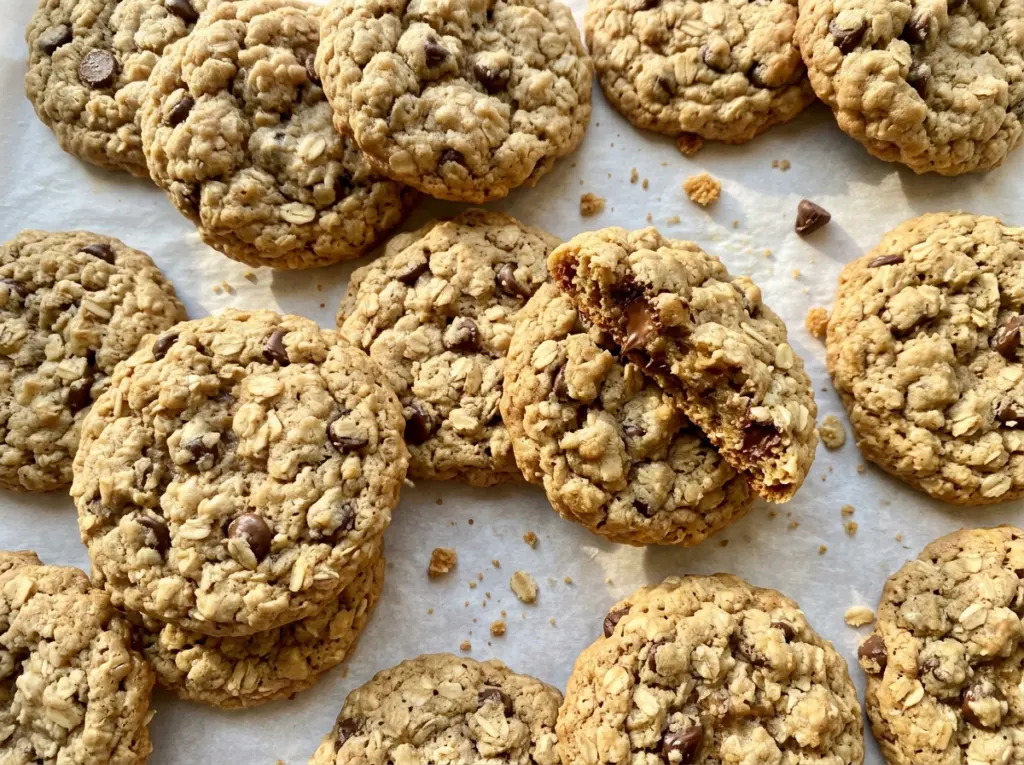
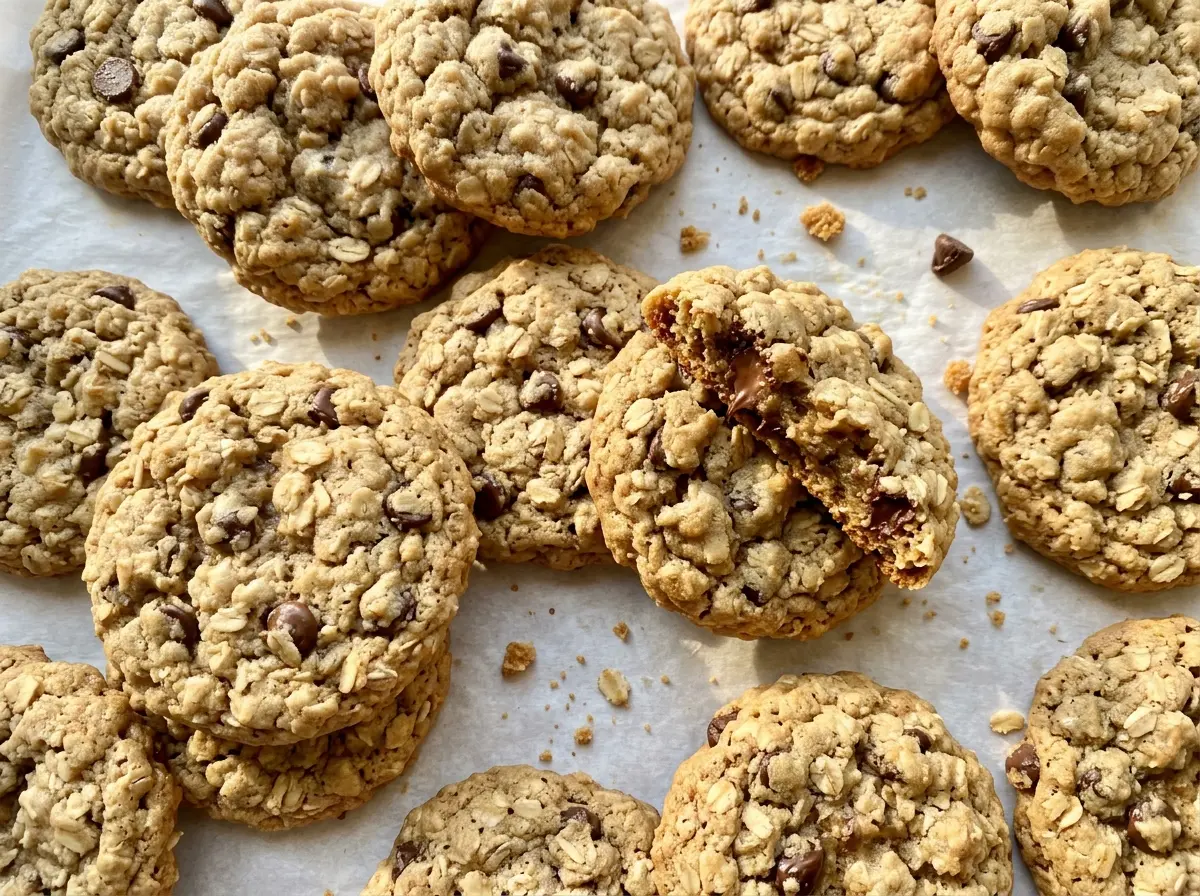
The first tray tells you what these cookies are going to be: the edges turn lightly golden while the centers still look a little too soft to trust. That’s the moment to take them out. They keep setting on the hot baking sheet, and waiting for the middle to look firm can leave you with a drier cookie than you wanted.
I like how the oats give each bite a little more to chew than a plain chocolate chip cookie, while the brown sugar keeps the centers tender. The dough is easy to mix, but chilling it for 30 minutes makes it less sticky to scoop and helps the cookies hold their shape in the oven.
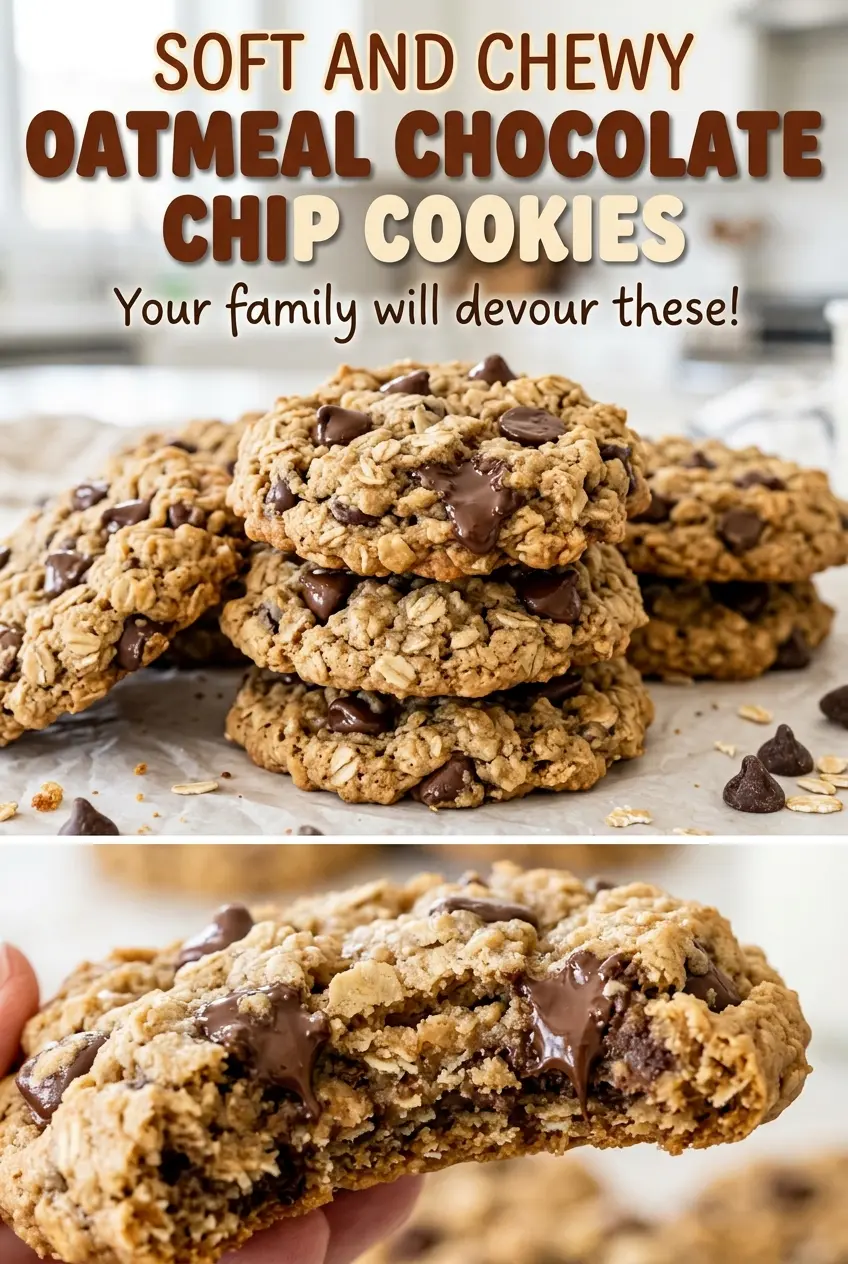
These soft and chewy oatmeal chocolate chip cookies have crisp, lightly browned edges, tender middles, and chocolate in every bite. Let them rest on the pan before moving them, and they’ll finish cooling without falling apart.
Kitchen Note
Give the dough the full 30 minutes in the refrigerator before scooping. It firms up enough to portion neatly, so you’re not wrestling sticky dough onto the pan.
Save these soft and chewy oatmeal chocolate chip cookies for a bake when you want tender centers, golden edges, and plenty of chocolate.
Why These Oatmeal Cookies Should Look Soft When They Leave the Oven
It’s easy to wait for the centers to look fully baked, especially when the tops still seem pale. Resist that extra minute or two. The edges are your better guide: once they’re lightly golden and set, the cookies have had the oven time they need, even if the middle still looks soft.
That soft center isn’t raw dough; it’s a cue to take the pan out and let the cookies finish on its residual heat. They rest on the baking sheet for five minutes before moving to a wire rack, so the middle firms as the edges settle. If the centers already look dry and firm in the oven, they’re likely to finish with less chew after cooling.
Ovens and pans can vary slightly, which is why the bake window is 10 to 12 minutes rather than a single exact minute. Start checking at the earlier end and look for the contrast: lightly golden edges with visibly soft centers. Once you’ve seen that cue, it’s easier to trust the timing instead of waiting for every part of the cookie to look the same.
What the Oats, Brown Sugar, and Butter Bring to the Dough
- Old-fashioned rolled oats — These give the cookies their distinct, substantial chew. Quick oats break down more readily and make the texture less defined, so rolled oats are the better choice here. No special brand is needed; choose oats that are fresh and not stale or musty.
- Light brown sugar — Its moisture and molasses notes help the centers stay tender and add a mellow caramel flavor. Dark brown sugar works in its place if that’s what you have; expect a deeper molasses taste and slightly darker cookies. Granulated sugar balances it with a cleaner sweetness.
- Unsalted butter — Softened butter creams smoothly with the sugars and gives the dough its rich base. It should yield to a fingertip without looking melted or greasy. Unsalted butter also lets the measured salt stay in control, so it’s the best option for matching the intended balance.
- Room-temperature eggs — They blend into the creamed butter and sugar more evenly than cold eggs, helping the dough come together without chilling the butter. Set them out while you gather the other ingredients; there’s no need to warm them in hot water.
- Semisweet chocolate chips — Their bittersweet edge offsets the sweet dough, and chips hold their shape as the cookies bake. A standard bag works well; use dark chocolate chips for a less-sweet bite or milk chocolate chips for a sweeter one.
From Creamed Butter to Cookies That Hold Their Shape
Whisk the Dry Ingredients First
Heat the oven to 350°F and line an 18×13-inch rimmed baking sheet with parchment paper. Whisk the flour, baking soda, and salt together in a medium bowl so the leavener is distributed before it reaches the butter mixture. Don’t leave a pocket of baking soda tucked into the flour; an even mix helps the cookies bake consistently.
Cream the Sugars, Then Add the Eggs
Beat the softened butter with both sugars in a large bowl until creamy, about two minutes. The mixture should look cohesive rather than like separate bits of butter and sugar. Beat in the eggs one at a time, then mix in the vanilla. Adding the eggs individually gives each one a chance to blend into the creamed mixture instead of leaving it slick or uneven.
Fold in the Oats and Chocolate
Add the flour mixture and mix just until it’s combined; stop once you no longer see dry flour. Stir in the oats and chocolate chips until they’re spread through the dough. Mixing beyond that point can make the cookies tougher, so use a light hand once the flour is in. Cover the bowl and chill the dough for 30 minutes.
Scoop, Bake, and Let the Pan Do Its Part
Scoop the dough into 2-tablespoon portions and arrange 12 on the lined sheet, about 2 inches apart. Bake for 10 to 12 minutes, watching for lightly golden edges and soft-looking centers. Let the cookies rest on the baking sheet for five minutes, then move them to a wire rack to cool. The sheet needs to cool completely before you arrange the next batch; dough placed on a warm pan can start softening before it reaches the oven.
Easy Changes for a Different Batch
Use Dark Chocolate for a Less-Sweet Cookie
Swap the semisweet chips for dark chocolate chips, keeping the same amount. The cookies will have a more pronounced cocoa bitterness against the brown sugar, without changing how you mix or bake the dough.
Make the Batch Gluten-Free
Replace the all-purpose flour with a cup-for-cup gluten-free baking blend that includes a binder, and use certified gluten-free rolled oats. The cookies may be a little more delicate, so let them complete their five-minute rest on the baking sheet before transferring them.
Trade Light Brown Sugar for Dark
Use dark brown sugar in place of the light brown sugar for a stronger molasses note and a deeper-colored cookie. The dough mixes the same way, though the flavor will be more caramel-like and less delicate.
Storage and Reheating
- Room temperature: Store fully cooled cookies in an airtight container for up to 5 days. The edges soften a little over time, while the centers stay chewy.
- Freezer: Freeze baked, cooled cookies in an airtight freezer-safe container for up to 3 months. Thaw them at room temperature before serving.
- Reheating: Warm one cookie in the microwave for about 8 seconds if you want the chocolate soft again. Longer heating can make the cookie hot and overly soft, so use short bursts.
Questions That Come Up When Baking Oatmeal Chocolate Chip Cookies
Soft and Chewy Oatmeal Chocolate Chip Cookies
Ingredients
Equipment
Method
- Heat the oven to 350°F.
- Line one 18x13-inch rimmed baking sheet with parchment paper.
- Whisk the flour, baking soda, and salt together in a medium bowl.
- Beat the butter, brown sugar, and granulated sugar in a large bowl until creamy, about 2 minutes.
- Beat in the eggs one at a time.
- Mix in the vanilla extract.
- Add the flour mixture and mix just until combined.
- Stir in the oats and chocolate chips.
- Cover and chill the dough for 30 minutes.
- Scoop the dough into 2-tablespoon portions.
- Arrange 12 portions about 2 inches apart on the baking sheet.
- Bake for 10–12 minutes, until the edges are lightly golden and the centers still look soft.
- Cool the baking sheet completely between batches.
- Let the cookies rest on the baking sheet for 5 minutes.
- Transfer the cookies to a wire rack to cool.


