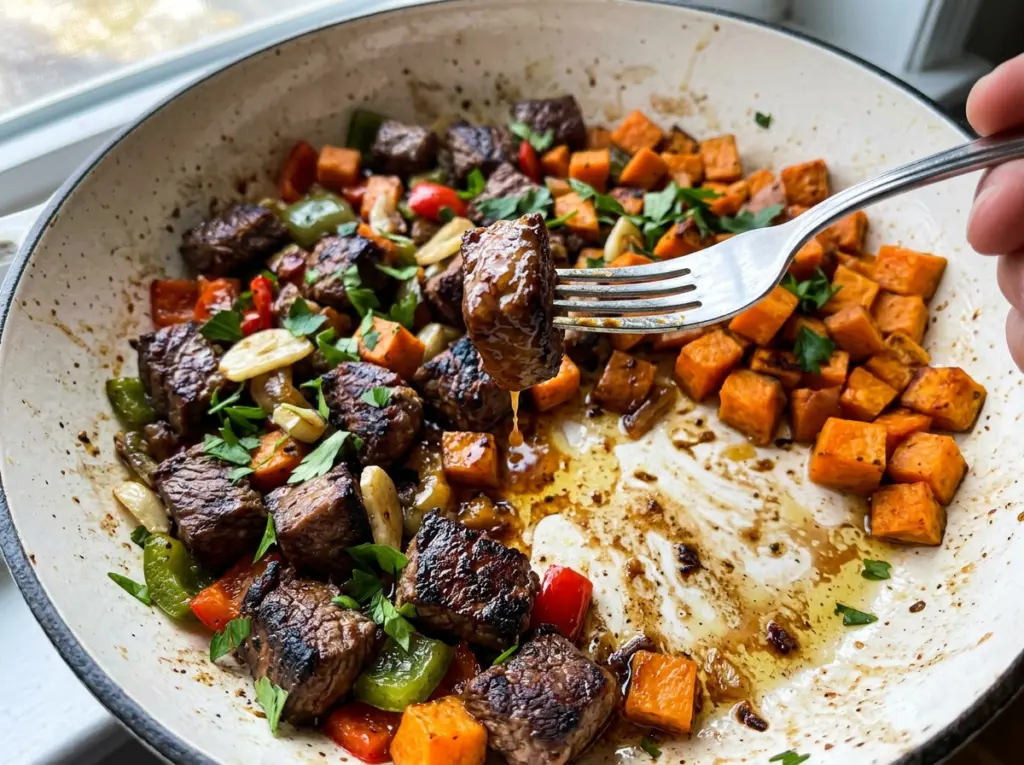
When the lid comes off the skillet, the sweet potatoes should be nearly tender but not browned yet; that’s when this dinner shifts from steaming to searing. I make these Whole30 steak bites by cooking the potatoes, peppers, and sirloin in turns, then bringing everything back together while it’s hot. That order gives each ingredient room to cook instead of crowding the pan.
The sweet potatoes start with a little water under the lid, which softens their centers before they brown. The steak gets a hotter, less crowded pan of its own, so the pieces have a chance to develop color. A quick toss at the end pulls the juices back into the skillet, along with the warm peppers and potatoes. You get tender cubes, browned edges, and a savory garlic-and-pepper finish.
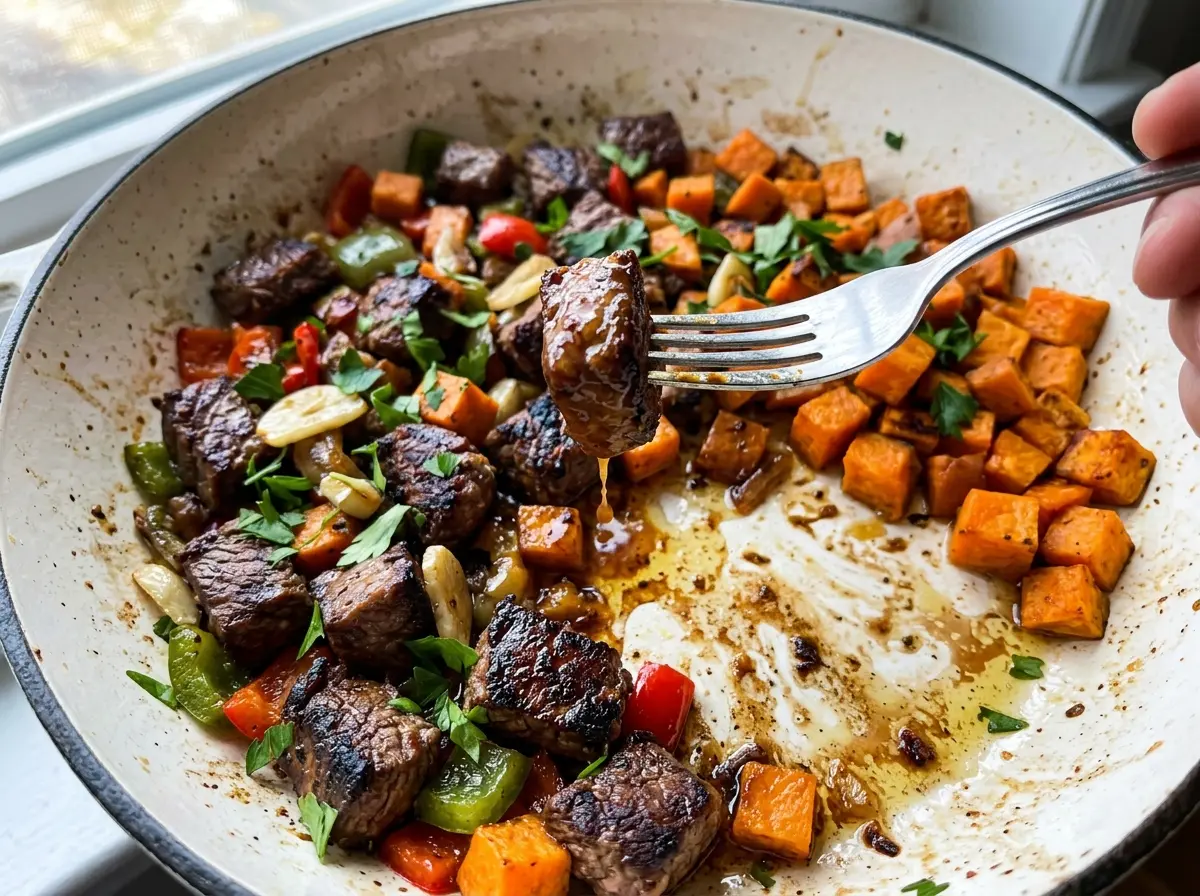
Kitchen Note
I set the divided salt beside the ingredients before I start. Since the potatoes, peppers, and steak are seasoned at different points, that little bit of setup keeps me from using too much on the first ingredient and leaving the rest flat.
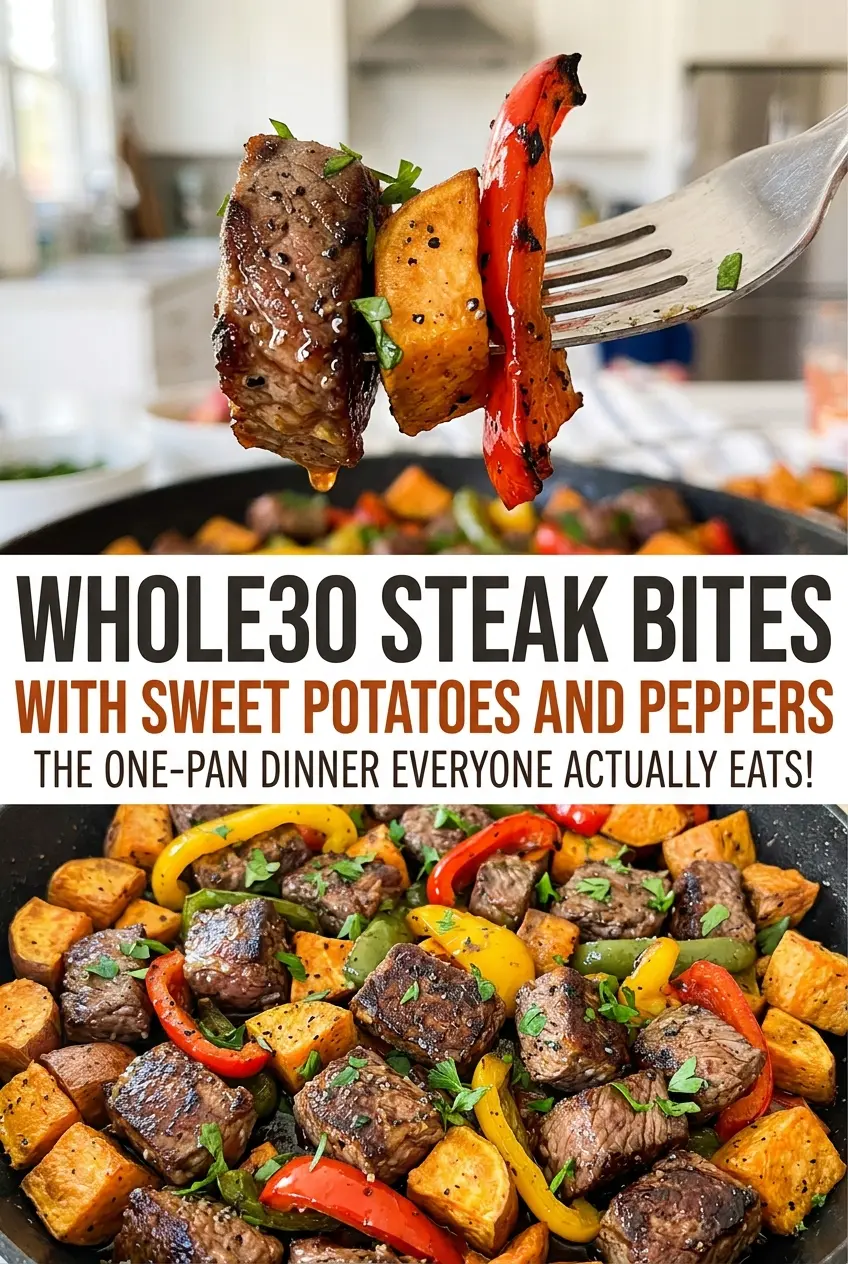
Save these Whole30 steak bites for a weeknight skillet dinner with browned sweet potatoes, tender peppers, and garlicky sirloin.
Why the Sweet Potatoes Cook Before the Steak
These ingredients need different heat and different amounts of time. Sweet potatoes take longer to soften than steak bites, and their centers need a head start before the outside can brown. Covering them with a small amount of water lets them cook through without keeping the skillet crowded for the entire meal. Once the water cooks away, the potatoes can pick up color in the same pan.
Peppers need less time than potatoes, while sirloin benefits from a hot pan and open space around each piece. Cooking the vegetables first lets you move them out of the way instead of trying to stir them around a skillet full of steak. It also means the steak can cook in two uncrowded batches, rather than steaming against a pile of vegetables. That little bit of sequencing is what gives the finished skillet a mix of browned edges and tender centers instead of one uniformly soft, wet jumble.
There’s no need to wash the skillet between stages. The potatoes and peppers leave behind a little oil and seasoning, and the steak finishes with all of it in the pan. Keep the ingredients on a plate while the steak cooks; they’ll go back in for just long enough to heat through.
What the Sirloin, Sweet Potatoes, and Peppers Each Bring
- Sweet potatoes — Their natural sweetness balances the peppery steak, and evenly cut 1/2-inch cubes soften at a similar pace. Choose firm potatoes without soft spots; peeling and cutting them into even cubes matters more here than finding a particular variety. Cauliflower is a lower-carb alternative, but it gives the skillet a less sweet flavor and a softer, less substantial bite.
- Avocado oil — It handles the high heat used for the steak without adding a strong flavor. A neutral oil labeled for high-heat cooking can stand in one-for-one, though the taste may shift slightly. There’s no need to buy a premium bottle for this skillet.
- Bell peppers — They add sweetness and a tender bite without needing much time in the pan. Any color works; green peppers taste sharper, while red, orange, and yellow ones lean sweeter. Remove the seeds and cut the pieces evenly so they soften together.
- Sirloin steak — Sirloin has enough tenderness for quick skillet cooking and holds its shape in 1-inch cubes. Look for a steak with an even thickness so it’s easier to cut into similar pieces. A different tender steak cut can work, but the timing may shift with its thickness and shape.
- Garlic powder and black pepper — Both season the steak evenly without adding moisture to the pan. Granulated garlic can replace garlic powder in the same amount, though its coarser texture is more noticeable. Freshly ground black pepper has a brighter aroma, but ordinary ground pepper works well here.
The Order That Keeps the Potatoes Tender and the Steak Browned
Soften the Sweet Potatoes Under the Lid
Heat a 12-inch skillet with a lid over medium heat. Add 1 tablespoon of avocado oil, the sweet potatoes, 1/2 teaspoon of kosher salt, and the water, then cover and cook for 8–10 minutes, stirring once. The cubes should be nearly tender when pierced, but they don’t need to be browned yet. If they’re still quite firm, give them a little more attention during the uncovered stage rather than rushing the next ingredients into the pan.
Let the Water Cook Away
Uncover the skillet and cook the potatoes for 3–5 minutes, stirring occasionally. Wait until the water has evaporated and the cubes are tender with lightly browned spots before moving them to a plate. If there’s still water in the pan, the potatoes will soften but won’t get those browned edges. Stir gently so the cubes keep their shape.
Soften the Peppers Separately
Add 1 teaspoon of avocado oil and the bell peppers to the skillet, season with 1/4 teaspoon of salt, and cook over medium-high heat for 4–5 minutes. Stir occasionally until the peppers have softened but still hold their shape. Transfer them to the plate with the potatoes once they reach that tender stage. Leaving the peppers in the skillet for the steak sear would crowd the pan and make it harder to brown the meat.
Sear the Steak in Two Batches
Season the steak with the remaining 3/4 teaspoon salt, black pepper, and garlic powder. Raise the heat to high and add the remaining avocado oil, then cook the steak in two uncrowded batches for 4–6 minutes per batch, turning occasionally. Brown the pieces on the outside, and check that the largest ones reach 145°F. Transfer each batch to a plate and let the steak rest for 3 minutes.
Bring the Skillet Back Together
Return the sweet potatoes and peppers to the skillet and cook over medium heat for 1–2 minutes, stirring, until hot. Add the steak and any juices that collected on the plate, then toss everything together. Keep the final toss brief; the meat is already cooked, and it only needs to warm through alongside the vegetables. Serve once the steak and vegetables are evenly mixed.
Three Small Changes for a Different Skillet
Make It Lower-Carb With Cauliflower
Replace the sweet potatoes with small cauliflower florets for a more savory, lower-carb skillet. Use the same covered-then-uncovered approach, but check the florets early and uncover once they’re just tender; cauliflower softens faster and can turn mushy if cooked as long as the potatoes. The finished dish loses the sweet contrast and has a lighter, less hearty texture.
Choose Peppers for a Sweeter or Sharper Bite
Use green bell peppers for a more savory, slightly sharper flavor, or choose red, orange, or yellow peppers for a sweeter result. Keep the pieces about the same size and follow the same skillet stage. It’s an easy way to shift the flavor without changing the overall cook.
Scale It Down for Two
Halve every ingredient for a two-serving skillet and keep the same cut sizes and doneness cues. The steak may fit in one uncrowded batch, but spread the pieces out rather than piling them together. The timing should stay close when the ingredient pieces are the same size.
Storage and Reheating
- Refrigerator: Store leftovers in a covered container for 3–4 days. The sweet potatoes soften more as they sit, and the steak won’t be quite as juicy as it is fresh.
- Freezer: Freeze in an airtight container for up to 2–3 months for best quality. The potatoes may turn softer after thawing, but the skillet is still useful for a quick meal.
- Reheating: Warm gently in a skillet over medium-low heat with a small splash of water, stirring until hot throughout. Reheat leftovers to 165°F, and avoid leaving the skillet over high heat; that can toughen the steak before the potatoes warm through.
Questions That Come Up While Cooking Steak Bites
Whole30 Steak Bites with Sweet Potatoes and Peppers
Ingredients
Equipment
Method
- Heat a 12-inch skillet with a lid over medium heat.
- Add 1 tablespoon of the avocado oil, the sweet potatoes, 1/2 teaspoon of the salt, and the water; cover and cook for 8-10 minutes, stirring once, until the potatoes are nearly tender.
- Uncover the skillet and cook the potatoes for 3-5 minutes, stirring occasionally, until the water has evaporated and the potatoes are tender and lightly browned; transfer them to a plate.
- Add 1 teaspoon of the avocado oil and the bell peppers to the skillet, season with 1/4 teaspoon of the salt, and cook over medium-high heat for 4-5 minutes, stirring occasionally, until softened; transfer them to the plate with the potatoes.
- Season the steak with the remaining 3/4 teaspoon salt, the black pepper, and garlic powder; raise the heat to high and add the remaining avocado oil.
- Cook the steak in two uncrowded batches for 4-6 minutes per batch, turning occasionally, until browned and the largest pieces reach 145°F; transfer to a plate.
- Rest the steak for 3 minutes.
- Return the sweet potatoes and peppers to the skillet and cook over medium heat for 1-2 minutes, stirring, until hot; add the steak and any accumulated juices and toss to combine.


