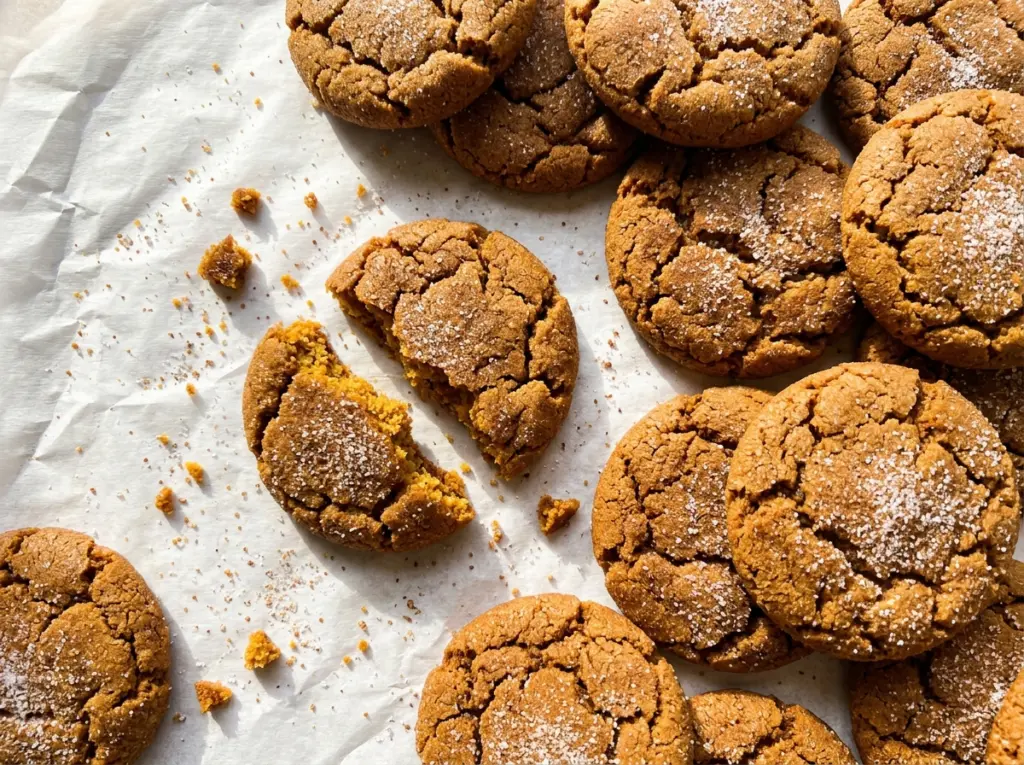
The dough looks softer and stickier than classic molasses-cookie dough when it comes together. That’s the pumpkin at work, and it’s what gives these pumpkin molasses cookies their puffed, tender centers instead of a dry, snappy bite. The warm smell of cinnamon and ginger starts building before the first tray is even in the oven.
I chill the dough before rolling it, then coat each ball in granulated sugar for a delicate, sparkly finish. The cookies bake until the edges are set while the centers still look soft; they finish settling on the baking sheet. That contrast between the lightly crisp outside and the tender middle is what makes this batch worth the extra time in the fridge.
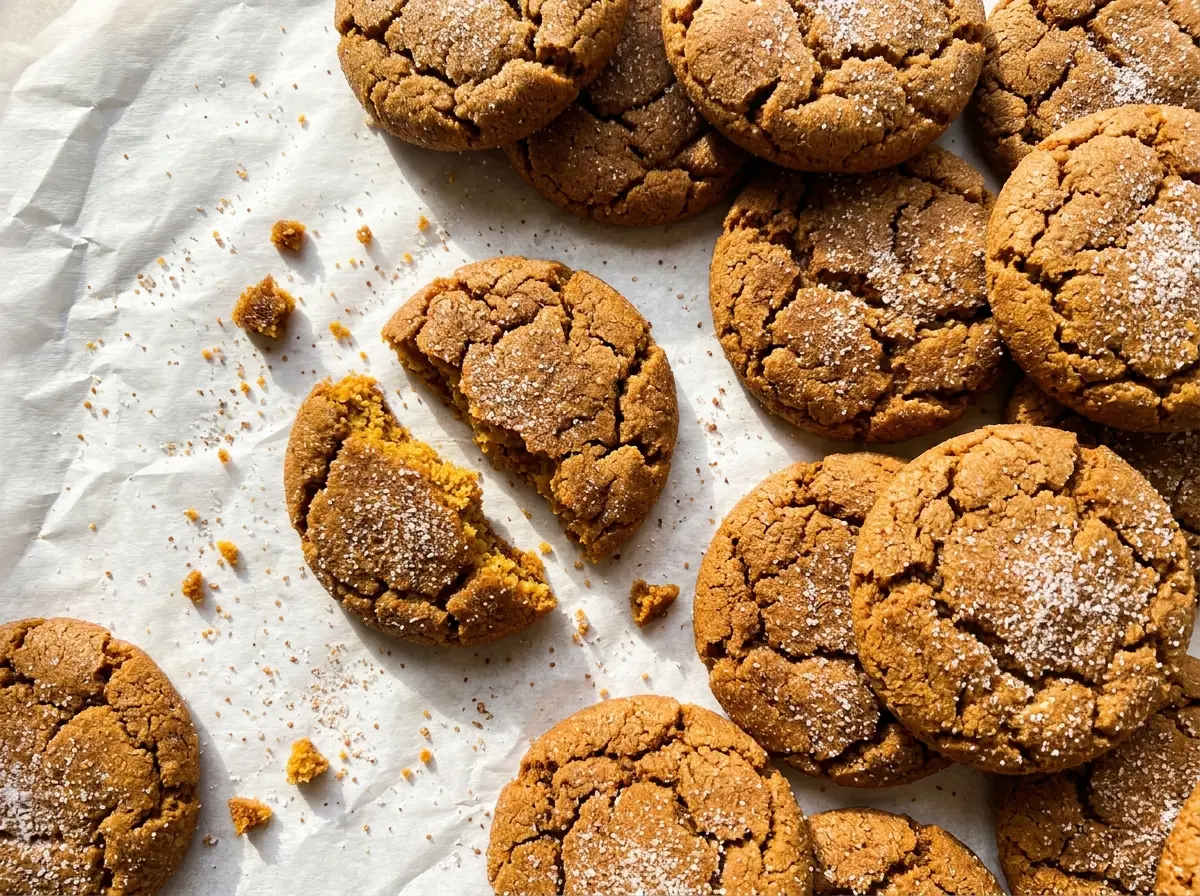
Kitchen Note
Once the flour goes in, stop stirring as soon as you can’t see any dry patches. It’s easy to keep mixing because the dough feels soft, but that extra work can make the cookies less tender.
Save these pumpkin molasses cookies for a soft-centered, sugar-coated batch with warm cinnamon and ginger in every bite.
Why Pumpkin Makes These Molasses Cookies Softer Than the Usual Batch
Pumpkin puree brings more moisture to cookie dough than the butter-and-sugar base in a standard molasses cookie. That moisture is welcome in the finished cookie, where it helps the middle stay soft, but it also means the dough is too loose to roll neatly right after mixing. Chilling gives the butter time to firm up and the dough time to become manageable without adding extra flour.
The 45-minute rest is doing practical work, not just waiting around. When the dough is firm enough to scoop and shape, the balls hold their form as they’re rolled in sugar and arranged on the pans. If the dough still feels sticky after chilling, give it more time in the refrigerator rather than dusting in extra flour; flour added at that point changes the balance and can leave the cookies dry. You’re aiming for dough that’s soft but holds together in a ball.
What Canned Pumpkin, Molasses, and the Egg Yolk Bring to This Dough
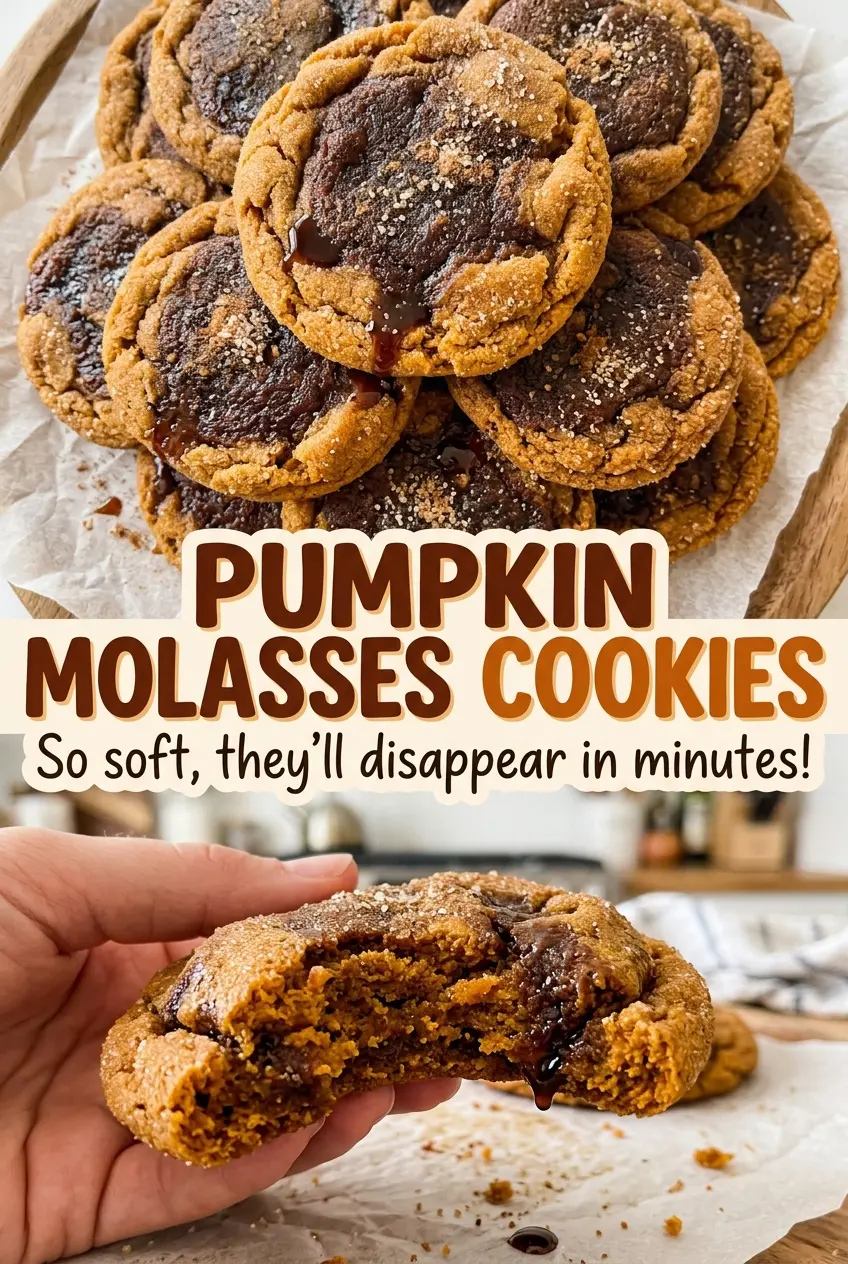
- Canned pumpkin puree — Choose plain puree, not pumpkin pie filling, which comes sweetened and spiced. A standard store brand works well here. Fresh pumpkin puree can vary in moisture, so canned is the more dependable choice for getting this dough to the right consistency.
- Unsulphured molasses — This gives the cookies their rounded, deep sweetness and familiar molasses flavor. Regular unsulphured molasses is the right fit; blackstrap tends to taste much more bitter and assertive. If you have dark unsulphured molasses, it can stand in measure for measure for a stronger, darker flavor.
- Light brown sugar — The molasses already brings a deep note, while brown sugar helps the butter mixture stay moist and creamy. Dark brown sugar can replace it measure for measure if that’s what you have; expect a slightly more pronounced molasses taste. There’s no need to buy a specialty brand.
- Unsalted butter — Softened butter creams smoothly with the sugar and carries the spices through the dough. A regular supermarket butter is fine; the important detail is that it’s softened enough to beat creamy, not melted.
- Egg yolk — The yolk adds richness and helps bind the dough without adding the extra white. Separate a large egg carefully so no white slips into the bowl. A whole egg isn’t an equivalent swap for this dough.
- Flour and spices — All-purpose flour gives the cookies their structure, and spooning it into the measuring cup before leveling helps avoid packing in too much. Fresh ground cinnamon and ginger make the warm spice notes clearer; the cloves add a smaller, sharper background note. Store-brand ground spices are fine if they still smell fragrant when you open the jar.
From Creamed Butter to Soft Centers: The Stages That Shape These Cookies
Build the Pumpkin-Brown Sugar Base
Heat the oven to 350°F and line two baking sheets with parchment paper. Beat the softened butter and packed light brown sugar in a large bowl until creamy, about 2 minutes; the mixture should look cohesive rather than like separate butter and sugar. Beat in the molasses, pumpkin puree, egg yolk, and vanilla until combined. If a little pumpkin streak remains, keep mixing just until the wet ingredients look even.
Bring the Dough Together Gently
Whisk the flour, baking soda, fine salt, cinnamon, ginger, and cloves in a medium bowl so the leavening and spices are spread through the flour. Stir the dry mixture into the pumpkin mixture until no dry flour remains. The finished dough will be soft and a little tacky, not stiff like dough for cutout cookies. Resist the urge to keep stirring once the flour has disappeared.
Chill, Scoop, and Coat
Cover the bowl and chill the dough for 45 minutes, until it’s firm enough to roll. Put the granulated sugar in a small bowl, then scoop the dough into 1 1/2-tablespoon portions. Roll each portion into a ball and turn it in the sugar until coated all over. If a portion gets misshapen while you coat it, roll it gently between your palms again before setting it on the pan.
Bake Until the Edges Set
Arrange 12 dough balls on each prepared sheet, leaving about 2 inches between them. Bake for 11 to 13 minutes, switching the baking sheets between racks halfway through. The edges should look set while the centers remain puffed and soft; don’t wait for the centers to look dry. Let the cookies cool on the baking sheets for 5 minutes, then move them to a wire rack to cool completely.
How to Change the Spice or Make a Dietary Adaptation
A Softer Cinnamon-Ginger Finish
Leave out the ground cloves and keep the cinnamon and ginger unchanged. The cookies will still taste warmly spiced, but the sharper, slightly pungent note from cloves won’t stand out.
A Gluten-Free Batch
Replace the all-purpose flour with a cup-for-cup gluten-free baking blend formulated for cookies, ideally one that includes xanthan gum. The cookies may have a slightly different crumb, so chill until the dough is firm enough to roll before shaping.
A Dairy-Free Version
Use an equal amount of block-style dairy-free butter in place of the unsalted butter. It may make the cookies a little less rich, and spreads vary by brand, so choose a baking stick rather than soft tub margarine. This adaptation still includes egg yolk.
Storage and Reheating
- Refrigerator: Store cooled cookies in an airtight container for up to 5 days. They’ll feel firmer when cold; let them sit at room temperature before serving.
- Freezer: Freeze completely cooled cookies in an airtight container, with parchment between layers, for up to 2 months. Thaw at room temperature.
- Reheating: Warm an individual cookie in the microwave for about 8 seconds if you’d like it slightly warm. Longer heating can dry the edges.
Questions That Come Up With Pumpkin Molasses Cookie Dough
Pumpkin Molasses Cookies
Ingredients
Equipment
Method
- Heat the oven to 350°F.
- Line two baking sheets with parchment paper.
- In a large bowl, beat the softened butter and packed light brown sugar until creamy, about 2 minutes.
- Beat in the molasses, canned pumpkin puree, egg yolk, and vanilla extract until combined.
- In a medium bowl, whisk together the flour, baking soda, fine salt, cinnamon, ginger, and cloves.
- Stir the dry ingredients into the pumpkin mixture just until no dry flour remains.
- Cover and chill the dough for 45 minutes, until firm enough to roll.
- Put the granulated sugar in a small bowl.
- Scoop the dough into 1 1/2-tablespoon portions.
- Roll each portion into a ball and coat it in the granulated sugar.
- Arrange 12 dough balls on each prepared baking sheet, spacing them about 2 inches apart.
- Bake for 11 to 13 minutes, switching the sheets between racks halfway through, until the edges are set and the centers look puffed and soft.
- Cool the cookies on the baking sheets for 5 minutes.
- Transfer the cookies to a wire rack to cool completely.


