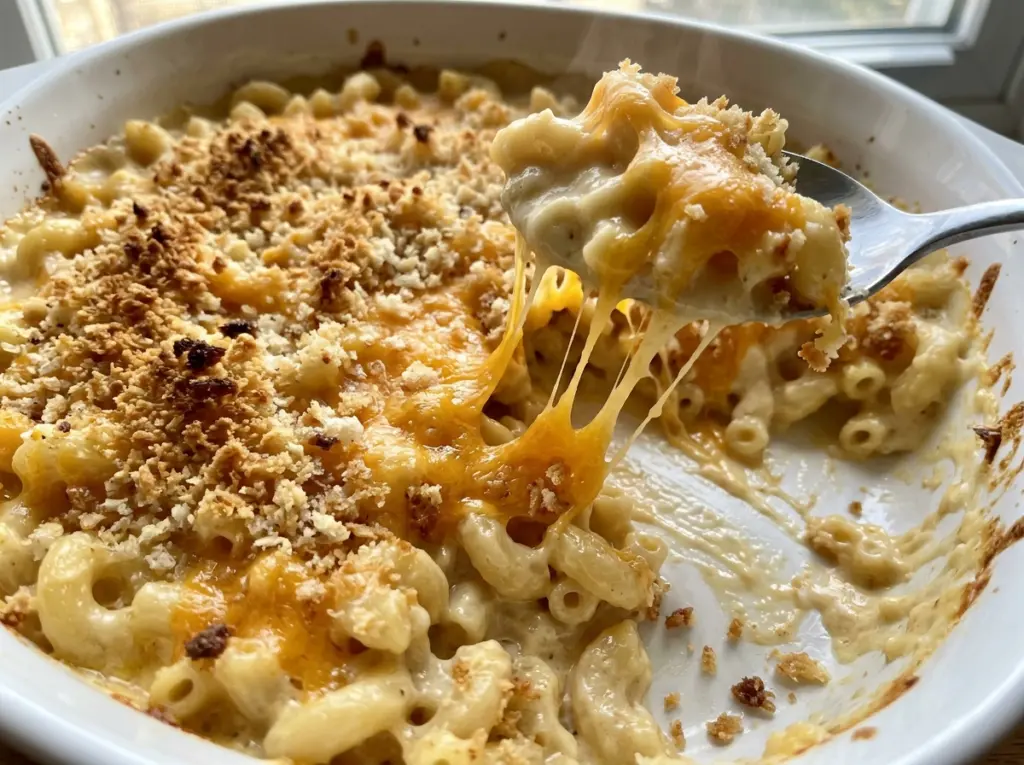
The first sign this baked mac and cheese is ready is the little ring of bubbles around the baking dish. The edges are hot and saucy, while the panko on top has turned golden and crisp. I used to cook the macaroni all the way to al dente before baking, then wonder why it came out softer than I wanted. Now I pull it from the pot early, and it finishes cooking in the cheddar sauce.
The sauce starts with a simple butter-and-flour roux, then whole milk turns it into a smooth base for sharp cheddar. I take the pan off the heat before adding the cheese; that gentle finish keeps the sauce smooth instead of pushing it toward a grainy texture. With a crisp, olive-oil-coated panko topping, every scoop of baked mac and cheese has a creamy center and a golden top.
Kitchen Note
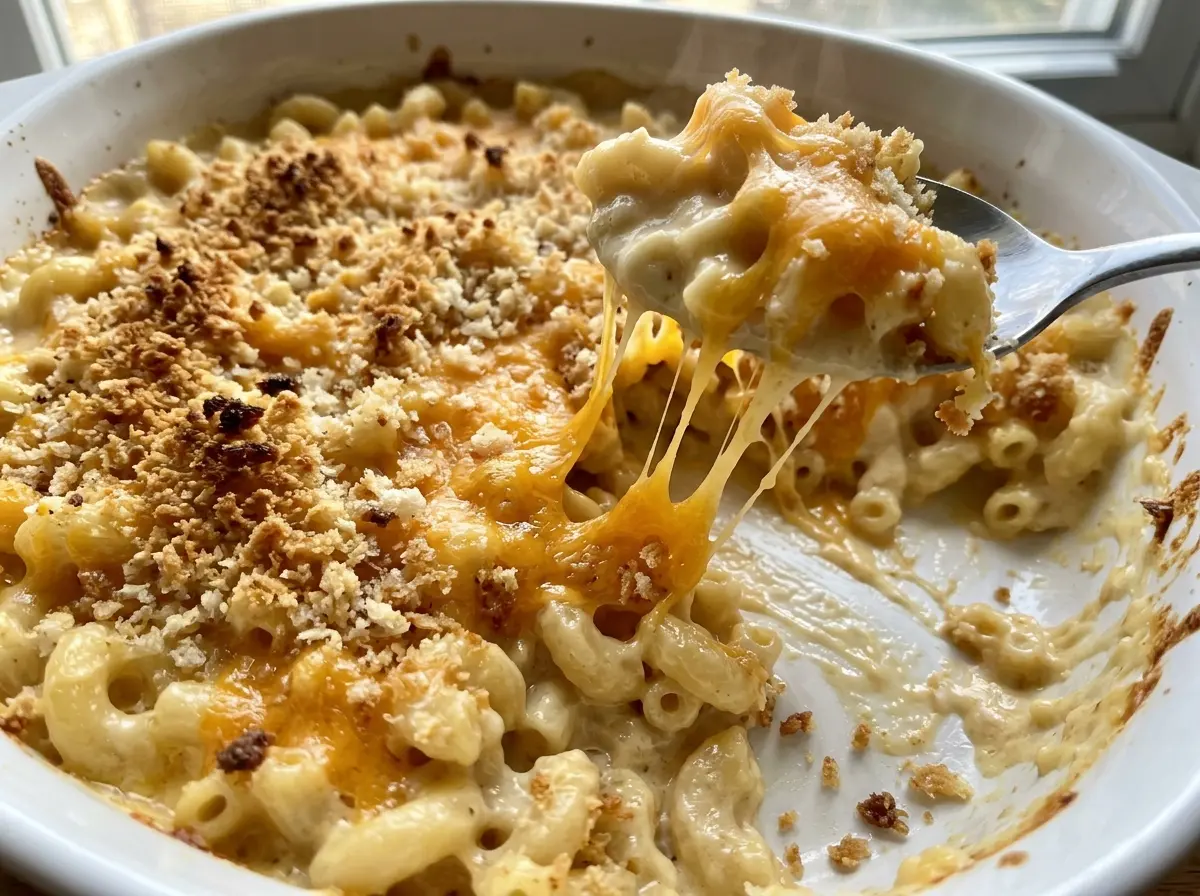
Give the casserole its full 10-minute rest after baking. The bubbling sauce settles during that pause, so it clings to the macaroni instead of running across the plate.
Save this baked mac and cheese for the nights you want creamy cheddar pasta under a golden, crunchy panko topping.
Why the Macaroni Needs to Go Into the Oven a Little Underdone
Macaroni that tastes perfectly tender straight from the pot has already used up most of its cooking time. Once it’s stirred into hot cheese sauce and baked, it softens more; starting at full tenderness leaves little room for that second round of heat. Cooking the elbows until they’re two minutes shy of the package’s al dente timing gives them a head start without letting them turn mushy in the dish.
That brief undercook also helps the pasta and sauce finish together. The macaroni absorbs some of the sauce as the casserole bakes, so it’s important not to begin with pasta that’s already soft. Drain it promptly, then stir it into the cheese sauce while both are ready to move into the baking dish. You’re aiming for pasta that still has a slight firmness at the center, not crunchy noodles. It will finish in the oven as the edges bubble and the topping browns.
Why Whole Milk, Sharp Cheddar, and Panko Matter Here

- Elbow macaroni — Its curves catch the cheese sauce, so each forkful gets pasta and sauce together. Another short pasta shape can work, but choose one that’s sturdy enough to hold up through boiling and baking.
- Whole milk — It gives the roux a rich, creamy base. Lower-fat milk can make the sauce less lush, so whole milk is the better choice when you want the texture this casserole is built around.
- Sharp cheddar — Sharpness keeps the cheese flavor noticeable alongside the pasta and creamy sauce. A block you shred yourself usually melts more evenly than pre-shredded cheese, though pre-shredded cheddar is convenient and will still work.
- All-purpose flour and butter — Together they form the roux that thickens the milk. Whisk the flour into fully melted butter before adding milk; dry pockets of flour are harder to smooth out once liquid is in the pan.
- Dry mustard — It adds a subtle savory edge that helps the cheddar taste more rounded without making the casserole taste strongly of mustard. Keep it in if you have it; leaving it out makes the cheese flavor a little less complex.
- Panko and olive oil — Panko gives the top a lighter, crisper crunch than fine breadcrumbs, while the oil helps the crumbs toast in the oven. Use panko for the texture contrast that sets this topping apart.
Building the Cheese Sauce Before the Pasta Goes In
Cook the elbows just shy of al dente
Bring a large pot of water to a boil and season it with the measured tablespoon of kosher salt. Cook the elbows until they’re two minutes short of the package’s al dente time, then drain them. Don’t leave the cooked pasta sitting in the water; draining it promptly keeps it from softening further before it reaches the oven.
Thicken the milk with a smooth roux
Melt the butter in a large saucepan over medium heat, whisk in the flour, and cook the mixture for one minute. Add the whole milk gradually while whisking, then keep whisking often as the sauce cooks. After five to seven minutes, it should be thick enough to coat the back of a spoon. If you see floury lumps, steady whisking while the sauce cooks helps smooth them out.
Melt the cheddar off the heat
Once the sauce has thickened, take the saucepan off the burner before adding the cheddar, remaining salt, dry mustard, and black pepper. Whisk until the cheese has melted and the sauce looks smooth. Adding the cheese after removing the pan from the heat keeps the sauce from taking on more direct heat than it needs. Stir in the drained macaroni until the elbows are coated, then transfer everything to the greased 9×13-inch baking dish.
Top and bake until the edges bubble
In a bowl, combine the remaining cheddar with the panko and olive oil, then scatter the mixture evenly over the macaroni. Bake at 350°F for 20 to 25 minutes, watching for a golden top and bubbling sauce around the edges. If the crumbs are golden and the edges are bubbling, take the dish out and let it rest for 10 minutes before serving.
Two Easy Ways to Adapt This Cheddar Bake
Make it gluten-free
Use gluten-free elbow macaroni, a gluten-free all-purpose flour blend in place of the regular flour, and gluten-free panko. Keep each replacement at the same amount as the ingredient it replaces, and cook the pasta according to its package timing, still pulling it two minutes before al dente. The sauce and topping keep the same structure, though gluten-free pasta can have a slightly different bite.
Use medium cheddar for a gentler cheese flavor
Swap the sharp cheddar for the same amount of medium cheddar in both the sauce and topping. The casserole will taste milder and less tangy, while keeping the same creamy center and crunchy top. Use the same cheese in both places for a balanced flavor from the first bite to the last.
Storage and Reheating
- Refrigerator: Refrigerate leftovers within 2 hours and keep them covered for 3 to 4 days. The panko topping softens as it sits.
- Freezer: Freeze cooled portions in airtight containers for up to 2 months for best quality. The pasta may be softer and the topping less crisp after thawing.
- Reheating: Reheat individual portions in the microwave in short bursts, stirring between intervals, until steaming hot throughout. A long, uninterrupted burst can dry the edges before the middle is hot.
Questions That Come Up When Baking Mac and Cheese
Baked Mac and Cheese
Ingredients
Equipment
Method
- Heat the oven to 350°F.
- Grease a 9x13-inch baking dish.
- Cook the macaroni in a large pot of boiling water seasoned with 1 tablespoon of the salt until 2 minutes shy of the package directions for al dente.
- Drain the macaroni.
- While the macaroni cooks, melt the butter in a large saucepan over medium heat.
- Whisk in the flour and cook for 1 minute.
- Gradually whisk in the milk and cook, whisking often, until the sauce thickens enough to coat the back of a spoon, 5 to 7 minutes.
- Remove the saucepan from the heat.
- Whisk in the 3 cups of cheddar, the remaining 1/2 teaspoon salt, the dry mustard, and the black pepper until smooth.
- Stir the drained macaroni into the sauce.
- Transfer the mixture to the prepared baking dish.
- Combine the remaining 1 cup cheddar, the panko, and the olive oil in a bowl.
- Scatter the mixture evenly over the macaroni.
- Bake until the topping is golden and the sauce bubbles around the edges, 20 to 25 minutes.
- Let rest for 10 minutes before serving.


