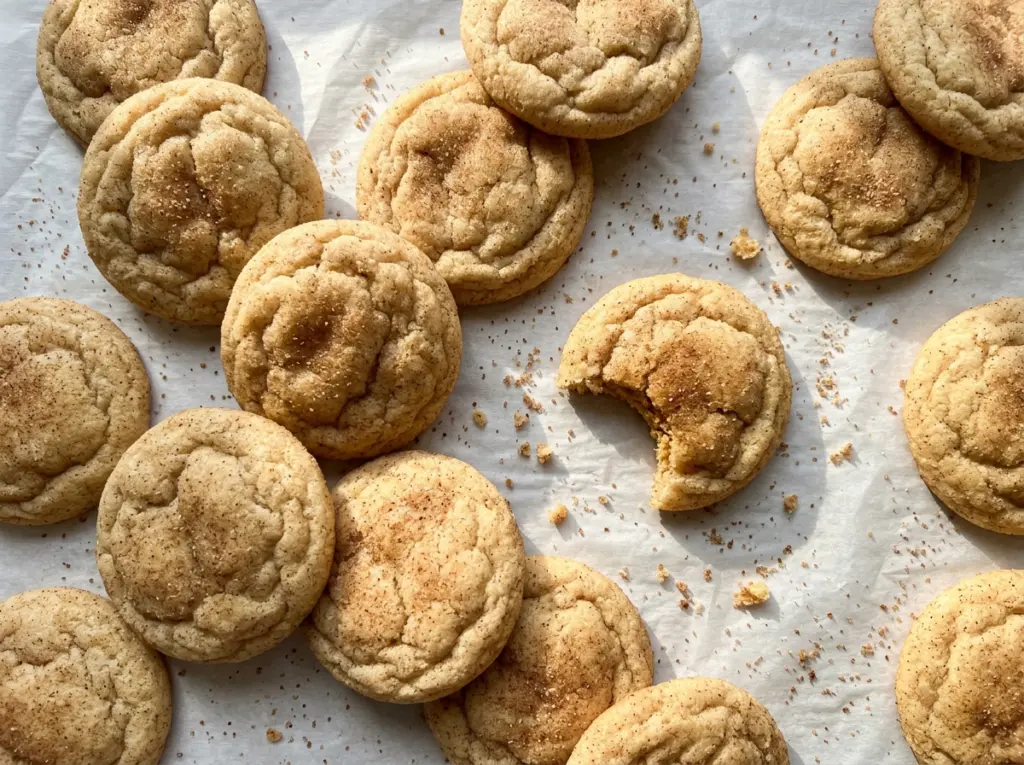
The cinnamon-sugar coating starts to crack as the cookies spread, and the kitchen smells like maple before the first sheet is even done. I wanted Maple Snickerdoodles with a clear maple taste, not just a hint hiding behind the cinnamon. Using pure maple syrup along with maple extract gives the dough both real maple flavor and a stronger maple note.
There’s a little more moisture in this dough than in a basic snickerdoodle, so chilling matters. After 30 to 45 minutes in the refrigerator, it’s firm enough to roll without sticking everywhere, and the cookies bake up with set edges and soft-looking centers. A quick turn through cinnamon sugar gives each one its familiar crackly top and warm, sweet finish.
Kitchen Note
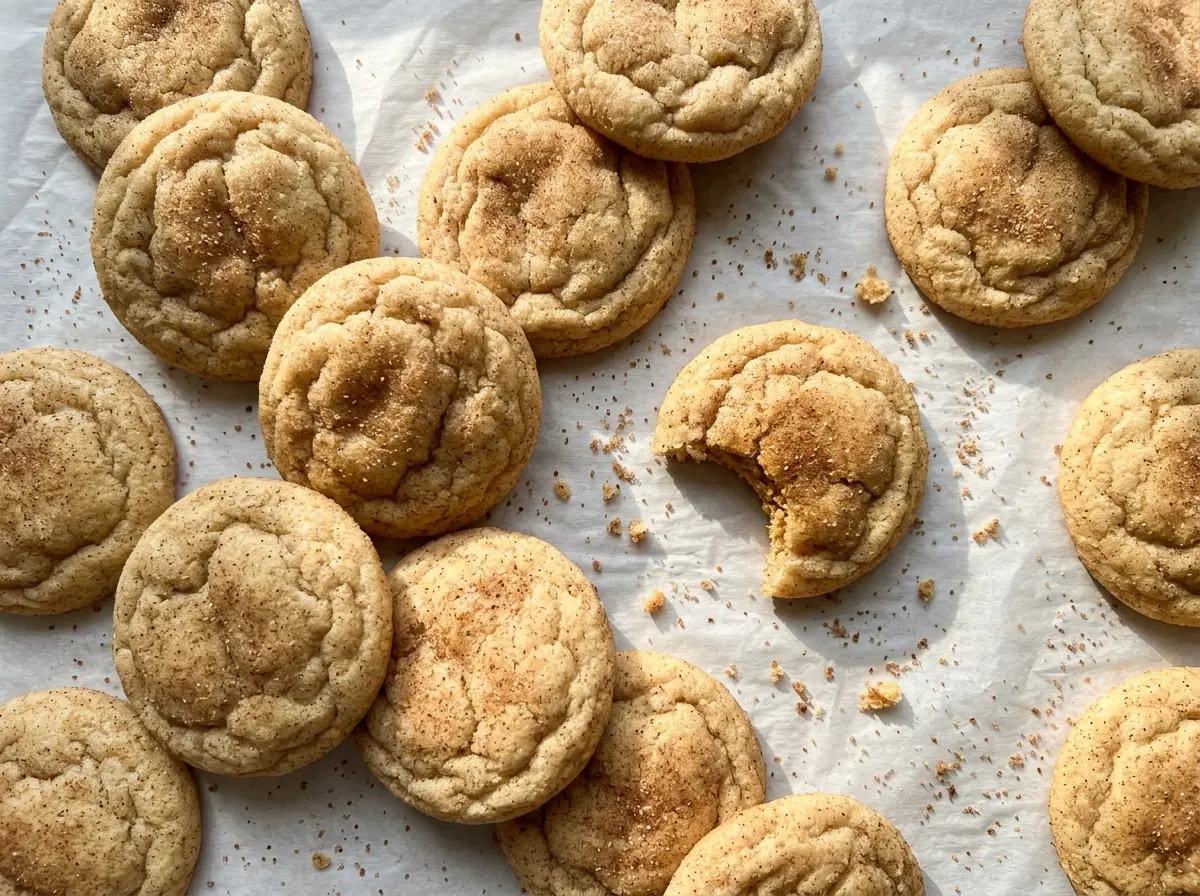
Let the cookies sit on the baking sheet for the full five minutes before moving them. They’re delicate while hot, and that short rest lets the bottoms firm up enough to transfer without breaking.
Save these maple snickerdoodles for a bake with soft centers, cinnamon-sugar cracks, and a warm maple note.
Why Chilling Matters More in Maple Snickerdoodles
Maple syrup brings genuine maple flavor, but it also adds moisture to cookie dough. Combined with softened butter, that can leave the dough too soft to shape neatly right after mixing. Refrigerating it gives the butter time to firm up, so the portions roll into balls instead of smearing across your hands. It also helps the cookies hold their shape as they bake.
Don’t try to solve sticky dough by adding extra flour. More flour can make the finished cookies dry and dull the maple flavor. Give the dough its full chill, then check that it feels firm enough to scoop and roll. If it still feels very soft, a few extra minutes in the refrigerator are more useful than changing the dough’s balance.
What Gives These Cookies Their Maple Flavor and Snickerdoodle Texture

- Pure maple syrup and maple extract — The syrup contributes real maple flavor and moisture, while the extract gives the maple note enough presence to stand up to cinnamon. Use pure maple syrup rather than pancake syrup; the latter has a different flavor and sweetness. A familiar grocery-store extract works, but choose one whose aroma you enjoy because it comes through in the finished cookie.
- Unsalted butter — Softened butter creams smoothly with the sugars and gives the dough its rich base. It should yield slightly when pressed but shouldn’t look shiny or melted. A standard store-brand butter is fine; the texture matters more here than buying a specialty brand.
- Granulated and light brown sugars — Granulated sugar helps create the crisp cinnamon-sugar coating and supports the cookies’ edges. Brown sugar brings moisture and a deeper, molasses-like sweetness to the dough. Keep the brown sugar packed so the dough stays balanced.
- Cream of tartar and baking soda — Cream of tartar gives snickerdoodles their familiar gentle tang, while baking soda helps the cookies rise and spread. Both are part of the characteristic texture, so leaving one out changes more than the flavor.
- All-purpose flour — It gives the dough enough structure to hold its shape after chilling. Regular store-brand flour works well; measure it without pressing it down into the cup, since packing in extra flour can make the cookies heavier and drier.
- Cinnamon — Fresh, fragrant ground cinnamon makes the coating taste warm rather than dusty. There’s no need for an expensive specialty cinnamon; use one that smells lively when you open the jar.
Mixing, Chilling, and Baking the Dough Without Guesswork
Cream the Butter and Sugars Until Fluffy
Beat the softened butter with the granulated and brown sugars on medium speed for about two minutes. The mixture should look lighter and fluffy, not like a dense paste. Scrape the bowl if butter or sugar is collecting along the sides. Starting with butter that’s too warm can make the mixture greasy, so let it soften until pliable rather than melting it.
Add the Maple, Then Stop Mixing When the Flour Disappears
Beat in the egg, maple syrup, maple extract, and vanilla until combined. In a separate bowl, whisk the flour, cream of tartar, baking soda, and salt so the leavening is evenly distributed. Add the dry mixture to the butter mixture on low speed. Stop as soon as no dry flour remains; continuing to beat can make the cookies tougher.
Chill, Portion, and Coat
Cover the dough and refrigerate it for 30 to 45 minutes, until firm enough to roll. While it chills, stir together the coating sugar and cinnamon in a small bowl. Scoop the dough into 1 1/2-tablespoon portions, roll each portion into a ball, and turn it in the cinnamon sugar until coated. Arrange 12 balls on each parchment-lined baking sheet, leaving about 2 inches between them.
Bake Until the Edges Set
Heat the oven to 350°F and bake one sheet at a time for 10 to 12 minutes. Look for set edges and centers that still appear slightly soft; waiting for the centers to look fully firm can take the cookies past their best texture. Let the cookies cool on the baking sheet for five minutes, then transfer them to a wire rack to cool completely. The edges will be set while the centers stay tender.
Simple Changes for Different Kitchens and Cravings
Make Them Gluten-Free
Replace the all-purpose flour with a cup-for-cup gluten-free baking blend that includes xanthan gum. The dough may feel a little different as you roll it, and the cookies can have a slightly less tender texture, but the cinnamon-maple flavor still comes through.
Use Dairy-Free Butter
Swap in an equal amount of stick-style dairy-free butter, softened, rather than a soft tub spread. A baking stick gives the dough a closer match in structure; the cookies may spread a little differently depending on the brand, so keep the dough chilled until it’s firm enough to roll.
Add Toasted Pecans
Fold 1/2 cup finely chopped toasted pecans into the dough after the flour mixture is incorporated. The nuts add a toasty crunch and make the cookies a little less tender, so chop them small enough that the portions still roll easily.
Storage and Reheating
- Room temperature: Keep completely cooled cookies in an airtight container for up to five days. They’ll gradually lose a little softness.
- Freezer: Freeze cooled cookies in an airtight container, with parchment between layers, for up to two months. Thaw at room temperature before serving.
- Reheating: They’re good at room temperature; for a warm cookie, microwave one for 5 to 8 seconds. Longer heating can make it tough.
Questions That Come Up While Baking Maple Snickerdoodles
Maple Snickerdoodles
Ingredients
Equipment
Method
- Heat the oven to 350°F and line two baking sheets with parchment paper.
- In a large bowl, beat the softened unsalted butter, 3/4 cup granulated sugar, and packed light brown sugar with a mixer on medium speed until light and fluffy, about 2 minutes.
- Beat in the large egg, pure maple syrup, maple extract, and vanilla extract until combined.
- In a medium bowl, whisk together the all-purpose flour, cream of tartar, baking soda, and kosher salt, then add to the butter mixture and mix on low just until no dry flour remains.
- Cover the dough and refrigerate for 30 to 45 minutes, until firm enough to roll.
- In a small bowl, stir together the coating's granulated sugar and ground cinnamon.
- Scoop the dough into 1 1/2-tablespoon portions, roll each into a ball, and coat in the cinnamon sugar; arrange 12 balls on each prepared baking sheet, spacing them about 2 inches apart.
- Bake one sheet at a time for 10 to 12 minutes, until the edges are set and the centers look slightly soft.
- Let the cookies cool on the baking sheet for 5 minutes.
- Transfer the cookies to a wire rack to cool completely.


