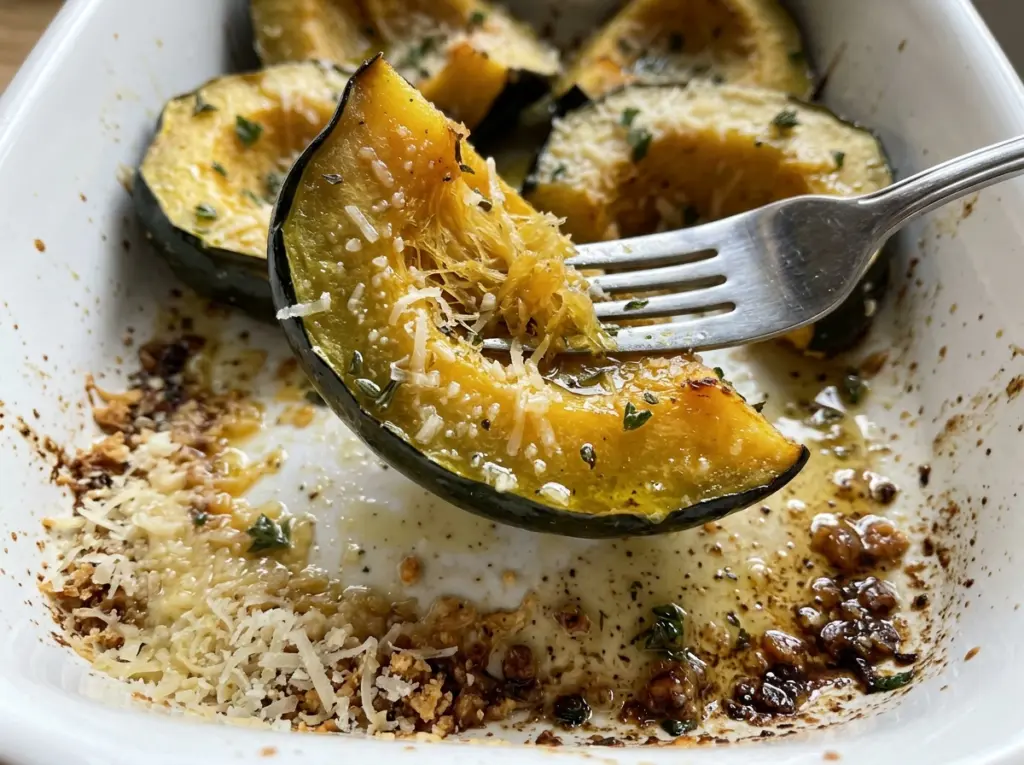
The cut edges start to turn bronze while the thick centers are still pale, and that’s exactly the point where acorn squash needs a little patience. I roast these wedges hot enough to brown, then add the Parmesan near the end so it has time to melt and toast without sitting in the oven for the whole roast. The result is tender squash with browned edges and a savory, herb-flecked finish.
Cutting the squash into even wedges makes a noticeable difference: pieces of similar thickness soften at about the same pace, so you’re less likely to have a tray of tender centers next to overly dark tips. I keep the seasoning simple and let the squash’s naturally sweet, nutty taste come through. A final scatter of fresh parsley brightens the warm Parmesan, and the finished wedges are easy to serve straight from the pan.
Kitchen Note
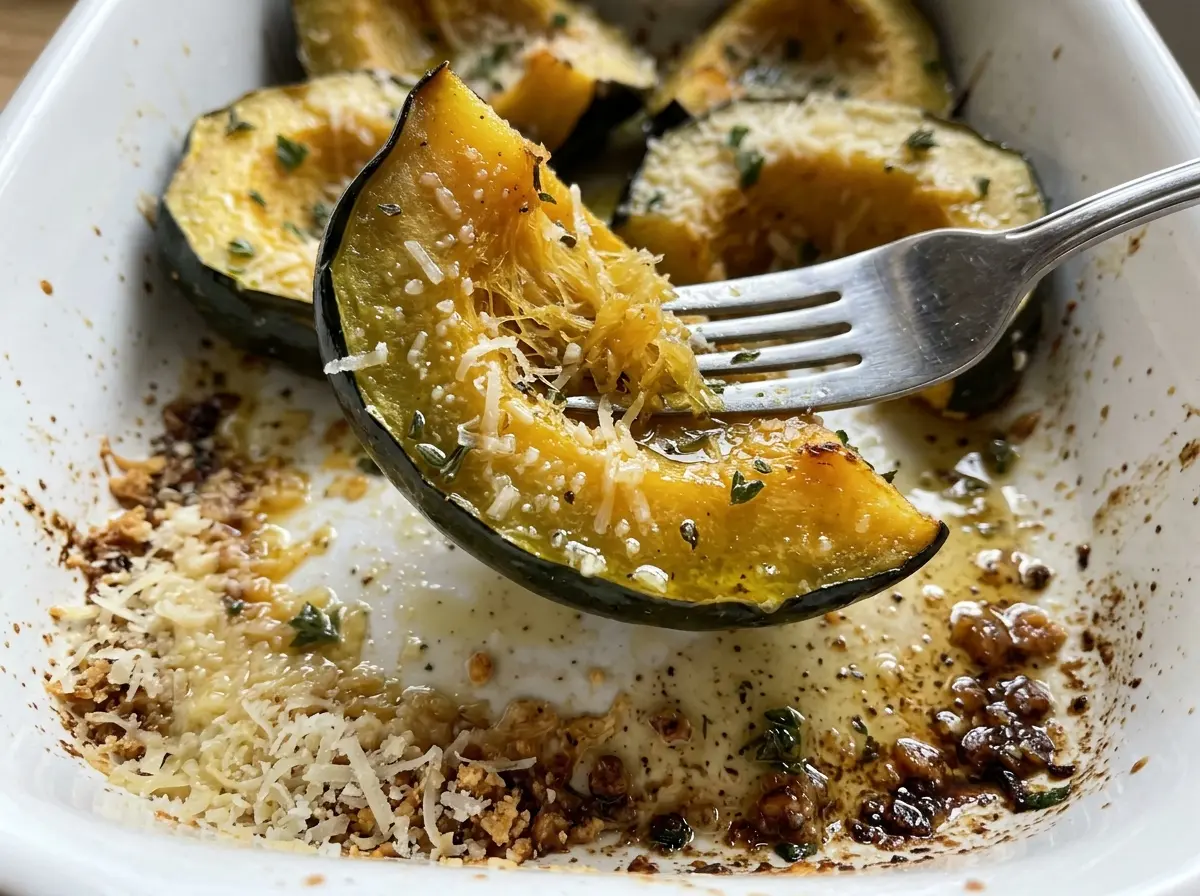
Cut the wedges close to the same 1-inch thickness. Narrow, uneven pieces can brown before the thicker parts are fork-tender, so an even cut helps the whole tray finish together.
Save Parmesan herb roasted acorn squash for a savory side with tender centers, browned edges, and a crisp little finish of Parmesan.
Why the Parmesan Goes on After the First Roast
Parmesan can brown quickly in a hot oven. If it goes onto the squash at the beginning, it spends the full roasting time exposed to the heat and can get darker than you want before the squash is tender. Adding it after the first 20 minutes gives the wedges time to start softening and coloring on their own, then lets the cheese melt and brown during the shorter finish.
That timing also makes it easier to turn the wedges without scraping melted cheese off the pan. After the turn, scatter the finely grated cheese over the squash so it lands on the tops and edges. The final 8 to 12 minutes are enough for the cheese to turn golden in spots while the squash finishes cooking. Keep an eye on the edges toward the end; the aim is browned and tender, not deeply dark cheese.
Acorn squash varies a little in shape, so use the fork test along with color. A browned surface tells you the oven is doing its work, but the thickest part should also yield easily when pierced. When both cues line up, the wedges are ready for parsley and the table.
What the Squash, Parmesan, and Herbs Each Bring to the Pan

- Acorn squash — Choose one that feels heavy for its size and has firm, unbroken skin. Its dense flesh holds its shape as wedges and turns tender in the oven. There’s no need to peel it for this preparation; the skin helps the wedges hold together as you turn them.
- Olive oil — Oil coats the cut surfaces and helps the seasonings cling while the squash roasts. A regular everyday olive oil is a good fit here; there’s no need to use a special finishing oil because the wedges go into a hot oven.
- Italian seasoning — A dried herb blend spreads its flavor across the wedges without adding moisture. The blend can differ slightly by brand, but an ordinary pantry jar works well. Break up any clumps between your fingers as you toss the squash so the seasoning doesn’t land in one spot.
- Parmesan — Finely grated cheese distributes more evenly than large shreds and is less likely to slide off the curved wedges. Grating a block gives you a fresh, fine texture; finely grated packaged Parmesan is convenient and works here, too.
- Fresh parsley — Chopped parsley goes on after roasting, where its fresh, green taste balances the salty cheese. Add it at the end rather than roasting it with the squash, which would dull its color and fresh flavor.
From Firm Squash to Tender, Browned Wedges
Heat the Oven and Prepare the Squash
Heat the oven to 425°F and line an 18×13-inch rimmed baking sheet with parchment paper. Cut the squash in half through the stem, then scoop out the seeds. Slice each half into wedges, using the stem as a guide as you work through the firm flesh. If the squash shifts while you cut, pause and steady it before continuing rather than forcing the knife.
Season and Arrange in One Layer
Toss the wedges with the olive oil and seasonings until the cut surfaces are lightly coated. Check the bottom of the bowl for seasoning that has settled there, then give the wedges another toss if needed. Arrange them in a single layer on the prepared baking sheet. Leaving them spread across the pan gives the exposed surfaces room to roast instead of crowding together.
Turn, Add Parmesan, and Finish Roasting
Roast the wedges for 20 minutes, then turn them over. Sprinkle the Parmesan over the squash and return the pan to the oven for 8 to 12 minutes. Check the thickest wedge with a fork; it should feel tender, and the edges should be browned. If the squash is tender and the edges have color, finish with the chopped parsley and serve.
Simple Ways to Adapt the Squash Without Losing Its Character
Make It Dairy-Free by Leaving Off the Parmesan
Skip the Parmesan for a dairy-free tray and roast the seasoned wedges until tender and browned at the edges. You’ll lose the salty, savory layer and the cheese’s toasted finish, but the squash and Italian seasoning still make a flavorful side. Add the parsley after roasting just as you would for the original version.
Roast a Half Batch for Two
For a smaller meal, use half the squash and halve each of the other ingredients. Keep the wedges in a single layer on the same prepared baking sheet, and use the same roast-and-turn method. The timing is guided by tenderness and browning, so check the wedges at the end of the stated roasting window.
Storage and Reheating
- Refrigerator: Store cooled leftovers in an airtight container for 3 to 4 days. The wedges soften as they sit, and the browned edges won’t stay as crisp.
- Freezer: Freeze cooled wedges in a freezer-safe airtight container for up to 2 months. They’ll be softer after thawing, so freezing is best when texture matters less than keeping leftovers.
- Reheating: Warm the wedges in a single layer on a baking sheet in the oven until heated through. The microwave works for convenience, but it softens the edges rather than restoring their roasted texture.
Questions That Come Up When Roasting Acorn Squash
Parmesan Herb Roasted Acorn Squash
Ingredients
Equipment
Method
- Heat the oven to 425°F.
- Line an 18x13-inch rimmed baking sheet with parchment paper.
- Cut the squash in half through the stem and scoop out the seeds.
- Slice each half into 1-inch wedges.
- Toss the squash wedges with the olive oil, salt, pepper, and Italian seasoning.
- Arrange the wedges in a single layer on the prepared baking sheet.
- Roast for 20 minutes, then turn the wedges and sprinkle them with Parmesan.
- Roast for 8 to 12 minutes more, until the squash is tender when pierced with a fork and browned at the edges.
- Sprinkle with the parsley and serve.


