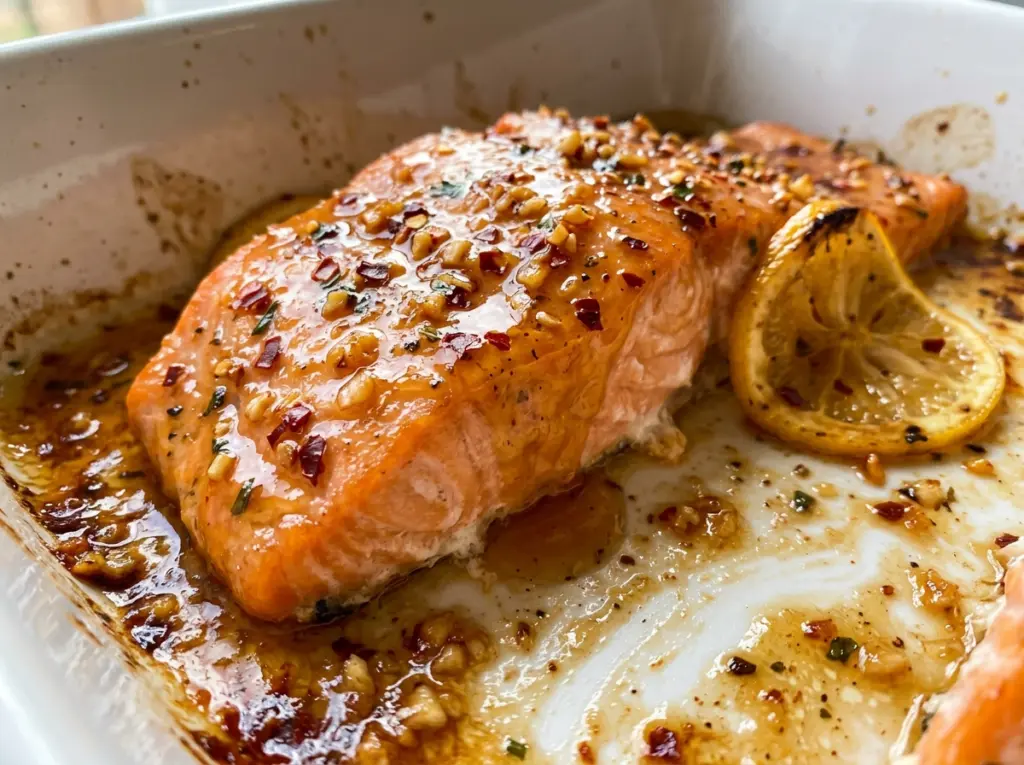
The edges of salmon can go from tender to dry while the thick center is still catching up, especially when the fillet tapers sharply. I use a center-cut piece for this spicy honey baked salmon, then let the oven do the work while a quick honey-sriracha glaze turns glossy over the top.
The glaze comes together in one bowl, and brushing it over the fish before baking keeps the method simple without sacrificing that sweet, garlicky heat. The cook time is a range because salmon fillets aren’t all the same thickness; checking the thickest part gives you a much better answer than relying on the clock alone. The finished fish is tender beneath its sticky, spicy glaze.
Kitchen Note
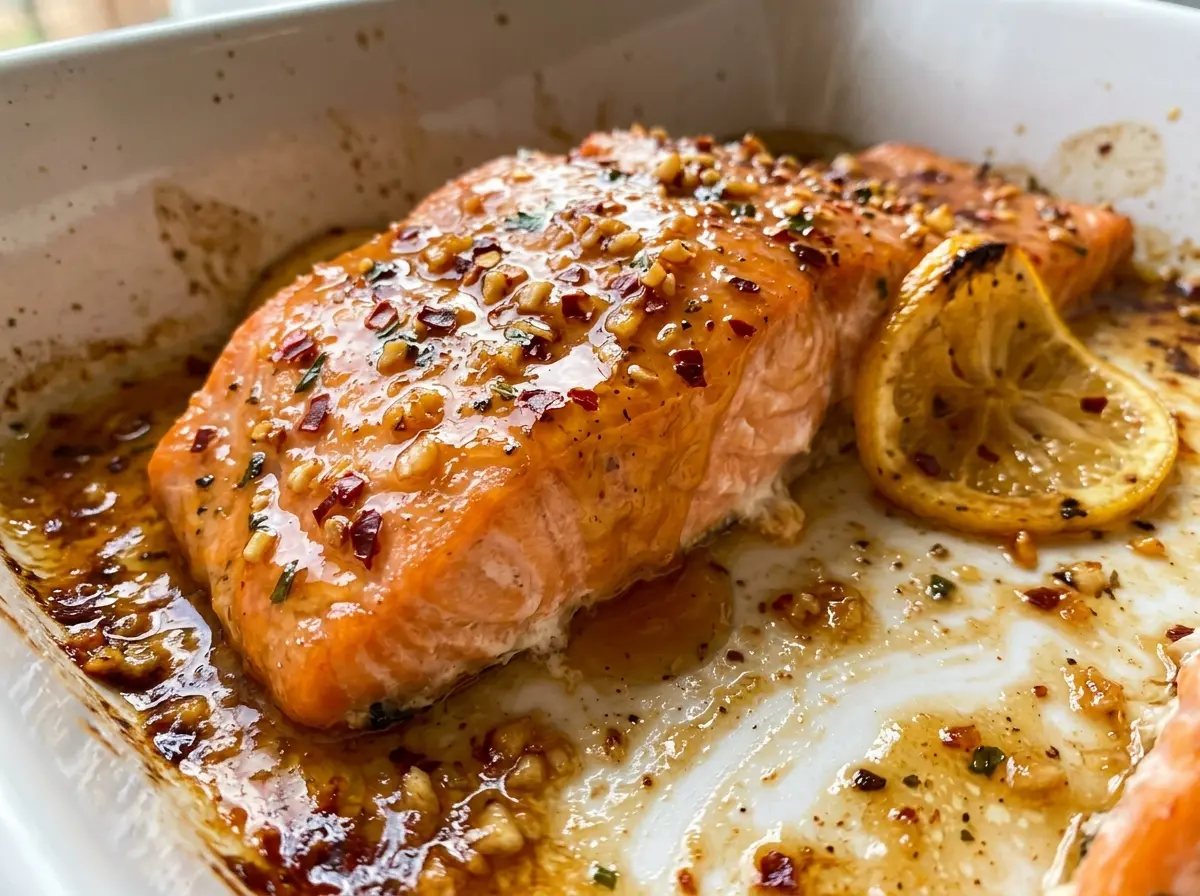
I whisk the glaze until the butter and honey stop looking streaky, then scrape around the bowl once so the minced garlic is spread through it. That small check helps every brushful carry the same sweet, spicy flavor.
Save this spicy honey baked salmon for a night when you want sweet heat, tender fish, and a quick glaze made in one bowl.
Why Center-Cut Salmon Is Less Likely to Dry Out at the Edges
A salmon fillet that’s thick in the middle and narrow at the tail cooks unevenly: the thin end is ready first, while the center needs more time. Center-cut salmon has a more consistent shape, so its portions tend to cook at a steadier pace. That doesn’t make the fish immune to overcooking, but it gives you a better starting point for a tender result.
The 12–16-minute baking range accounts for differences in thickness and ovens. A thinner fillet will be ready sooner than a thick one, even when both go into the same size dish at the same temperature. Start checking toward the early end of the range rather than assuming every piece needs the full time. The thermometer check in the method is what settles the question; the clock is a guide, not a substitute.
Center-cut salmon also gives the glaze a broad, even surface to cover. That means you can brush it over the top without trying to chase it down a narrow tail or leaving one section bare. Keeping the skin underneath the fish helps hold the fillet together as it bakes and makes serving easier.
What the Honey, Sriracha, and Butter Each Bring to the Glaze

- Center-cut salmon — A fillet with a fairly even thickness is easier to cook consistently than a piece that narrows dramatically at one end. Fresh or fully thawed salmon works; choose a fillet with a clean, mild smell and moist-looking flesh. Pin bones are removed before cooking, so check the center with your fingertips and pull any remaining bones with clean tweezers.
- Honey — Honey gives the glaze its rounded sweetness and helps it cling to the fish. A standard liquid honey is easy to whisk and brush on; there’s no need to seek out a specialty variety. Thick, crystallized honey is harder to blend evenly, so warm it gently until fluid before measuring.
- Sriracha — This brings the chili heat and a little tang, while its smooth texture blends neatly into the honey. Use the sriracha you enjoy eating; changing brands can shift both heat and saltiness. If you’re sensitive to spice, reducing the amount is the simplest adjustment.
- Butter — Melted butter softens the sharp edge of the chili and gives the glaze a richer finish. It also helps the ingredients blend into a brushable mixture. Since the butter is melted, salted or unsalted butter will both work, though salted butter adds a little more seasoning.
- Garlic and lemon juice — Freshly minced garlic gives the glaze a savory bite, and lemon juice keeps the honey from tasting one-note sweet. Mince the garlic finely so it distributes through the glaze instead of landing in a few large pieces. Fresh lemon juice is ideal, but bottled juice works when that’s what you have.
- Olive oil — The oil greases the baking dish so the salmon is less likely to stick as it cooks. A basic olive oil is fine here; save the pricier, strongly flavored bottle for a dish where its taste will stand out.
Brush on the Glaze Before the Salmon Goes Into the Oven
Set Up the Fillet in the Baking Dish
Heat the oven to 400°F and grease a 9×13-inch baking dish with the olive oil. Set the salmon in the dish skin-side down, then season it with the kosher salt and black pepper. Keep the fillet flat rather than folding a thin end underneath, which would change how quickly that section cooks. If the fish has visible pin bones, remove them before it goes into the dish.
Whisk a Smooth Honey-Sriracha Glaze
In a small bowl, whisk together the honey, sriracha, melted butter, minced garlic, and lemon juice. The glaze should look blended, with no separate streaks of butter and honey. If you spot garlic clinging to the sides of the bowl, scrape it back in and whisk again. Have a pastry brush ready so you can coat the fish while the glaze is easy to spread.
Bake Until the Center Is Cooked Through
Brush the glaze over the salmon, covering the top in an even layer, then bake for 12–16 minutes. Check the thickest part with an instant-read thermometer; it should reach 145°F. Avoid judging doneness by the glaze color alone, since the surface can look ready before the center is cooked through. Let the salmon rest for 3 minutes before serving so the fish settles after baking.
Easy Ways to Adjust the Heat or Make the Glaze Dairy-Free
Dial the Sriracha Up or Down
For a milder glaze, use less sriracha; for a hotter finish, add a little more. Keep the honey, butter, garlic, and lemon juice the same so the glaze stays balanced and brushable. Less chili lets the honey come through more clearly, while extra sriracha makes the heat more prominent.
Use Olive Oil Instead of Butter
For a dairy-free glaze, replace the melted butter with the same amount of olive oil. Whisk it thoroughly with the honey, sriracha, garlic, and lemon juice before brushing it on. The glaze will taste less buttery and a little lighter, but it still coats the salmon well.
Storage and Reheating
- Refrigerator: Refrigerate leftovers within 2 hours and keep them covered for up to 3 days. The glaze will lose some of its shine, and the salmon will firm up as it chills.
- Freezer: Cooked salmon freezes, though its texture will be softer after thawing. Wrap portions airtight and freeze for up to 2 months; thaw overnight in the refrigerator before reheating.
- Reheating: Cover the salmon loosely and warm it in a 275°F oven until it reaches 165°F. Gentle heat helps it stay moist; avoid leaving it uncovered in a hot oven, where the thin edges can dry out before the center warms.
Questions That Come Up When Baking Honey-Glazed Salmon
Spicy Honey Baked Salmon
Ingredients
Equipment
Method
- Heat the oven to 400°F.
- Grease a 9x13-inch baking dish with the olive oil.
- Place the salmon skin-side down in the dish.
- Season it with the salt and black pepper.
- Whisk the honey, sriracha, melted butter, garlic, and lemon juice together in a small bowl.
- Brush the glaze over the salmon.
- Bake for 12–16 minutes, until the thickest part reaches 145°F on an instant-read thermometer.
- Let the salmon rest for 3 minutes before serving.


