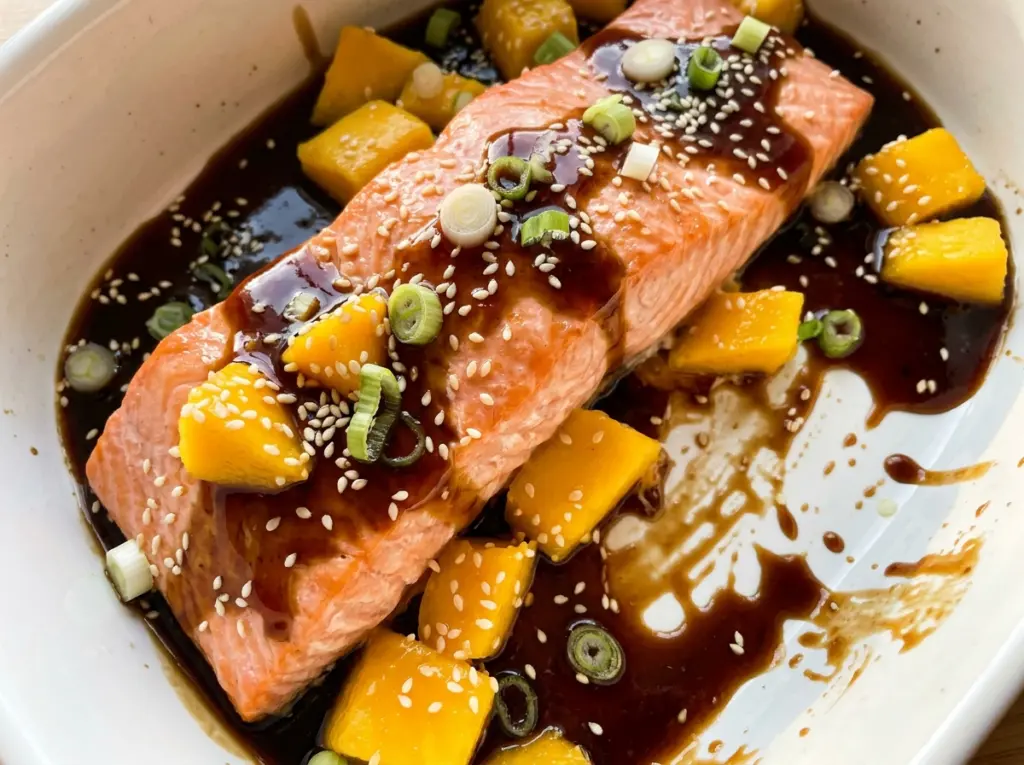
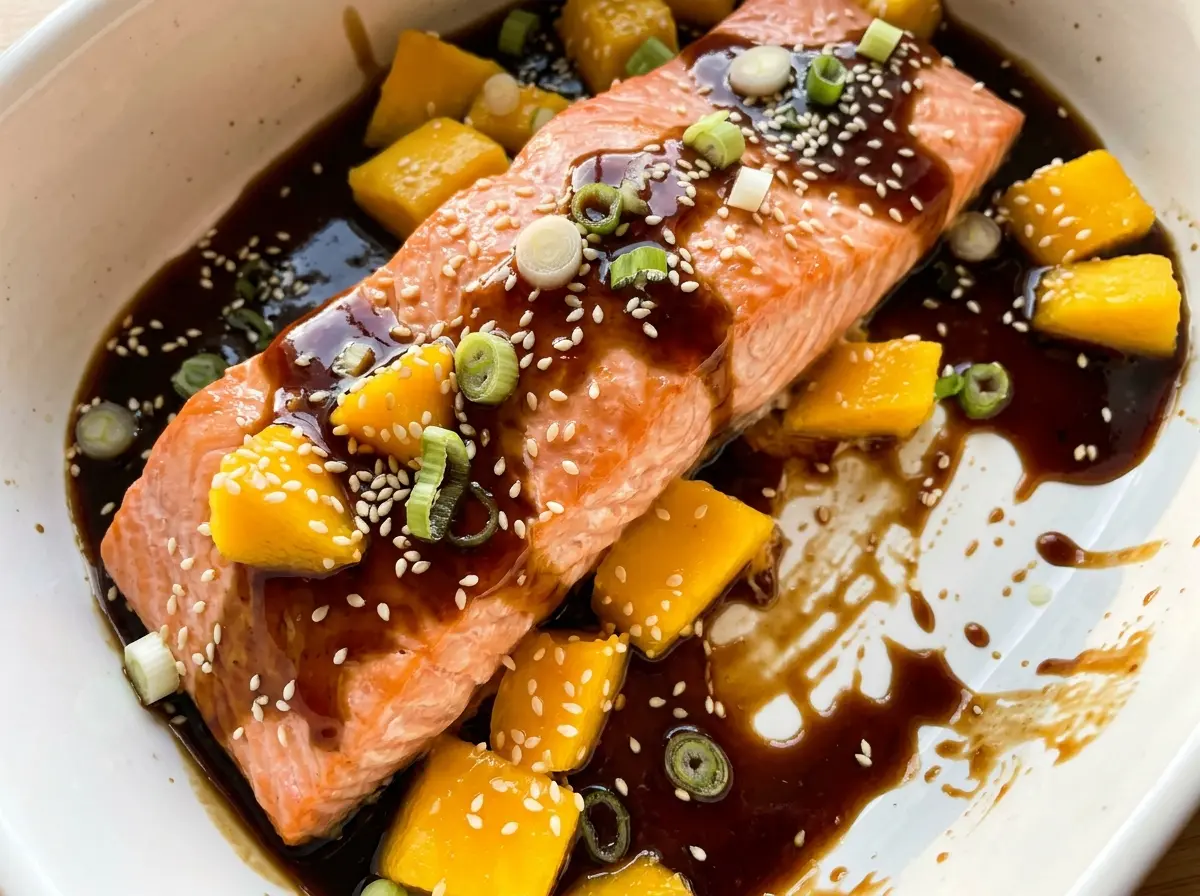
When the blender lid comes off, the mango teriyaki sauce looks more like a bright orange puree than the glossy glaze you might expect. That’s exactly where it should start. Blending the ripe mango with soy sauce, mirin, ginger, garlic, and brown sugar gives this Mango Teriyaki Salmon its smooth, fruit-forward coating, and a quick simmer turns that puree into a sauce that clings to the fish.
I bake the salmon skin-side down on a parchment-lined sheet, so there’s no flipping a delicate fillet through sticky glaze. The sauce comes together on the stovetop while the oven heats, and the salmon needs only a brush of oil, a little seasoning, and 10 to 15 minutes in the oven. The result is tender salmon under a sweet-savory glaze, with extra mango teriyaki sauce served alongside.
Kitchen Note
The sauce thickens quickly once the cornstarch slurry goes in. I stop after about a minute at a simmer, when it lightly coats a spoon; it firms up a little more as it sits.
Save Mango Teriyaki Salmon for a night when you want tender baked salmon under a sweet-savory mango glaze, with extra sauce ready for the table.
The Skin-Side-Down Detail That Keeps the Glaze Where You Want It
With a fruit-based glaze, where you put the salmon matters. Set the portions skin-side down and brush the sauce over the exposed tops. That gives the mango mixture a clear surface to coat, while the skin stays between the fish and the parchment. You won’t need to flip the salmon partway through baking, which means less handling and less chance of the tender flesh breaking apart.
The glaze also contains brown sugar, so there’s no benefit to putting sauce underneath the fish where it can run onto the pan. Keep the coating on top, and let the parchment catch any drips. If a portion is especially thick, use the temperature in the thickest part to judge doneness rather than relying on the color of the glaze. The outside can look ready before the center is cooked through.
What the Mango and Soy Bring to This Teriyaki Sauce

- Ripe mango — Choose one that gives slightly when pressed and smells sweet near the stem. Its soft flesh blends smoothly and brings both fruit flavor and body to the sauce. Thawed frozen mango works as a substitute; drain excess liquid and use an equal volume.
- Low-sodium soy sauce — This gives the glaze its savory backbone without overwhelming the mango. For a gluten-free version, use low-sodium tamari in its place, one-for-one. Regular soy sauce also works, but the finished salmon will taste saltier.
- Mirin and brown sugar — Mirin adds gentle sweetness, while brown sugar gives the sauce a warmer, deeper note. Dry sherry can replace mirin one-for-one, though the flavor will be less rounded. Maple syrup can stand in for the brown sugar in an equal volume; expect a cleaner sweetness and a slightly different finish.
- Fresh ginger and garlic — Fresh aromatics give the blended sauce a brighter, more distinct taste than dried versions. If needed, use ground ginger at one-quarter the volume of fresh ginger, and garlic powder at about one-eighth the volume of the minced clove. The sauce will still blend smoothly, but the fresh flavor won’t be quite as vivid.
- Cornstarch — This is what turns the simmered mango mixture into a glaze that stays on the salmon. Stir it with cold water before adding it to the saucepan; mixing the starch directly into the hot sauce makes lumps harder to whisk out.
- Skin-on salmon — Ask for a fillet cut into four portions, ideally with pieces of similar thickness so they finish at roughly the same time. Freshness matters more than a particular salmon variety here; the sauce is bold enough that a premium fish isn’t necessary.
Blending and Simmering the Mango Glaze Before It Meets the Fish
Blend Until the Aromatics Disappear
Add the mango, soy sauce, mirin, brown sugar, ginger, and garlic to a blender and blend until smooth. Check for visible pieces of garlic or mango before moving on; a smooth puree makes it easier to brush an even layer over the fish. Don’t add the cornstarch at this stage, since it needs to be stirred with cold water separately.
Give the Sauce Its First Simmer
Pour the blended mixture into a small saucepan and bring it to a simmer over medium heat. Cook for 3 minutes, stirring occasionally so the sauce doesn’t sit undisturbed on the bottom. Keep the heat at medium; a hard boil isn’t needed to bring the flavors together.
Thicken It and Set Aside the Serving Portion
Stir the cornstarch and cold water together, then whisk that slurry into the saucepan. Simmer for about 1 minute, whisking, until the sauce thickens. Transfer 1/3 cup to a clean bowl for serving before using any sauce on the uncooked salmon. Keep that portion separate from the brush and baking sheet.
Bake the Salmon Without Flipping It
Heat the oven to 400°F and line a rimmed baking sheet with parchment paper. Pat the salmon dry, set the portions skin-side down, brush the tops with oil, and season with kosher salt and black pepper. Brush on the remaining sauce and bake for 10–15 minutes, until the thickest part reaches 145°F. Serve with the reserved sauce.
Two Ways to Change the Mango Teriyaki Without Losing the Balance
Make It Gluten-Free with Tamari
Replace the low-sodium soy sauce with low-sodium tamari in the same amount. The sauce stays savory and smooth, with a slightly different, rounder soy flavor; the rest of the method stays the same.
Add a Gentle Chili Heat
Blend a small pinch of crushed red pepper with the mango, soy sauce, mirin, brown sugar, ginger, and garlic. The heat gives the sweet glaze a little contrast without changing its smooth texture; add more only if you want the finished sauce noticeably spicy.
Storage and Reheating
- Refrigerator: Store leftover salmon in an airtight container for 3–4 days. The glaze may lose some of its fresh gloss as it chills.
- Freezer: Freeze cooked portions in an airtight container or freezer bag for up to 2 months for best quality. Thaw overnight in the refrigerator; the mango glaze may look a little less smooth after thawing.
- Reheating: Warm gently in the microwave at reduced power in short bursts, turning the portion between bursts if needed, until it reaches 165°F. Long blasts on high heat can dry the salmon before the middle is warm.
Questions That Come Up When Baking Mango Teriyaki Salmon
Mango Teriyaki Salmon
Ingredients
Equipment
Method
- Blend the mango, soy sauce, mirin, brown sugar, ginger, and garlic until smooth.
- Pour the mixture into a small saucepan and bring to a simmer over medium heat.
- Cook for 3 minutes, stirring occasionally.
- Stir the cornstarch and cold water together.
- Whisk the slurry into the saucepan and simmer for about 1 minute until the sauce thickens.
- Transfer 1/3 cup sauce to a clean bowl for serving; keep it separate from the sauce used on the raw salmon.
- Heat the oven to 400°F.
- Line a rimmed baking sheet with parchment paper.
- Pat the salmon dry and arrange it skin-side down on the baking sheet.
- Brush the tops with oil and season with the salt and pepper.
- Brush the salmon with the remaining sauce.
- Bake for 10–15 minutes, until the thickest part reaches 145°F.
- Serve the salmon with the reserved sauce.


