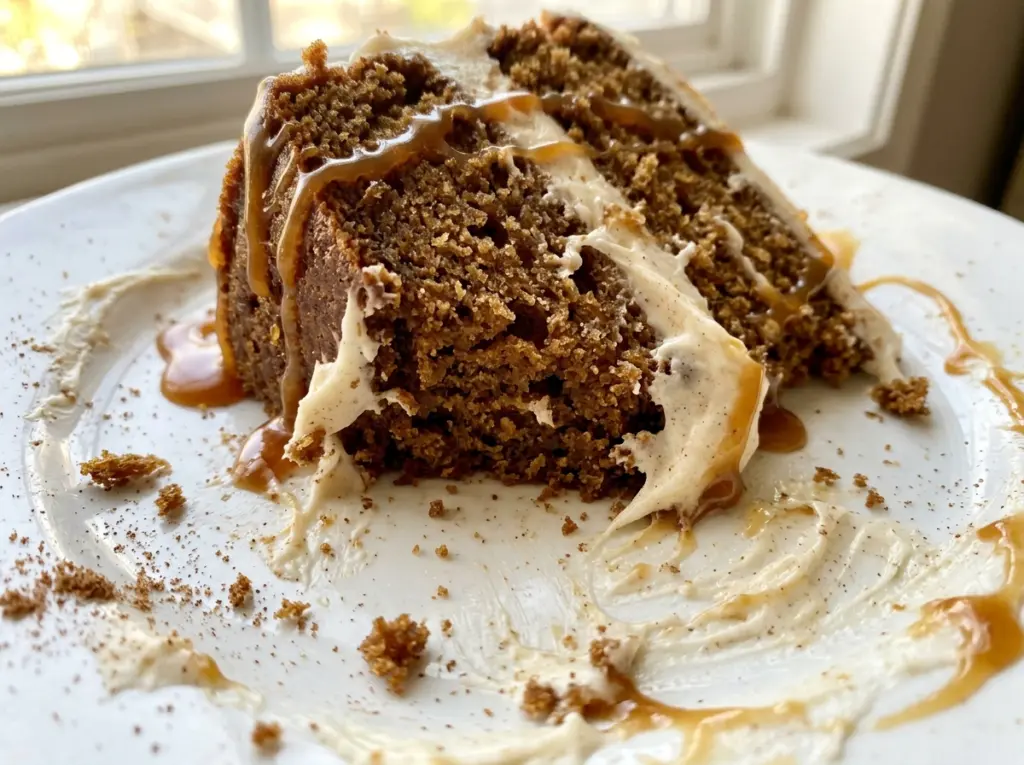
The center of a gingerbread cake should give a toothpick a few moist crumbs, not come out coated in batter. That little cue keeps this cake tender instead of dry, which matters with a crumb built around molasses and warm spices. I make this gingerbread cake with cinnamon cream cheese frosting and caramel drizzle in a 9×13-inch dish, so it’s easy to frost and slice without stacking layers.
The batter is looser than a typical cake batter because hot water is whisked into the molasses mixture before it meets the flour. It can look surprisingly thin in the bowl, but resist adding extra flour; the cake bakes up soft and moist. Let it cool completely before frosting, then finish with caramel that’s warm enough to drizzle but not so hot that it runs straight through the frosting.
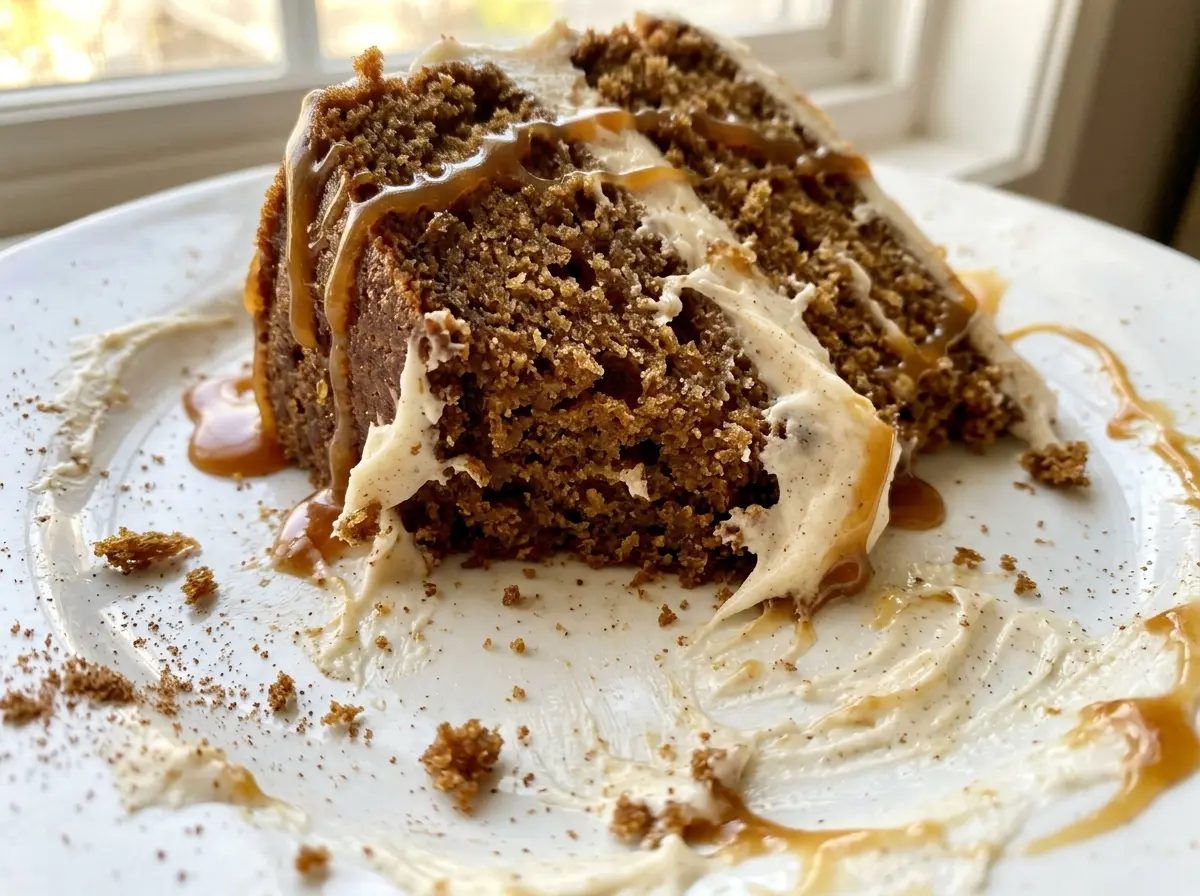
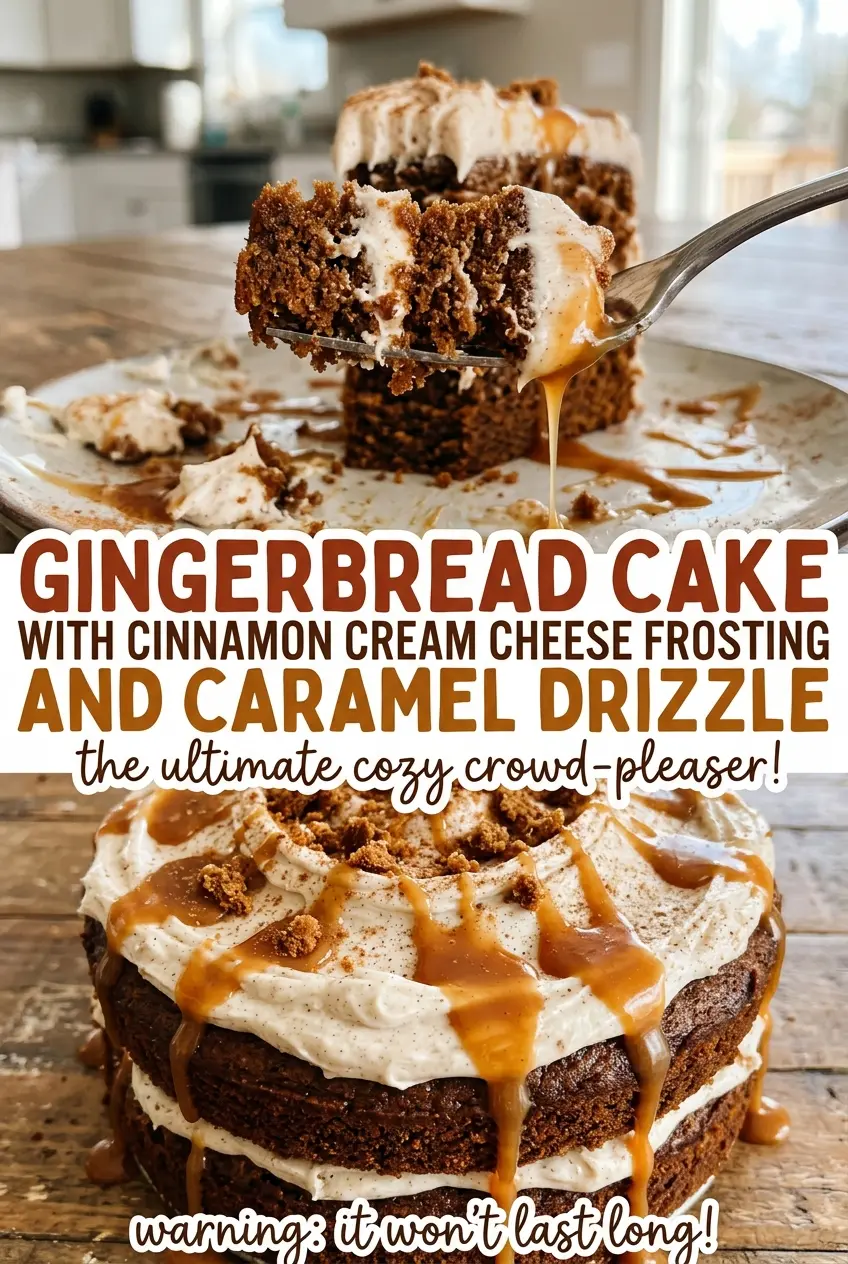
On the plate, you get a dark, tender slice with a gentle ginger-and-molasses bite, a cool cinnamon frosting, and a ribbon of caramel on top.
Kitchen Note
When the warm cream hits the caramel, it bubbles up vigorously. I take the pan off the heat first and whisk the cream in gradually; pouring it all at once makes the foaming harder to manage.
Save this gingerbread cake with cinnamon cream cheese frosting and caramel drizzle for a soft, molasses-rich slice with a buttery-sweet finish.
Why This Gingerbread Batter Looks Too Thin to Be Cake Batter
Hot water loosens the molasses before it goes into the flour, so the finished batter pours more easily than a butter-based cake batter. That thin texture is expected. The water also helps distribute the molasses and spices throughout the mixture, rather than leaving thick, sticky pockets that are difficult to whisk smooth.
Once the wet and dry mixtures meet, whisk only until the flour disappears and the batter looks even. A few quick strokes are better than prolonged beating; overworking flour can make a cake tight instead of tender. If you’re used to judging cake batter by how thick it clings to a spatula, use the smooth, pourable consistency here as your cue rather than adding flour.
The other helpful distinction is the molasses itself. Unsulphured molasses gives the cake its deep, rounded sweetness, while blackstrap is much more bitter and intense. The spices should sit alongside that molasses flavor, not compete with it.
What the Molasses, Hot Water, and Spices Each Bring
- Unsulphured molasses — This is the cake’s defining flavor and a big part of its moist crumb. Choose regular unsulphured molasses, not blackstrap; there isn’t a direct swap that keeps the same mellow sweetness and texture.
- All-purpose flour and baking soda — All-purpose flour gives the cake enough structure for the generous frosting, and baking soda provides lift alongside the acidic molasses. Avoid self-rising flour, which changes the leavening balance.
- Ground ginger, allspice, and cloves — These give the cake its familiar warming spice without relying on a single dominant note. Fresh, fragrant ground spices matter most; if you’re out of allspice, ground cinnamon can stand in at the same amount, though the cake will taste more cinnamon-forward.
- Light brown sugar and vegetable oil — Brown sugar adds a softer caramel note, while neutral vegetable oil keeps the crumb moist without bringing a strong flavor of its own. A basic store-brand vegetable oil works well here.
- Hot water — It thins and blends the molasses mixture so it incorporates evenly into the dry ingredients. Use hot water, not boiling water straight from a kettle that could make the mixture awkward to handle.
- Block cream cheese and unsalted butter — The block-style cream cheese gives the frosting body, and softened butter helps it beat smoothly. Tub-style spreadable cream cheese tends to be looser; if salted butter is all you have, it works, with a slightly saltier frosting.
- Powdered sugar and ground cinnamon — Powdered sugar thickens the frosting while cinnamon ties it back to the cake’s spices. A standard store-brand powdered sugar is fine; break up any visible lumps before beating it in.
- Granulated sugar and heavy cream — Granulated sugar caramelizes into the drizzle, and heavy cream turns that syrup into a pourable sauce. Milk is not a reliable stand-in for the cream here because the caramel will be thinner.
Build the Cake, Frost It Cold, Then Finish the Caramel
Whisk a smooth, pourable batter
Heat the oven to 350°F and lightly coat a 9×13-inch baking dish with nonstick cooking spray. Whisk the flour, baking soda, ginger, allspice, cloves, and salt together in a large bowl so the leavener and spices are evenly dispersed. In another bowl, whisk the brown sugar, oil, eggs, and molasses until smooth, then slowly whisk in the hot water. Add the wet mixture to the dry ingredients and whisk just until smooth; stop once there are no dry pockets.
Bake until the center gives moist crumbs
Transfer the batter to the prepared dish and bake for 33 to 38 minutes. The center is ready when a toothpick inserted there comes out with a few moist crumbs, rather than wet batter; a completely clean toothpick can mean the cake has gone a little too far. Set the dish on a wire rack and let the cake cool completely in the dish, about 2 hours. If the middle still feels warm, give it more time before adding frosting.
Beat the cinnamon frosting until fluffy
Beat the softened cream cheese and butter with an electric mixer on medium speed for about 2 minutes, until the mixture is smooth. Add the powdered sugar a cup at a time on low speed so it doesn’t puff out of the bowl, then beat in the vanilla and cinnamon until fluffy. Spread the frosting evenly over the completely cooled cake. If the cake is warm, the frosting will soften and lose its clean, spreadable layer.
Cook the syrup to deep amber
Warm the heavy cream in a microwave-safe measuring cup for 20 to 30 seconds, just until warm and not boiling. In a 1-quart saucepan, stir the granulated sugar and water over medium heat until the sugar dissolves, then stop stirring. Cook for 5 to 8 minutes, swirling the pan occasionally, until the syrup turns deep amber. After whisking in the cream, return the pan to low heat and stir for 1 to 2 minutes until smooth; cool the caramel for 10 minutes, then drizzle it over the frosted cake before serving.
Three Simple Ways to Change the Finish
Keep the caramel off
Leave off the caramel and serve the cake with its cinnamon cream cheese frosting. The finish is less sweet and the frosting’s cinnamon comes through more clearly.
Serve it as unfrosted gingerbread
Skip both the frosting and caramel for a simpler cake that puts the molasses and spices first. It’s a useful option when you want a less rich slice or need to pack portions without worrying about the topping.
Drizzle each slice at the table
Instead of covering the whole cake with caramel, spoon it over individual frosted slices just before serving. This keeps the frosting visible and lets each person choose a lighter or heavier caramel finish.
Storage and Reheating
- Refrigerator: Cover and refrigerate the frosted cake for up to 4 days. The cake firms up when cold, so the crumb won’t feel quite as soft straight from the fridge.
- Freezer: Freeze the unfrosted cake, tightly wrapped, for up to 2 months. Thaw it in the refrigerator while still wrapped, then add the frosting and caramel after it has thawed.
- Reheating: This cake doesn’t need reheating. Let a slice sit at room temperature briefly to soften the frosting, and don’t leave the cream cheese-frosted cake out for more than 2 hours total.
Questions I Get Asked About This Gingerbread Cake
Gingerbread Cake with Cinnamon Cream Cheese Frosting and Caramel Drizzle
Ingredients
Equipment
Method
- Preheat the oven to 350°F.
- Lightly coat a 9x13-inch baking dish with nonstick cooking spray.
- In a large bowl, whisk together the flour, baking soda, ginger, allspice, cloves, and salt.
- In a separate bowl, whisk together the brown sugar, oil, eggs, and molasses until smooth.
- Slowly whisk the hot water into the molasses mixture until combined.
- Pour the wet mixture into the dry ingredients and whisk just until smooth, then transfer the batter to the prepared dish.
- Bake for 33 to 38 minutes, until a toothpick inserted in the center comes out with a few moist crumbs.
- Cool completely in the dish on a wire rack, about 2 hours.
- In a large bowl, beat the cream cheese and butter with an electric mixer on medium speed for about 2 minutes, until smooth.
- Beat in the powdered sugar, 1 cup at a time, on low speed, then beat in the vanilla and cinnamon until fluffy.
- Spread the frosting evenly over the cooled cake.
- Warm the heavy cream in a microwave-safe measuring cup for 20 to 30 seconds, until warm but not boiling.
- Combine the granulated sugar and water in a 1-quart saucepan over medium heat, stirring until the sugar dissolves.
- Stop stirring and cook for 5 to 8 minutes, swirling the pan occasionally, until the syrup turns deep amber.
- Remove the pan from the heat and gradually whisk in the warm cream, taking care as the mixture bubbles vigorously.
- Return the pan to low heat and stir for 1 to 2 minutes, until smooth.
- Let the caramel cool for 10 minutes.
- Drizzle the caramel over the frosted cake before serving.


