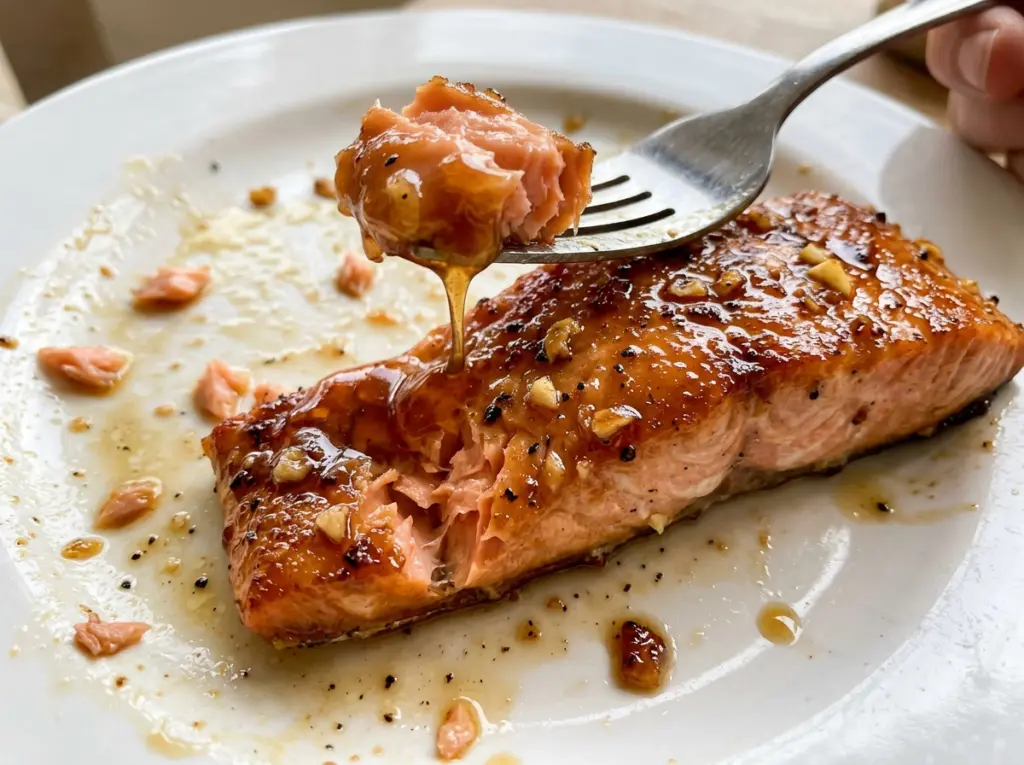
The glaze turns glossy as it bakes, and the brown sugar gives the salmon a sweet edge without burying its savory flavor. I like this Brown Sugar Glazed Salmon when dinner needs to feel put together without a separate sauce pan: whisk the glaze, brush it over the portions, and let the oven do the work. With the skin underneath, the salmon sits neatly on the parchment while the glaze coats the top.
The balance comes from pairing the sugar with soy sauce, Dijon, lemon juice, and garlic. Each brings a different note, so the sweetness doesn’t have to carry the whole dish. I brush the glaze across all four portions before they go into the oven; an even coat means each bite gets some of that tangy, savory finish. The salmon comes out tender and flakes easily, with a shiny brown-sugar glaze across the top.
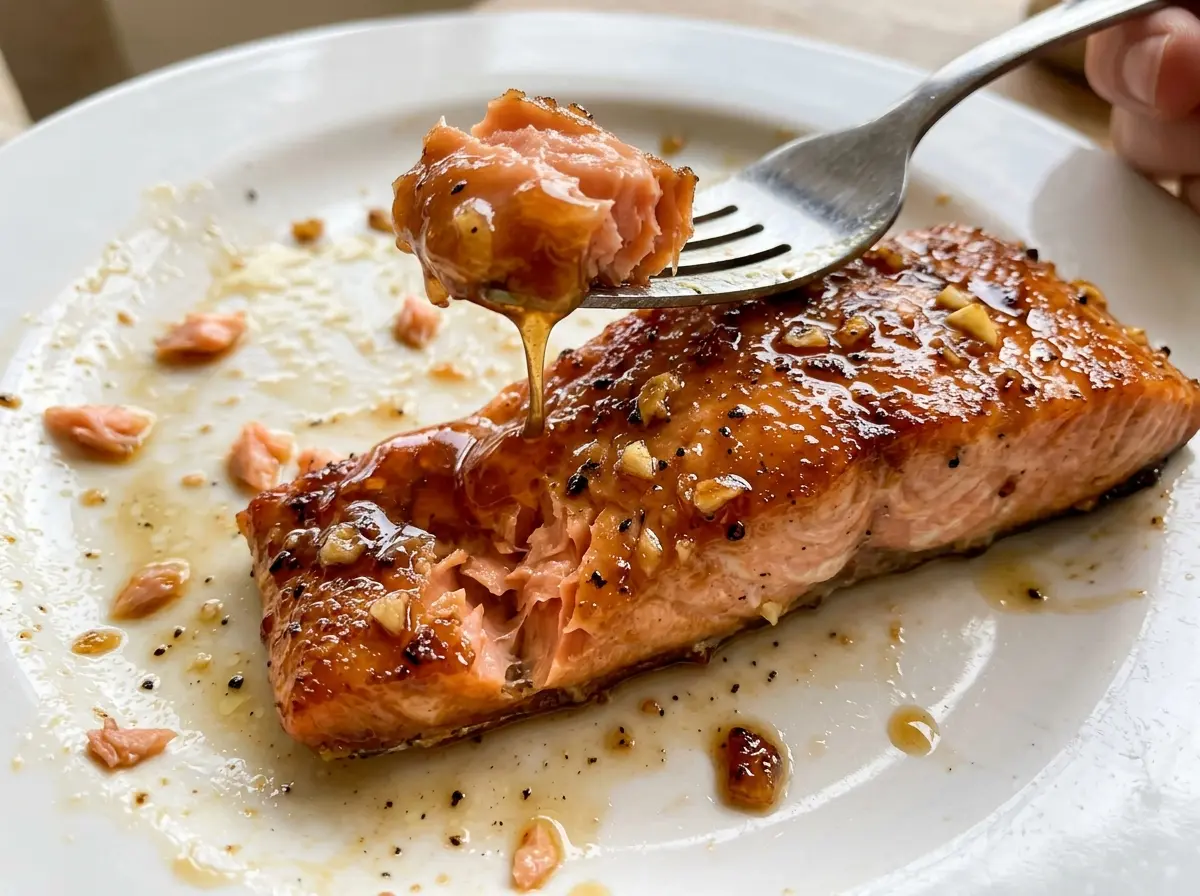
Kitchen Note
Whisk until the glaze looks uniform, with the mustard and garlic distributed throughout. A quick second whisk right before brushing catches any brown sugar that settled while you arranged the salmon.
Save this Brown Sugar Glazed Salmon for a night when you want tender baked fish with a sweet-tangy glaze and very little cleanup.
Why This Brown Sugar Glaze Doesn’t Taste Like Candy
A sweet glaze can easily take over salmon, especially when the sugar is the only strong flavor. Here, soy sauce brings a salty, savory counterpoint, while Dijon adds a sharp mustard note. Lemon juice cuts through the sweetness with a clean, bright tang. Garlic fills in the savory side without making the glaze taste heavy.
The proportions matter because every part has a job. You want the glaze sweet enough to show up after baking, but not so sugary that it reads like a dessert topping. The Dijon and lemon keep the finish lively, and the soy sauce gives the sugar something savory to play against. Brush the mixture evenly over the portions rather than concentrating it in one spot; that keeps the balance consistent across the top of each piece. There’s no need to add another sweetener or a separate sauce to make the salmon taste complete.
What Each Part of the Glaze Contributes to the Salmon

- Light brown sugar — It gives the glaze its sweetness and soft molasses note. Fresh, soft sugar blends easily; if yours is clumpy, break it up as you whisk. Dark brown sugar works in the same measure, though it makes the glaze taste more deeply molasses-like.
- Soy sauce — This supplies the savory, salty backbone, and an everyday supermarket brand is fine here. For a gluten-free swap, use the same measure of certified gluten-free tamari; it tastes a little rounder and less sharp than some soy sauces. Reduced-sodium soy sauce also works in the same measure for a less salty finish.
- Dijon mustard — Dijon adds a focused mustard tang and helps the brushed glaze cling to the salmon. A standard jar is all you need; whole-grain mustard can replace it in the same measure, with a more textured finish and visible mustard seeds.
- Lemon juice — Its acidity keeps the glaze from tasting flat. Fresh lemon gives the clearest flavor, but bottled lemon juice is convenient and works in this baked glaze. Lime juice can stand in at the same measure; expect a sharper, slightly different citrus note.
- Garlic — A freshly minced clove gives the glaze a pungent savory note. Mince it finely so larger pieces don’t collect on one portion; if you’re out of fresh garlic, use 1/8 teaspoon garlic powder instead.
- Skin-on salmon — Choose a fillet cut into four portions with similar thickness so they cook at a similar pace. The skin helps each piece hold together as you handle it, but skinless salmon also works on parchment; it may be a little more delicate when you lift it from the pan.
How to Glaze and Bake the Salmon Without Guesswork
Whisk the Brown Sugar Mixture Until Even
Put the brown sugar, soy sauce, Dijon, lemon juice, and minced garlic in a small bowl. Whisk until the mixture is combined and looks consistent, with no thick streaks of mustard or clumps of sugar. If the garlic sits at the bottom while you get the pan ready, whisk once more before you brush. This quick check helps spread the flavor across all four portions.
Set the Portions Skin Side Down
Heat the oven to 400°F and line a rimmed baking sheet with parchment paper. Arrange the salmon portions skin side down, leaving them in a single layer. Brush the glaze evenly over the top of each piece. Try not to leave one portion with a thick puddle while another barely has a coating; an even brush gives each serving a balanced finish.
Bake Until the Thickest Portion Is Ready
Bake for 12–16 minutes, checking the thickest portion for doneness. It should reach 145°F and flake easily when tested with a fork. The exact point in that window depends on the thickness of the salmon, so use both the thermometer and the fork rather than relying on color alone. If it hasn’t reached the temperature or doesn’t flake, return the pan to the oven and continue baking.
Two Easy Ways to Adapt the Glaze
Make It Lower in Sodium
Replace the regular soy sauce with reduced-sodium soy sauce in the same measure. The glaze will taste less salty, while the brown sugar, Dijon, and lemon still give it a sweet-tangy character.
Give the Glaze an Orange Note
Use orange juice in place of the lemon juice, keeping the same measure. The glaze will taste rounder and a little sweeter, with less of lemon’s sharp edge; the soy sauce and Dijon keep it savory.
Storage and Reheating
- Refrigerator: Store leftover salmon in an airtight container for 3–4 days. The glaze will lose its fresh shine, and the fish firms up as it chills.
- Freezer: It freezes well for up to 3 months. Cool the portions, wrap them tightly or place them in a freezer-safe airtight container, and thaw in the refrigerator before reheating.
- Reheating: Warm covered in short microwave bursts or in a low oven until hot throughout. Avoid high heat or a long reheat; both dry the salmon quickly.
Questions That Come Up When Baking Glazed Salmon
Brown Sugar Glazed Salmon
Ingredients
Equipment
Method
- Whisk the brown sugar, soy sauce, Dijon mustard, lemon juice, and garlic in a small bowl until combined.
- Heat the oven to 400°F.
- Line a rimmed baking sheet with parchment paper.
- Arrange the salmon skin side down on the baking sheet.
- Brush the glaze evenly over the portions.
- Bake for 12–16 minutes, until the thickest portion reaches 145°F and flakes easily with a fork.


