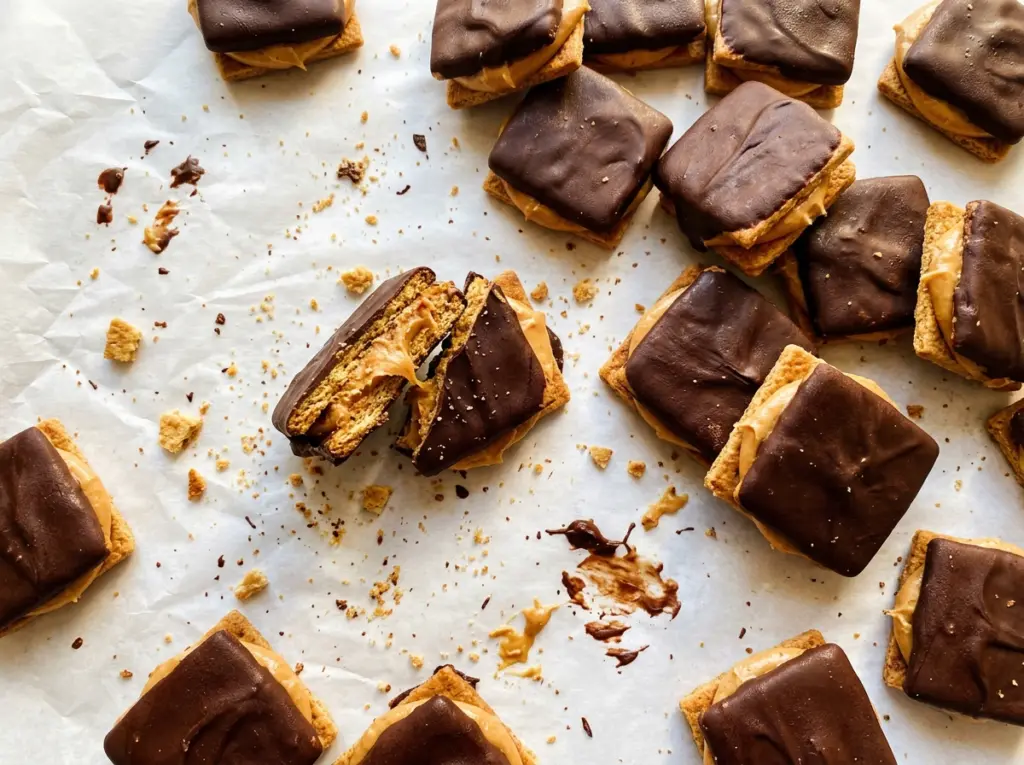
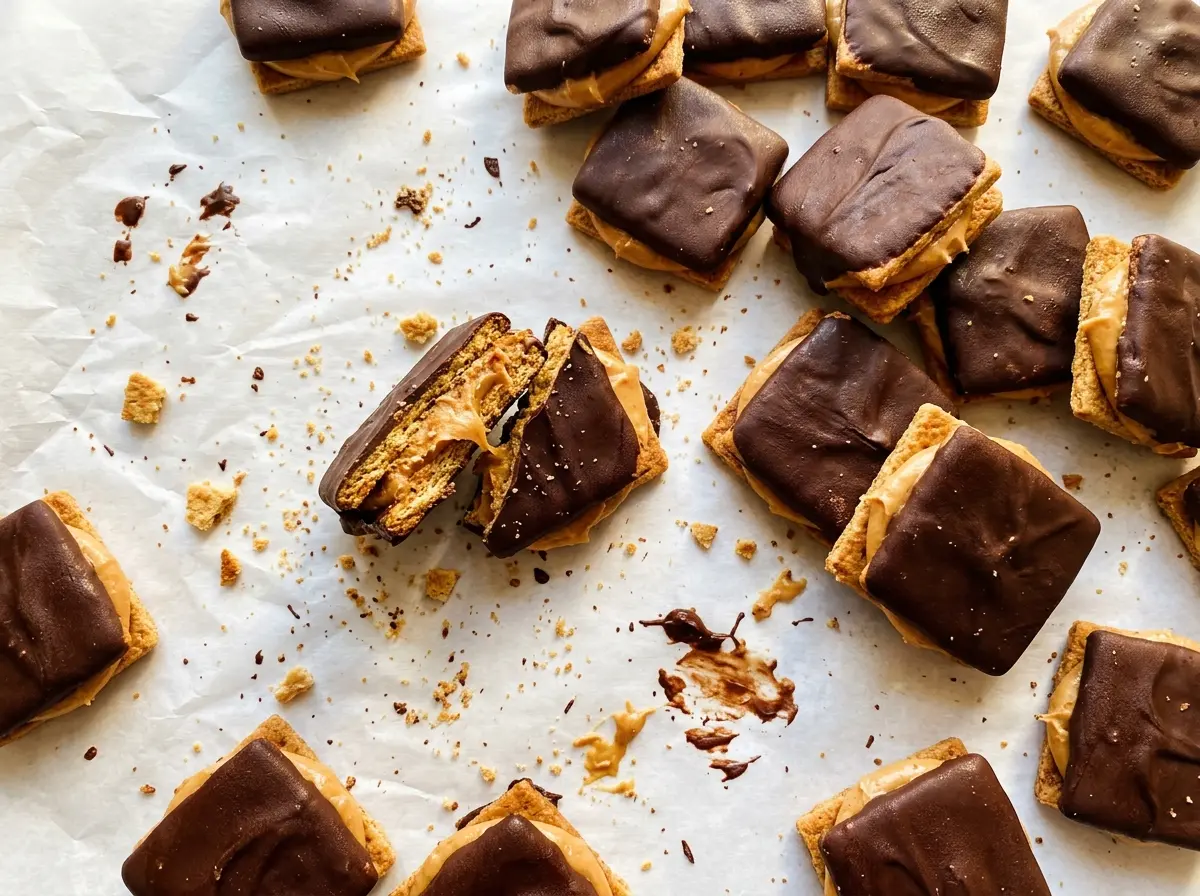
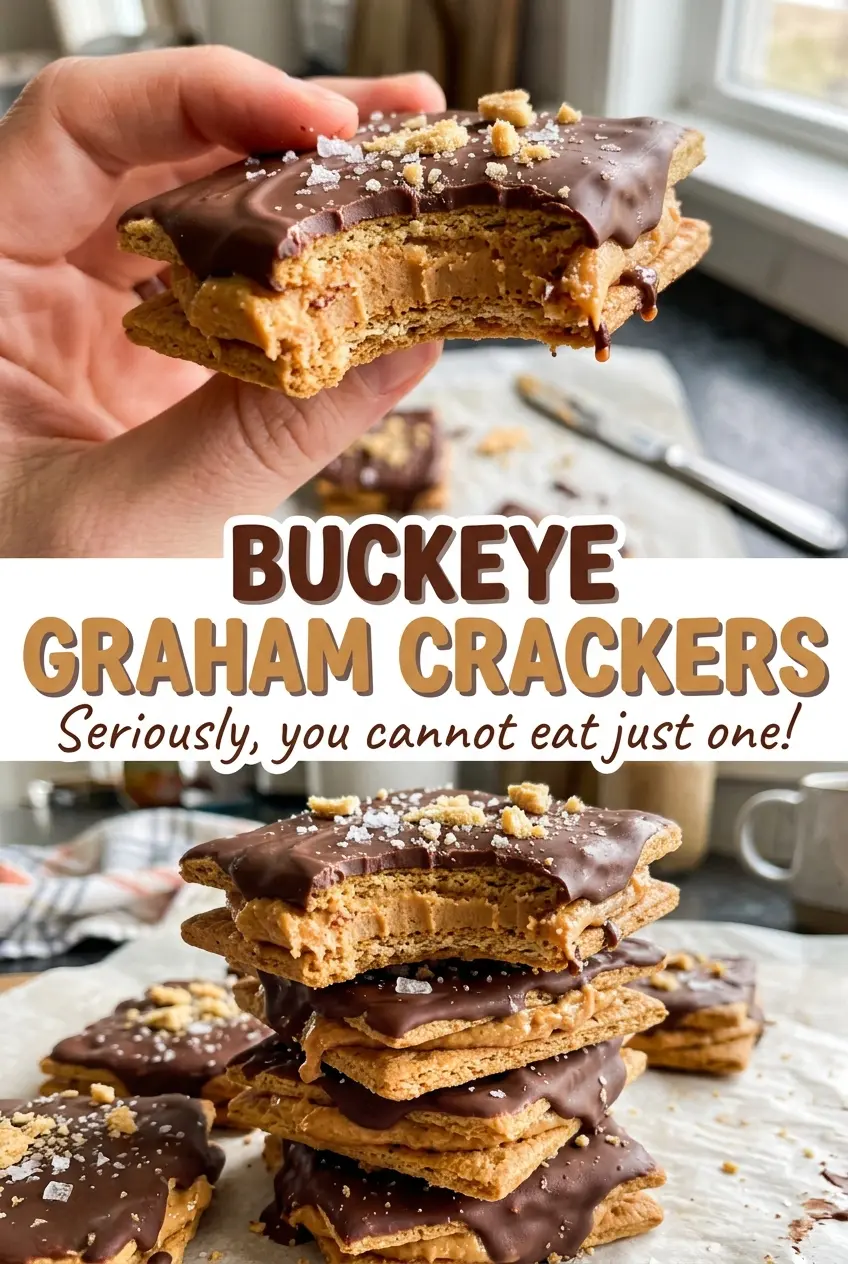
The peanut butter layer is thick enough to spread without soaking into the crackers, and the chocolate turns each rectangle into a tidy little treat. I like that every bite has a crisp graham base under a soft, sweet center; these Buckeye Graham Crackers bring the familiar peanut butter-and-chocolate pairing together without rolling or dipping individual candies.
For an even finish, the peanut butter mixture needs to be smooth before it goes onto the crackers. Beating the softened butter and creamy peanut butter first, then adding the powdered sugar gradually, gives you a thick dough that spreads in a neat layer. Once it’s chilled, the chocolate goes over the top instead of blending into the filling, leaving a clean contrast between the two layers.
Kitchen Note
Don’t rush the microwave. Short bursts with a stir after each one keep the chocolate from overheating at the edges while the middle is still solid; stop when it’s smooth and glossy.
Save these Buckeye Graham Crackers for a no-bake peanut butter and chocolate treat with a crisp graham cracker base and a smooth chocolate top.
Why the Peanut Butter Layer Needs to Chill Before the Chocolate
The filling is soft enough to spread, so it needs a little time in the refrigerator before the chocolate goes on. That chill firms the surface and gives you a steadier base to cover. Skip it, and the warm coating is more likely to drag the peanut butter mixture around as you spread, making the layers look swirled instead of distinct.
Spread the filling in an even layer over each cracker, then let the tray sit in the refrigerator for 20 minutes. The goal isn’t to freeze the centers solid; you’re looking for a firmer surface that holds its shape under the chocolate. An even layer matters here, too. Thick mounds take longer to firm and can make the finished pieces feel uneven, while a level coating gives the chocolate a smooth surface to cover.
The graham crackers are the sturdy base, but they’re still delicate. Keep them in a single layer on the lined baking sheet while you work, and spread the filling with a light hand. That way, each rectangle stays intact and the layers sit neatly on top.
What Each Ingredient Does in These Peanut Butter Chocolate Squares
- Graham cracker rectangles — Intact rectangles give the soft filling a crisp base that’s easy to portion and coat. Choose crackers that aren’t already cracked; standard graham crackers are fine, and gluten-free graham crackers work as a swap if they’re sturdy enough to spread on.
- Creamy peanut butter — A smooth, well-mixed peanut butter makes a uniform filling that spreads cleanly. Conventional creamy peanut butter is the reliable choice here; natural peanut butter with separated oil can make the mixture softer and less predictable.
- Softened unsalted butter — Softened butter beats smoothly with the peanut butter and gives the filling structure. Let it soften until it yields when pressed, but don’t melt it; unsalted butter also lets the measured kosher salt stay in control.
- Powdered sugar — This is what turns the peanut butter mixture into a thick, shapeable layer. Add it gradually so it incorporates evenly rather than leaving dry pockets in the dough.
- Semisweet chocolate chips — Semisweet chocolate balances the sweet peanut butter layer. A familiar grocery-store brand works well; use chips rather than a chocolate bar for the straightforward melt and even coverage this coating needs.
- Refined coconut oil — A small amount helps the melted chocolate spread smoothly over the crackers. Refined coconut oil keeps the coating neutral in flavor; unrefined coconut oil can bring a noticeable coconut taste.
- Vanilla and kosher salt — Vanilla rounds out the peanut butter filling, while salt keeps its sweetness from tasting one-note. They’re mixed into the filling after the powdered sugar.
Building the Layers Without Breaking the Crackers
Set Up a Flat Cracker Base
Line a 13×18-inch rimmed baking sheet with parchment paper and arrange the graham cracker rectangles in one layer. Keep the crackers close together so the filling and chocolate stay on their individual bases. Start with intact rectangles, since broken edges are harder to cover neatly. A level tray also makes spreading more comfortable and helps the layers stay even.
Beat a Smooth, Thick Peanut Butter Dough
Beat the softened butter and creamy peanut butter in a large bowl until smooth. Add the powdered sugar a little at a time, then mix in the vanilla and kosher salt. The finished mixture should look uniform and thick, with no loose streaks of butter or dry sugar left in the bowl. If you rush the sugar in all at once, it takes more mixing to work it through evenly.
Spread and Firm the Filling
Spread 2 tablespoons of the peanut butter mixture over each cracker. Use gentle pressure so the crackers don’t snap, and aim for a level layer across each rectangle. Refrigerate the tray for 20 minutes, until the filling feels firm rather than soft to the touch. This gives the chocolate a stable surface to cover.
Coat the Tops and Let Them Set
Combine the semisweet chocolate chips and refined coconut oil in a microwave-safe bowl. Microwave in 20-second bursts, stirring after each, until the chocolate is melted and smooth. Divide it evenly over the crackers and spread it across the peanut butter layer; work while it’s fluid so you don’t have to press hard. Refrigerate for 30 minutes, until the chocolate is set.
Easy Swaps for Different Buckeye Graham Crackers
Make the chocolate more mellow
Swap the semisweet chips for the same amount of milk chocolate chips and keep the refined coconut oil. The topping will taste sweeter and less intense against the peanut butter layer, so this is a good choice if you prefer a gentler chocolate bite.
Add a little crunch to the filling
Use crunchy peanut butter in place of creamy peanut butter, keeping the same amount. The filling won’t spread quite as smoothly, but the peanut pieces add a pleasant crunch beneath the chocolate.
Make a gluten-free batch
Replace the graham cracker rectangles with gluten-free graham cracker rectangles. Choose ones sturdy enough to support a spread of filling; depending on the brand, the base may be a little more delicate, so spread gently.
Make them dairy-free
Use stick-style dairy-free butter in place of the unsalted butter, dairy-free semisweet chips for the chocolate, and graham crackers made without dairy. Keep the listed amounts for each replacement. The filling may be a touch less rich, but it still gives you the same peanut butter-and-chocolate layers.
Storage and Reheating
- Refrigerator: Store the set crackers in an airtight container for up to 1 week. The filling and chocolate stay firm when chilled.
- Freezer: Freeze in an airtight container, with parchment between layers, for up to 2 months. Thaw in the refrigerator before serving.
- Reheating: These are served chilled, so they don’t need reheating. Don’t microwave the finished pieces; the chocolate coating can soften before the centers do.
Questions That Come Up While Making Buckeye Graham Crackers
Buckeye Graham Crackers
Ingredients
Equipment
Method
- Line a 13x18-inch rimmed baking sheet with parchment paper and arrange the graham cracker rectangles in a single layer.
- Beat the butter and peanut butter in a large bowl until smooth.
- Beat in the powdered sugar a little at a time.
- Mix in the vanilla and salt until a thick, uniform dough forms.
- Spread 2 tablespoons of the peanut butter mixture over each cracker.
- Refrigerate for 20 minutes, until firm.
- Combine the chocolate chips and coconut oil in a microwave-safe bowl.
- Microwave in 20-second bursts, stirring after each, until melted and smooth.
- Divide the melted chocolate evenly over the crackers and spread it to cover the peanut butter layer.
- Refrigerate for 30 minutes, until the chocolate is set.


