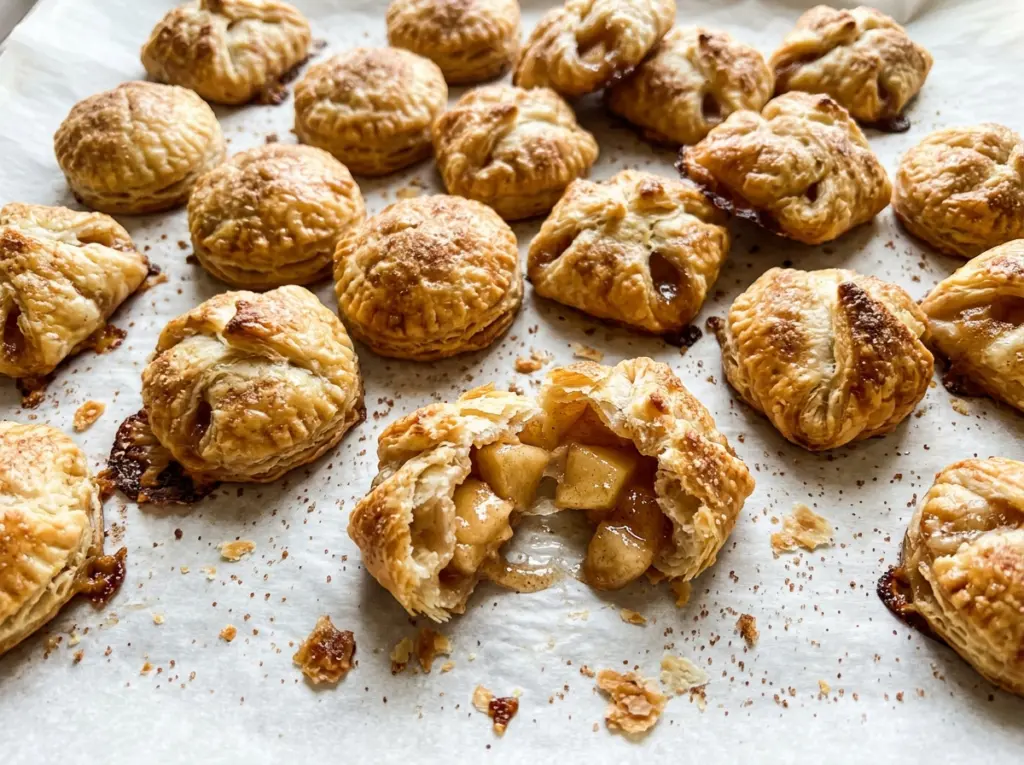
As the diced apple softens in the skillet, the brown sugar turns its juices glossy and the kitchen starts to smell like pie filling. That’s the moment these Apple Pie Bites begin to come together: tender apple tucked inside buttery crescent dough, with cinnamon sugar waiting for the warm tops.
I like this little muffin-pan format because each bite gets its own pastry cup, and the filling stays easy to portion. Granny Smith apple brings a tart edge and keeps its shape as it cooks, so the center tastes like apple instead of turning into a smooth sauce.
Once the juices thicken around the apple and the crescent dough bakes deep golden, a brush of melted butter helps the cinnamon sugar cling to every warm, flaky bite.
Kitchen Note
Let the filling cool for the full 10 minutes before it goes near the crescent dough. It should be spoonable rather than piping hot, which makes it easier to shape the dough around each portion.
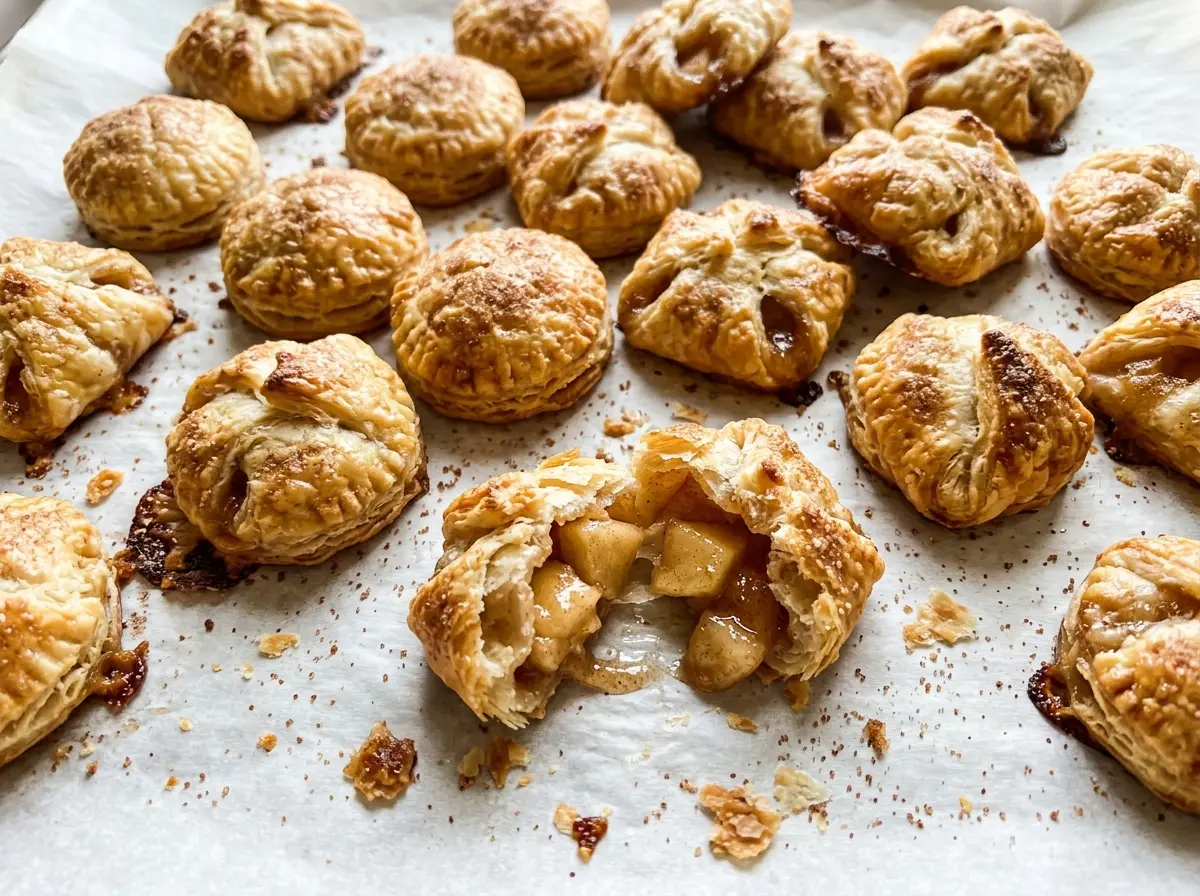
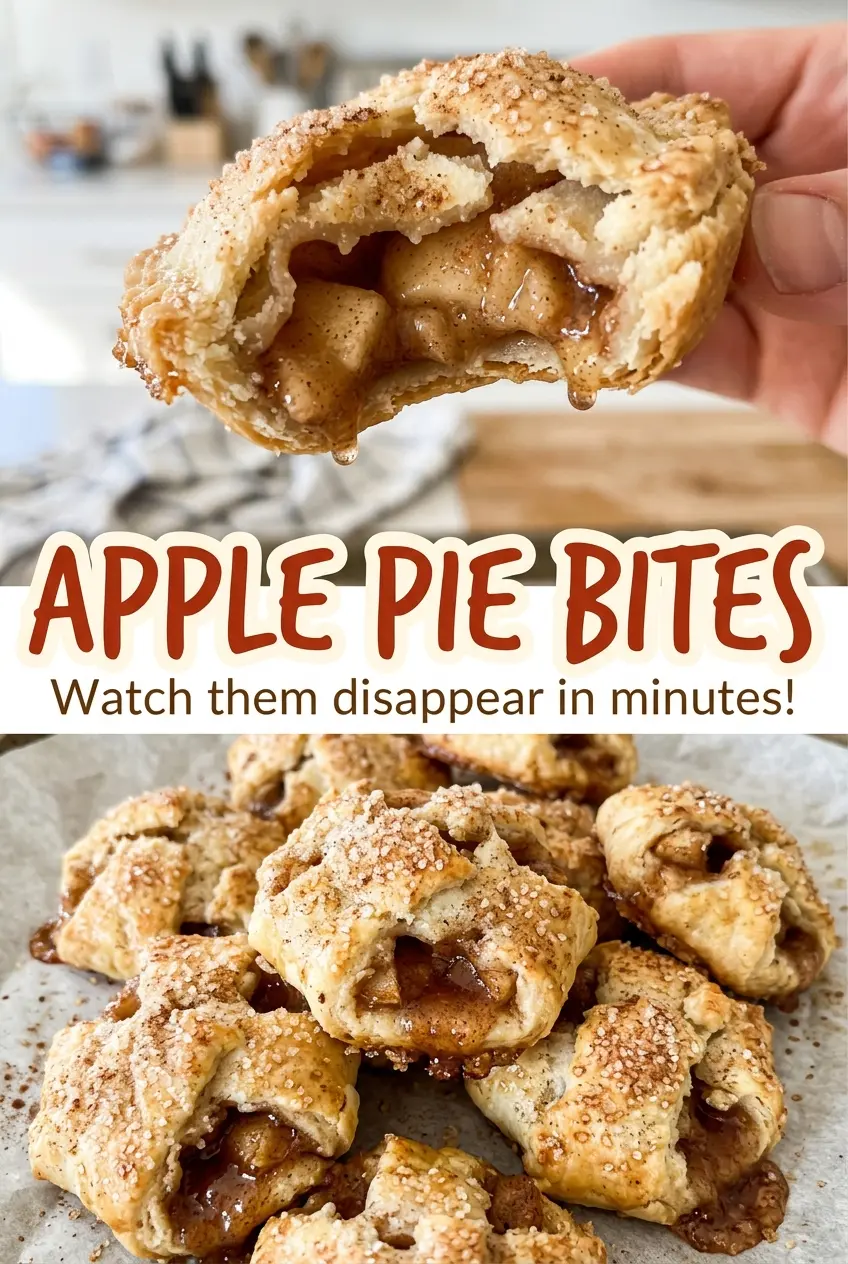
Save these Apple Pie Bites for a cozy bake: tart apple filling, golden crescent pastry, and a cinnamon-sugar finish.
Why These Crescent Cups Need a Thoughtful Amount of Filling
These are pastry cups with apple in every bite, not miniature pies with a deep layer of filling. Crescent dough is soft and flexible before baking, but it needs room to fold over the apple without being stretched thin. A generous spoonful can seem like the way to get more fruit, yet extra filling makes it harder to close the cup neatly and gives the juices more opportunity to bubble over.
About two tablespoons in each cup gives you a good balance: enough apple to taste clearly, with dough still visible around the sides and top. The filling should hold together rather than run like syrup; that way it stays where you spoon it while the pastry bakes. This is also why the apple is diced instead of sliced. Small pieces settle into the cups evenly, so you don’t get one oversized chunk pushing through the dough.
Think of the pointed end as a loose lid, not a tight seal. Fold it over the apple, but don’t pull the crescent dough taut. A relaxed fold keeps the top in place without making the pastry tear or forcing filling out at the edges.
What the Apple, Spice, and Dough Each Bring to the Bites
- Granny Smith apple — Its tartness keeps the filling from tasting flat against the brown sugar, and a firm apple stays in pieces as it cooks. Choose a firm apple without bruised or soft spots; peeling and cutting it into even pieces matters more here than finding a particularly fancy apple.
- Light brown sugar and lemon juice — Brown sugar brings a gentle caramel note, while lemon juice sharpens the apple flavor. Dark brown sugar works in the same measure if that’s what’s in your pantry, though its stronger molasses taste will come through more. Fresh or bottled lemon juice both work here.
- Apple pie spice — This gives the filling its familiar warm-spice character without needing to measure several spices separately. Ground cinnamon alone is a workable stand-in in the same measure, but the result tastes simpler and less layered.
- Cornstarch — It turns the apple juices into a glossy filling that stays in the pastry cups. Don’t skip it: without a thickener, the liquid is more likely to soak into the dough and escape around the edges. Stir it smooth with water before adding it so you don’t leave dry lumps in the filling.
- Refrigerated crescent roll dough — The dough provides both the cup and its folded top, so use crescent dough rather than a different pastry with a different thickness or baking time. There isn’t a dependable one-for-one gluten-free dough swap for this particular shape and method.
- Melted butter and cinnamon sugar — Brushing the warm pastry gives the sugar something to cling to and adds a buttery finish. Ground cinnamon with granulated sugar keeps the topping familiar and crisp; use fresh-smelling cinnamon if yours has been open for a long time.
From Skillet Filling to Golden Crescent Cups
Cook the Apple Until It’s Tender but Still in Pieces
Combine the diced apple, brown sugar, lemon juice, apple pie spice, salt, and 2 tablespoons of water in a 10-inch skillet. Set it over medium heat and cook for 5–7 minutes, stirring occasionally. The apple should turn tender while still holding its shape, rather than collapsing into applesauce. If the pieces are still firm in the center, give them a little more time within that cooking window and check again.
Thicken the Juices Until They Look Glossy
In a small bowl, stir the cornstarch into the remaining 1 tablespoon of water until smooth. Stir this slurry into the apple mixture and cook for 30–60 seconds, until the juices thicken and look glossy around the pieces. Keep stirring so the thickener disperses evenly instead of setting in one spot. Remove the skillet from the heat and let the filling cool for 10 minutes.
Shape the Dough into Muffin-Cup Nests
Heat the oven to 375°F and grease 8 cups of a 12-cup muffin pan. Mix the granulated sugar and cinnamon in a small bowl, then separate the crescent dough into 8 triangles. Press one triangle into each greased cup, using its wide end to cover the bottom and sides. If a triangle pulls away while you’re shaping it, ease it back into the cup rather than stretching it thin.
Fill, Fold, and Bake Until Deep Golden
Spoon about 2 tablespoons of cooled filling into each dough cup, then fold the pointed dough end over the apple. Bake for 15–18 minutes, until the pastry is deep golden brown and cooked through; pale dough around the sides needs more time. Brush the warm bites with melted butter and sprinkle them with the cinnamon sugar. Let them cool in the pan for 5 minutes before removing them.
Two Simple Ways to Change the Apple Pie Bites
Use Honeycrisp for a Sweeter Filling
Replace the Granny Smith with one large Honeycrisp apple, peeled, cored, and diced the same way. The filling will taste sweeter and less tart, and the apple may soften more as it cooks, so keep an eye on the skillet and stop when the pieces are tender but intact.
Leave the Cups Open on Top
For a more visible apple center, press the crescent triangles into the muffin cups but leave the pointed ends unfolded. You’ll get less pastry over the filling and a more open-faced look; keep the filling portion modest so it stays inside the cup as it bakes.
Storage and Reheating
- Refrigerator: Store cooled bites in an airtight container for up to 3 days. The pastry softens as it sits beside the filling.
- Freezer: They can be frozen, though the crescent dough will be less crisp after thawing. Freeze the cooled bites in a single layer, then transfer them to an airtight container.
- Reheating: Warm them in the oven until heated through to bring back some of the pastry’s texture. The microwave is quick, but it tends to make crescent dough softer.
Questions That Come Up When Making Apple Pie Bites
Apple Pie Bites
Ingredients
Equipment
Method
- Combine the diced apple, brown sugar, lemon juice, apple pie spice, salt, and 2 tablespoons of the water in a 10-inch skillet.
- Cook over medium heat for 5–7 minutes, stirring occasionally, until the apple is tender but still holds its shape.
- Stir the cornstarch into the remaining 1 tablespoon water until smooth.
- Stir the cornstarch mixture into the apple mixture and cook for 30–60 seconds, until the juices are thick and glossy.
- Remove from the heat and cool for 10 minutes.
- Heat the oven to 375°F.
- Grease 8 cups of a 12-cup muffin pan.
- Mix the granulated sugar and cinnamon in a small bowl.
- Separate the crescent dough into 8 triangles.
- Press one triangle into each greased muffin cup, using the wide end to cover the bottom and sides.
- Spoon about 2 tablespoons of cooled filling into each dough cup.
- Fold the pointed dough end over the filling.
- Bake for 15–18 minutes, until the pastry is deep golden brown and cooked through.
- Brush the warm bites with melted butter.
- Sprinkle the bites with the cinnamon sugar.
- Cool in the pan for 5 minutes before removing.


