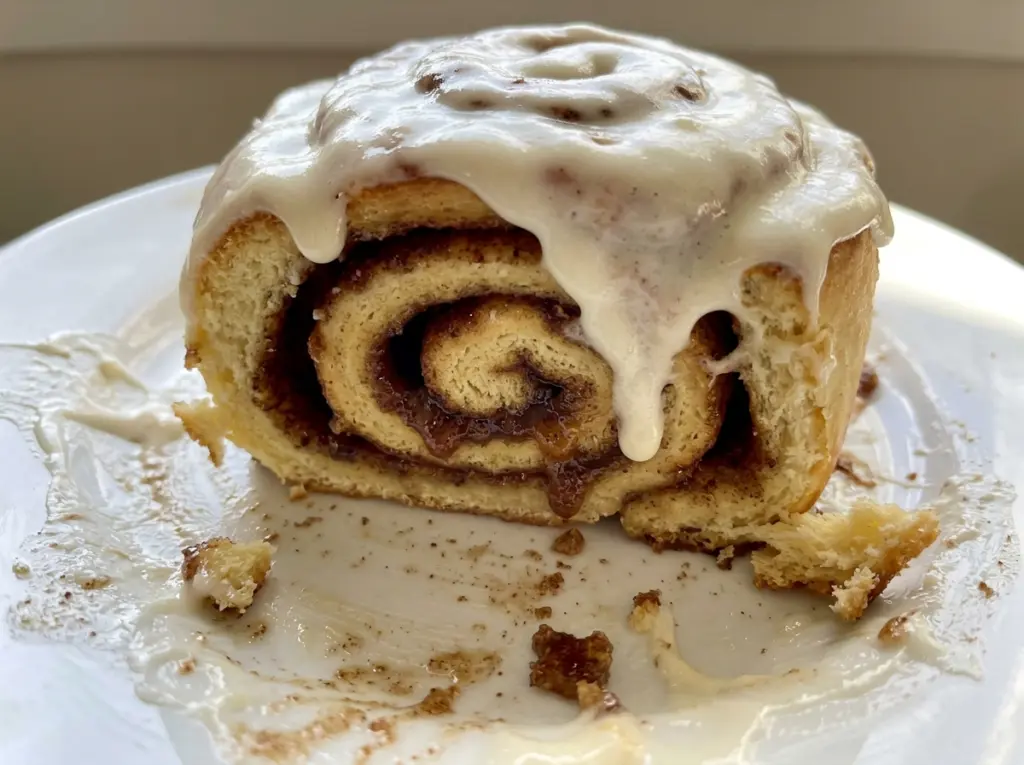
The rolls puff against one another as they bake, and the centers should look set before the tops get too dark. That’s the moment I watch most closely with these Jumbo Cinnabon Cinnamon Rolls: a deep golden top is lovely, but a gooey, underbaked middle is not the goal. The dough makes twelve generous rolls, with a soft, buttery crumb and a cinnamon-sugar spiral in every slice.
Give the dough time for both rises. The first rise builds structure and flavor; the second lets the shaped rolls turn light and pillowy in the pan. I knead until the dough feels smooth and just a little tacky, rather than adding extra flour until it feels dry. A properly risen dough bakes up tender, and the cream cheese frosting melts into the warm swirls without disappearing completely.
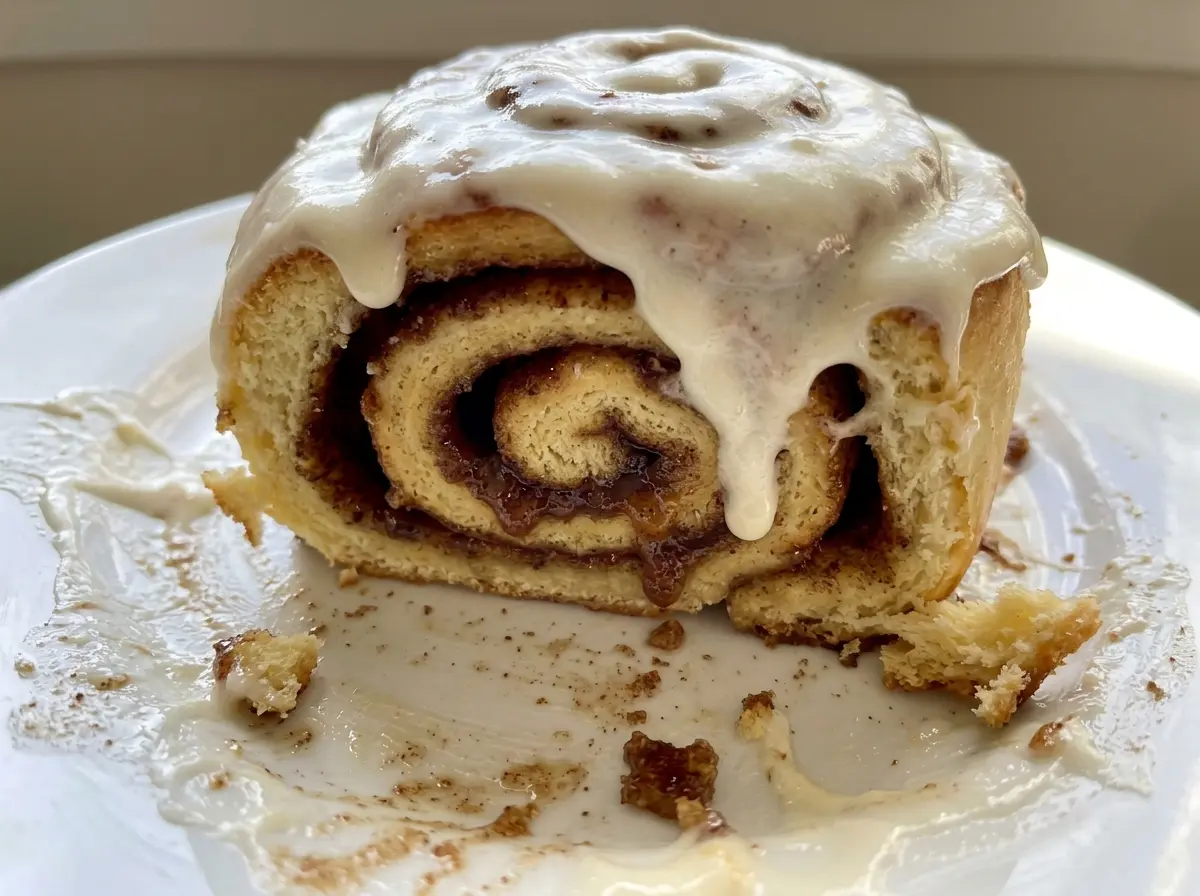
Kitchen Note
I let the rolls rest in the pan for the full 10 minutes before frosting. Spread the frosting while they’re still warm, not straight from the oven, and it softens over the tops instead of sliding off into the bottom of the dish.
Save these Jumbo Cinnabon Cinnamon Rolls for a baking day when you want twelve soft, cinnamon-filled spirals finished with tangy cream cheese frosting.
Why the Second Rise Matters as Much as the First
Sweet, enriched dough rises more slowly than a lean bread dough because eggs, sugar, and butter weigh it down. That’s why I look for the dough to double in the first rise rather than pulling it early because the clock says it’s time. A cool kitchen can stretch the rise; a comfortably warm spot helps it move along. The dough itself is the better guide.
After shaping, the rolls need their own rise in the baking dish. They should look puffy and nearly doubled, with the spirals relaxed and the rolls nestled close together. If they go into the oven too soon, they have less air in their centers and bake up dense. If they’ve had enough time, they expand into each other and stay soft through the middle. The two rises aren’t busywork; they do different jobs for the finished texture.
What Makes the Dough Soft and the Filling Stay Put

- Whole milk and eggs — They enrich the dough and help give the rolls their tender, soft bite. Room-temperature eggs mix in more smoothly than cold ones, while the milk should be warmed to the range given in the ingredients. Lower-fat milk can work, but the dough won’t have quite the same richness.
- Active dry yeast — The foamy milk mixture is a useful check that the yeast is active before you build the dough. If it stays flat after resting, don’t count on the dough to rise well. Keep the milk within the stated temperature range; overly hot milk can damage the yeast.
- All-purpose flour — It gives these rolls a soft, familiar texture without making them too chewy. Add it until a shaggy dough forms, then knead until the dough is smooth and slightly tacky. A dry, stiff dough usually means too much flour was worked in.
- Softened butter and brown sugar — The butter needs to spread easily across the rolled dough so the cinnamon-sugar mixture covers it evenly. Softened butter is easier to distribute than melted butter here, which can run ahead of the filling as you roll the log.
- Cream cheese — It gives the frosting its gentle tang, which balances the sweet rolls. Let both the cream cheese and butter soften before beating; cold lumps are difficult to smooth out once the powdered sugar goes in. Use vanilla extract for a rounded finish, rather than leaving the frosting plain.
From Foamy Yeast to Frosted Cinnamon Spirals
Start with a Smooth, Slightly Tacky Dough
Whisk the yeast and part of the sugar into the warmed milk, then leave it for 5–10 minutes until foamy. Whisk in the remaining sugar, eggs, melted and cooled butter, and salt before mixing in the flour to make a shaggy dough. Knead with a stand mixer and dough hook on medium-low for 6–8 minutes, or by hand for 8–10 minutes. Stop when the dough is smooth and a little tacky; if it feels dry and firm, it has likely picked up too much flour.
Let the Dough Double Before Rolling
Lightly oil a large bowl, add the dough, and turn it once so the surface gets a thin coating. Cover it and leave it in a warm place for 1–1 1/2 hours, until doubled. Don’t judge this rise by the top alone: the whole mass should look visibly larger and airy. While it rises, stir the brown sugar and cinnamon together so the filling is ready to spread.
Roll, Fill, and Proof the Twelve Pieces
Coat a 9×13-inch baking dish with the remaining oil, then roll the dough into an 18×12-inch rectangle. Spread softened butter evenly over the surface and scatter the cinnamon-sugar mixture across it. Roll from a long edge into a snug log, pinch the seam closed, and cut 12 equal pieces, about 1 1/2 inches wide. Set them cut side up in the dish, cover, and let rise for 30–45 minutes, until puffy and nearly doubled; uneven pieces will bake at different rates.
Bake Until the Centers Set, Then Frost
Toward the end of the second rise, heat the oven to 350°F. Beat the cream cheese and softened butter until smooth, then beat in the powdered sugar, vanilla, and salt until creamy. Bake the rolls for 25–30 minutes, watching for golden tops and centers that look set rather than wet. Let them rest in the pan for 10 minutes, then spread the frosting over the warm rolls.
Small Changes for a Different Cinnamon Roll
A More Cinnamon-Forward Spiral
For a bolder, less sugary filling, increase the ground cinnamon and reduce the brown sugar by a similar small amount. Keep the filling spread in an even layer so every roll gets a balanced stripe, and expect the center to taste more warmly spiced rather than as sweet.
A Dairy-Free Batch
Use unsweetened soy milk in place of whole milk, plant-based butter sticks for both the dough and filling, and dairy-free cream cheese for the frosting. Choose baking-style plant butter rather than a soft tub spread so the dough and filling behave more like they do with butter. The rolls will still be tender, though the frosting and dough will taste a little less rich.
Storage and Reheating
- Refrigerator: Keep frosted rolls covered and refrigerated for up to 4 days. The dough firms up when cold, so let a portion sit briefly at room temperature before eating if you prefer a softer texture.
- Freezer: Freeze baked rolls before frosting, wrapped tightly once completely cool, for up to 2 months. Thaw in the refrigerator, then warm gently and frost before serving.
- Reheating: Warm an individual roll briefly in the microwave until soft. Long heating can make the dough tough and cause the frosting to melt away.
Questions That Come Up When Baking These Jumbo Rolls
Jumbo Cinnabon Cinnamon Rolls
Ingredients
Equipment
Method
- Whisk the yeast and 1 tablespoon of the sugar into the warm milk, warmed to 105–110°F.
- Let the mixture stand for 5–10 minutes, until foamy.
- Whisk in the remaining sugar, eggs, melted butter, and salt.
- Mix in the flour until a shaggy dough forms.
- Knead the dough in a stand mixer with a dough hook on medium-low for 6–8 minutes, or by hand for 8–10 minutes, until smooth and slightly tacky.
- Lightly coat a large bowl with 2 teaspoons of the oil.
- Add the dough to the bowl and turn it once to coat.
- Cover and let rise in a warm place for 1–1 1/2 hours, until doubled.
- Stir the brown sugar and cinnamon together in a small bowl.
- Lightly coat a 9x13-inch baking dish with the remaining 1 teaspoon oil.
- Roll the dough into an 18x12-inch rectangle.
- Spread the softened butter evenly over the dough.
- Sprinkle on the cinnamon-sugar mixture.
- Starting at a long edge, roll the dough into a snug log and pinch the seam closed.
- Cut the log into 12 equal pieces, each about 1 1/2 inches wide.
- Arrange the rolls cut side up in the prepared dish.
- Cover and let rise for 30–45 minutes, until puffy and nearly doubled.
- Beat the cream cheese and softened butter until smooth.
- Beat in the powdered sugar, vanilla, and salt until creamy.
- Toward the end of the rolls’ rise, heat the oven to 350°F.
- Bake the rolls for 25–30 minutes, until golden on top and the centers are set.
- Let the rolls rest in the pan for 10 minutes.
- Spread the frosting over the warm rolls.


