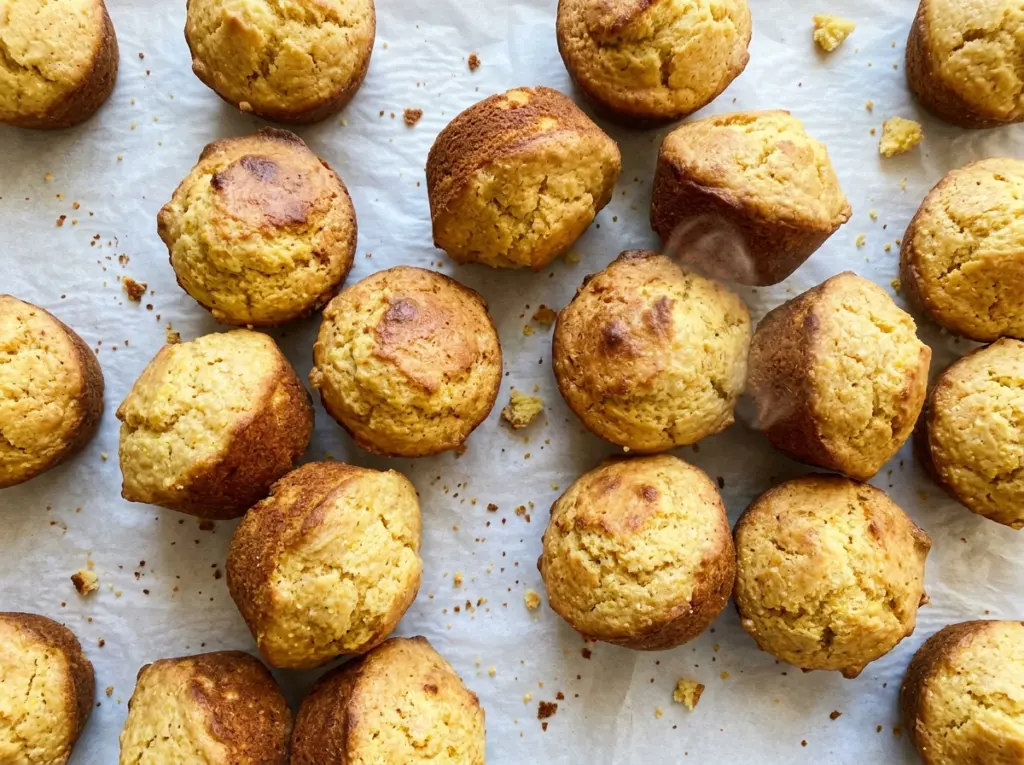
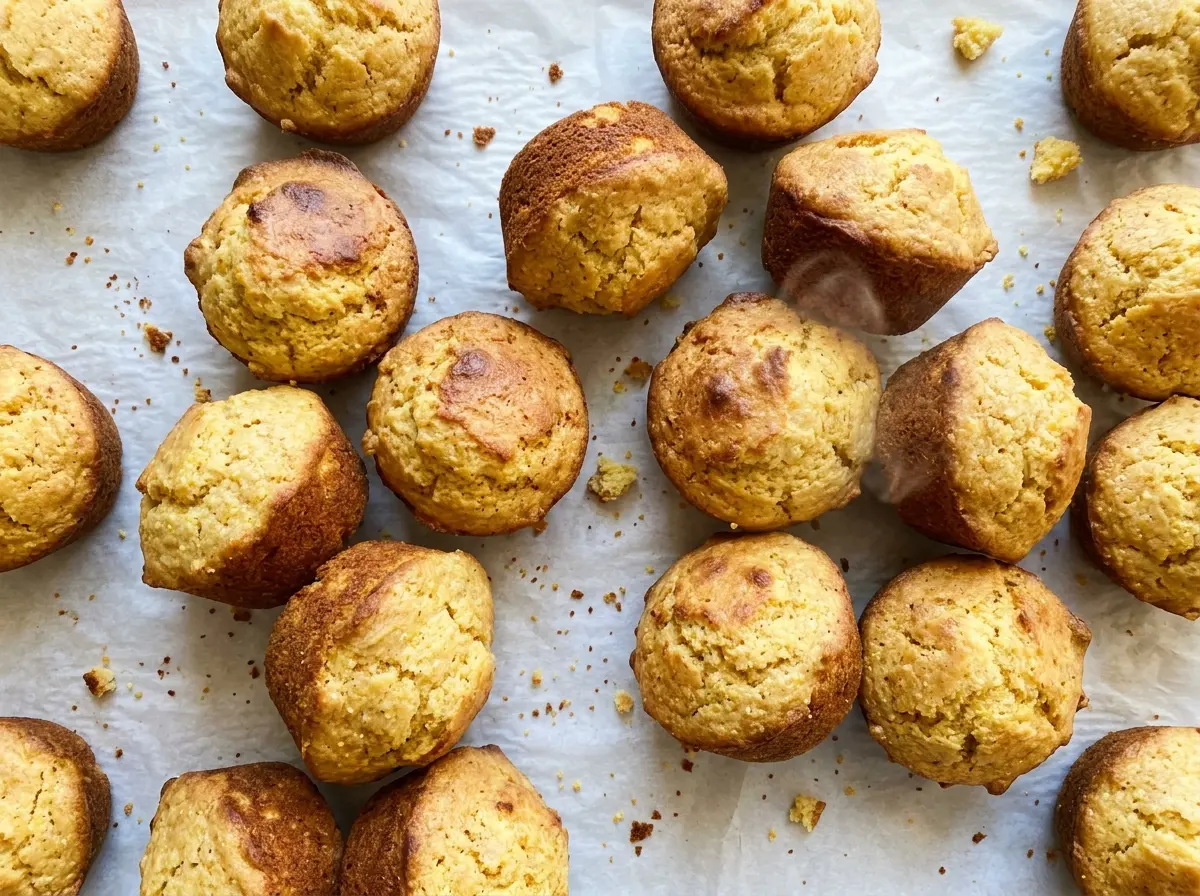
A toothpick that comes out clean or with a few moist crumbs is the cue I watch for with these muffins; waiting for the tops to get deeply browned can dry out the tender center. Amish Cornbread Muffins bake quickly, and their golden tops are a good sign that the cornmeal-and-flour batter is nearly ready. I like them warm, when the crumb is soft and the edges have just enough texture.
The batter comes together in two bowls, which makes it easy to mix the dry ingredients evenly before the milk, egg, and melted butter go in. Stir only until the last dry streak disappears. That keeps the muffins from turning heavy, and the slightly cooled butter blends smoothly into the wet ingredients instead of arriving in hot streaks. The result is a lightly sweet cornbread muffin with a fine, tender crumb.
Kitchen Note
Let the melted butter cool slightly before whisking it into the milk and egg. If it’s piping hot, it can start setting the egg in little streaks before the batter is mixed.
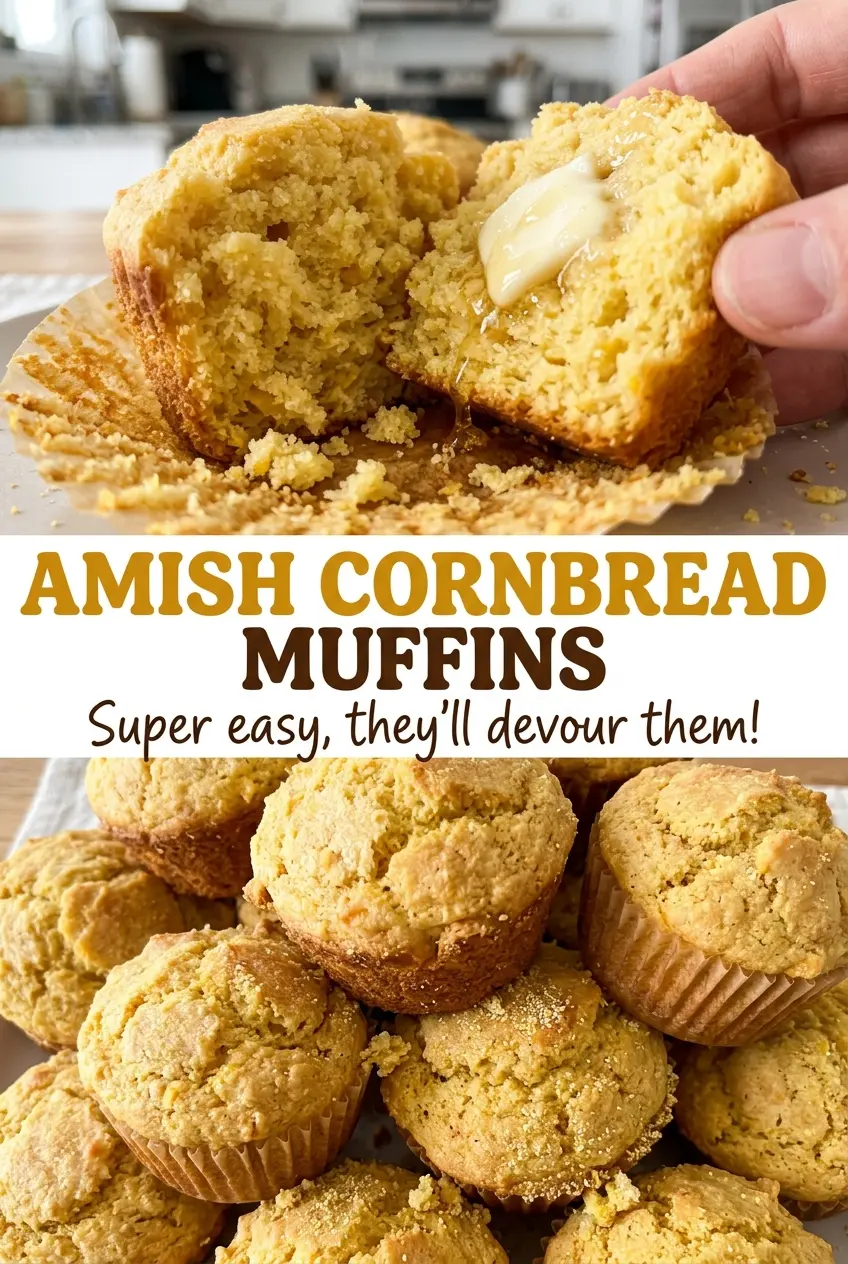
Save these Amish Cornbread Muffins for a golden, lightly sweet bake with a soft center and a quick two-bowl batter.
Why the Equal Cornmeal-and-Flour Split Keeps These Muffins Tender
Cornmeal gives these muffins their familiar grainy bite, but a batter made with cornmeal alone can bake up coarse and fragile. All-purpose flour supplies the softer structure that helps each muffin hold together when you split it or lift it from the pan. The equal balance lets both ingredients show up: you get a clear corn flavor without a crumb that falls apart at the first bite.
The texture also depends on what happens after the wet mixture meets the dry one. Flour develops gluten when it’s stirred, and extra mixing can make a quick muffin batter tight rather than tender. Stir just enough to bring the ingredients together; a few small lumps are less of a problem than a smooth batter that’s been worked hard. This isn’t a cake batter that needs to be beaten until uniform.
The sugar keeps the cornbread gently sweet, not dessert-like, while the melted butter brings richness to the crumb. Together, those ingredients round out the cornmeal without covering it up. That balance is why these muffins work alongside a savory meal just as comfortably as they do on their own.
What Cornmeal, Flour, and Butter Each Bring to the Crumb
- Yellow cornmeal — This is where the unmistakable cornbread flavor and fine, sandy texture come from. A standard fine- or medium-ground cornmeal gives a more even crumb than a very coarse grind; the latter can feel gritty in a small muffin. Check the bag for freshness if it smells stale or musty, since cornmeal’s natural oils can lose their clean, sweet-corn aroma over time.
- All-purpose flour — Flour gives the muffins enough structure to stay tender instead of crumbling. Spoon it into the measuring cup and level the top rather than packing it down; too much flour can make the batter stiff and the baked centers dry. A cup-for-cup gluten-free baking blend made for replacing wheat flour is the most practical swap, though the crumb may be a little more delicate.
- Baking powder — This is the lift in a batter with no yeast, so freshness matters more here than brand. If the container has been open for a long time, the muffins may bake up shorter and heavier. Keep it dry and tightly closed between uses.
- Whole milk and egg — Milk moistens the cornmeal and flour, while the egg helps bind the crumb as it bakes. Whole milk brings more richness than a lower-fat option; plain unsweetened plant milk is a useful dairy-free replacement, with a slightly less buttery result.
- Unsalted butter — Melted butter spreads through the batter easily and gives the muffins a rich, soft bite. A good everyday butter works well here; there’s no need for a specialty brand. For a dairy-free batch, use a plant-based butter substitute in the same measure, choosing one intended for baking.
From Two Bowls to Golden Tops: The Muffin Batter Cues
Get the Pan and Oven Ready
Heat the oven to 400°F and coat a 12-cup muffin pan with nonstick cooking spray. Do this before mixing, so the baking powder doesn’t sit in the wet batter while you prepare the pan. Spray into the corners of each cup as well as across the bottom. The pan should be ready to fill as soon as the batter comes together.
Whisk the Dry Ingredients Evenly
In a large bowl, whisk together the cornmeal, flour, sugar, baking powder, and salt. Break up any small flour or baking-powder clumps as you whisk; even distribution helps the muffins rise evenly. A few turns around the bowl are enough once the mixture looks uniform. Don’t pack the dry mixture down after whisking.
Blend the Milk, Egg, and Butter
In a medium bowl, whisk the milk and egg until the yolk is fully blended into the milk. Whisk in the melted, slightly cooled butter until the wet mixture looks combined. If the butter is still hot, it may make little cooked-egg flecks, so give it a moment to cool first. The mixture doesn’t need to be foamy.
Fill, Bake, and Let the Crumb Set
Pour the wet mixture into the dry ingredients and stir just until combined, then divide the batter evenly among the muffin cups. Bake for 15–18 minutes, until the tops are golden and a toothpick inserted in the center comes out clean or with a few moist crumbs. A toothpick with wet batter means the centers need more time; a few crumbs are a good stopping point. Cool the muffins in the pan for 5 minutes, then transfer them to a wire rack so the bottoms don’t stay steamy.
Two Useful Swaps for Amish Cornbread Muffins
Make Them Gluten-Free
Replace the all-purpose flour with the same measure of a cup-for-cup gluten-free baking blend formulated to replace wheat flour. Keep the rest of the ingredients and method the same. The muffins may have a slightly more delicate or sandy crumb, so let them sit in the pan for the full cooling time before moving them.
Make a Dairy-Free Batch
Use plain unsweetened plant milk in place of the whole milk and a baking-style plant butter in place of the unsalted butter, keeping each replacement measure-for-measure. Leave the egg in; it still provides structure and helps the muffins hold together. The flavor will be a little less rich than the original, but the cornmeal remains front and center.
Storage and Reheating
- Refrigerator: Store cooled muffins in an airtight container for up to 4 days. The cold can firm and dry the crumb, so bring them back to room temperature before serving.
- Freezer: Freeze fully cooled muffins in a freezer-safe airtight container for up to 2 months. Wrap them individually if you want to thaw one at a time.
- Reheating: Warm thawed muffins in a 300°F oven for about 5 minutes. Avoid leaving them in the oven too long, which can dry out the edges.
Questions That Come Up Before the Muffin Pan Goes In
Amish Cornbread Muffins
Ingredients
Equipment
Method
- Heat the oven to 400°F and coat a 12-cup muffin pan with nonstick cooking spray.
- In a large bowl, whisk together the yellow cornmeal, all-purpose flour, granulated sugar, baking powder, and salt.
- In a medium bowl, whisk together the whole milk and egg.
- Whisk the melted and slightly cooled unsalted butter into the milk mixture.
- Pour the milk mixture into the dry ingredients and stir just until combined.
- Divide the batter evenly among the muffin cups.
- Bake for 15–18 minutes, until the tops are golden and a toothpick inserted in the center comes out clean or with a few moist crumbs.
- Cool the muffins in the pan for 5 minutes.
- Transfer the muffins to a wire rack.


