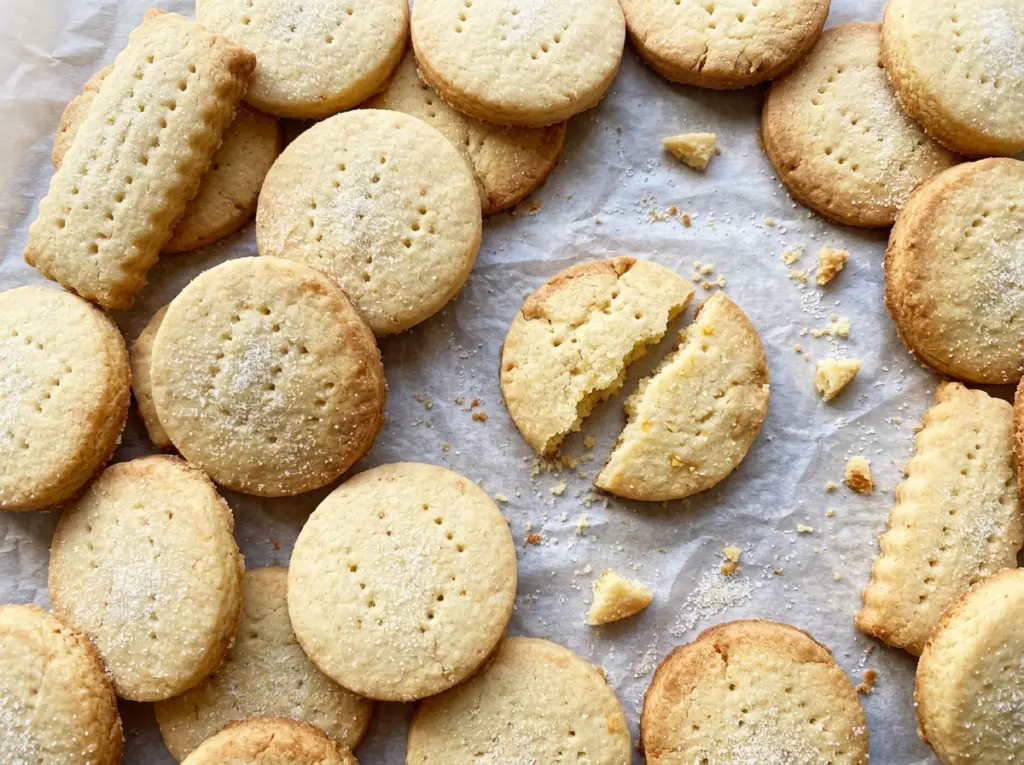
When the first shortbread rounds come out of the oven, their centers are still pale and the rims have only just picked up color. That’s the cue I watch for with these easy shortbread cookies; waiting for a deep golden finish takes them past the buttery, delicate texture I want. The dough is simple, but it rewards a light touch and a little patience before the cutter comes out.
I cream softened butter and powdered sugar until smooth, then add the flour in two batches on low speed. That keeps the dough cohesive without working it harder than it needs. Rolling it between parchment before chilling means the whole sheet firms evenly, so the rounds cut neatly and the scraps are easy to gather. The batch makes 30 cookies, each with a fine crumb, a clean edge, and just enough vanilla to keep the butter at the center.
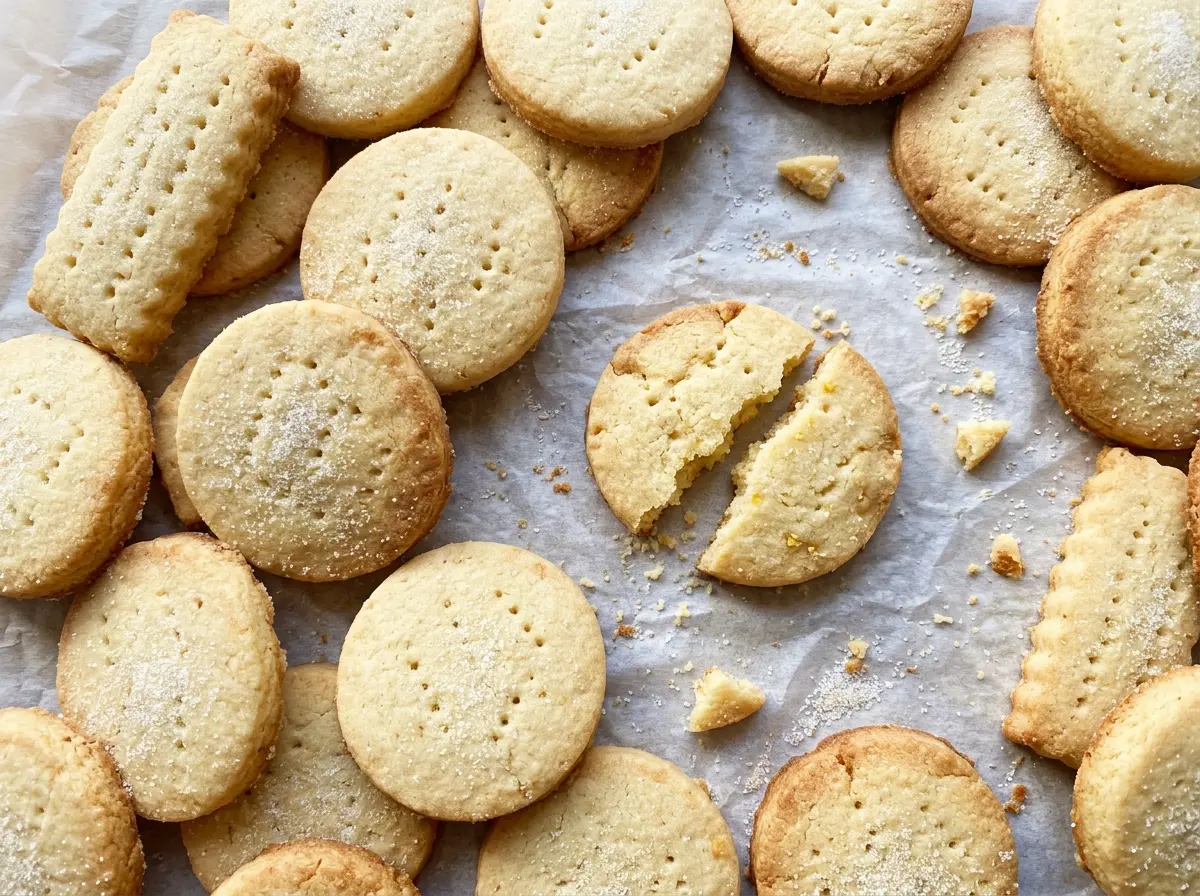
Kitchen Note
Let the butter soften until it gives easily when pressed, but don’t let it turn shiny or partly melted. Properly softened butter creams smoothly with the powdered sugar in about 2 minutes.
Save these easy shortbread cookies for a buttery, tender batch with neatly cut rounds and lightly golden edges.
Why Rolling the Dough Flat Before Chilling Makes Cleaner Shortbread Rounds
Shortbread dough is rich and tender, so it firms up considerably in the refrigerator. Chilling it as a thick ball and then trying to roll it cold means more effort, more cracking, and extra handling just to reach an even thickness. Rolling the dough between parchment first solves that small but frustrating problem: the sheet chills evenly and stays flat, ready for the cutter.
The even thickness matters as much as the chill. At 1/3 inch, the cookies bake at a consistent pace, and a 2-inch cutter gives you rounds that fit comfortably on the baking sheet with a little space between them. If the dough gets warm while you’re cutting, the rounds can lose their crisp outlines; return the parchment-covered sheet to the refrigerator until it feels firm again. Gathering scraps is part of the process, but bring them together gently so you don’t work the dough more than necessary. That combination of a flat chill and light handling gives the cookies tidy edges without making the dough tough.
What Butter, Sugar, and Flour Each Bring to These Shortbread Cookies

- Unsalted butter — Butter supplies the rich flavor and tender texture, so use butter you enjoy eating on its own. A standard grocery-store unsalted butter works well; there’s no need for a specialty brand. Softening it evenly is more important than choosing a premium variety.
- Powdered sugar — Its fine texture blends into the butter smoothly and helps keep the crumb delicate. Granulated sugar isn’t a direct substitute here: the larger crystals change the dough’s texture and the finished cookie’s bite.
- Vanilla extract — Vanilla rounds out the buttery flavor without taking over. A basic pure or imitation vanilla extract both work; use the same amount either way, and avoid vanilla-flavored syrup, which adds liquid and sweetness.
- All-purpose flour — Regular all-purpose flour gives the dough enough structure to roll and cut while keeping the cookies tender. Measure without packing it into the cup, since extra flour can leave the dough dry and crumbly.
- Fine salt — Fine salt distributes through the dough more evenly than coarse crystals, balancing the butter and sugar in every bite. If you use salted butter instead, see the note in the FAQ about adjusting the salt.
From Creamed Butter to Pale-Golden Edges: The Shortbread Process
Cream the Butter and Powdered Sugar Smooth
Heat the oven to 325°F and line an 18×13-inch baking sheet with parchment paper. Beat the softened butter and powdered sugar in a large bowl until smooth and creamy, about 2 minutes, then mix in the vanilla. The mixture should look cohesive rather than greasy or separated. If bits of butter cling to the sides, scrape the bowl and continue until they’re incorporated.
Add the Flour Without Overworking the Dough
Whisk the flour and fine salt together in a medium bowl so the salt is distributed before it goes into the butter. Add the dry mixture to the butter mixture in 2 additions, mixing on low speed each time. Stop as soon as the dough comes together; a few small crumbs are fine, but continuing to beat once it holds together can make the cookies firm. If flour is hiding at the bottom of the bowl, scrape it in gently rather than running the mixer longer than needed.
Roll, Chill, and Cut the Rounds
Roll the dough between sheets of parchment paper to 1/3-inch thickness, then chill it flat for 20 minutes. Once firm, cut 2-inch rounds and arrange them about 1/2 inch apart on the prepared baking sheet. Bring the scraps together gently and reroll them as needed to use the dough. If a round bends or feels too soft to lift cleanly, chill the sheet briefly before continuing.
Bake Just Until the Edges Begin to Color
Bake the cookies for 16–20 minutes, until they’re set and the edges are just beginning to turn golden. The tops should stay pale; don’t wait for the whole cookie to brown. Let them cool on the baking sheet for 10 minutes, when they’re still delicate and need that time to firm up. Then transfer them to a wire rack and cool completely.
Two Useful Ways to Adapt This Shortbread Dough
Make Fluted or Scalloped Cutouts
Use a fluted or scalloped cutter in place of a plain round cutter, keeping the dough at the same 1/3-inch thickness. The finished cookies have a decorative edge but keep the same buttery shortbread character. Choose a cutter close to 2 inches across so the cookies bake at a similar pace.
Use a Gluten-Free Baking Flour Blend
For a gluten-free batch, replace the all-purpose flour with an equal amount of a 1:1 gluten-free baking flour blend that contains xanthan gum. The dough may feel more fragile, so keep it well chilled and handle the cut rounds carefully. The buttery flavor stays familiar, though the crumb can be a little more delicate.
Storage and Reheating
- Refrigerator: Store the cooled cookies in an airtight container for up to 1 week. They’ll feel firmer when cold; let them come to room temperature before serving.
- Freezer: Freeze fully cooled cookies in an airtight container, with parchment between layers, for up to 2 months. Thaw at room temperature while still covered to keep condensation off the cookies.
- Reheating: These are best at room temperature, so reheating isn’t needed. Skip the microwave, which softens the butter quickly and can make the edges lose their delicate texture.
Questions That Come Up When Baking Shortbread Cookies
Easy Shortbread Cookies
Ingredients
Equipment
Method
- Heat the oven to 325°F.
- Line an 18x13-inch baking sheet with parchment paper.
- Beat the butter and powdered sugar in a large bowl until smooth and creamy, about 2 minutes.
- Mix in the vanilla.
- Whisk the flour and salt in a medium bowl.
- Add the flour mixture to the butter mixture in 2 additions, mixing on low just until the dough comes together.
- Roll the dough between sheets of parchment paper to 1/3-inch thickness and chill it flat for 20 minutes.
- Cut the dough into 2-inch rounds and arrange them about 1/2 inch apart on the baking sheet.
- Gather and reroll the scraps as needed.
- Bake for 16–20 minutes, until the cookies are set and their edges are just beginning to turn golden.
- Cool the cookies on the baking sheet for 10 minutes.
- Transfer the cookies to a wire rack to cool completely.


