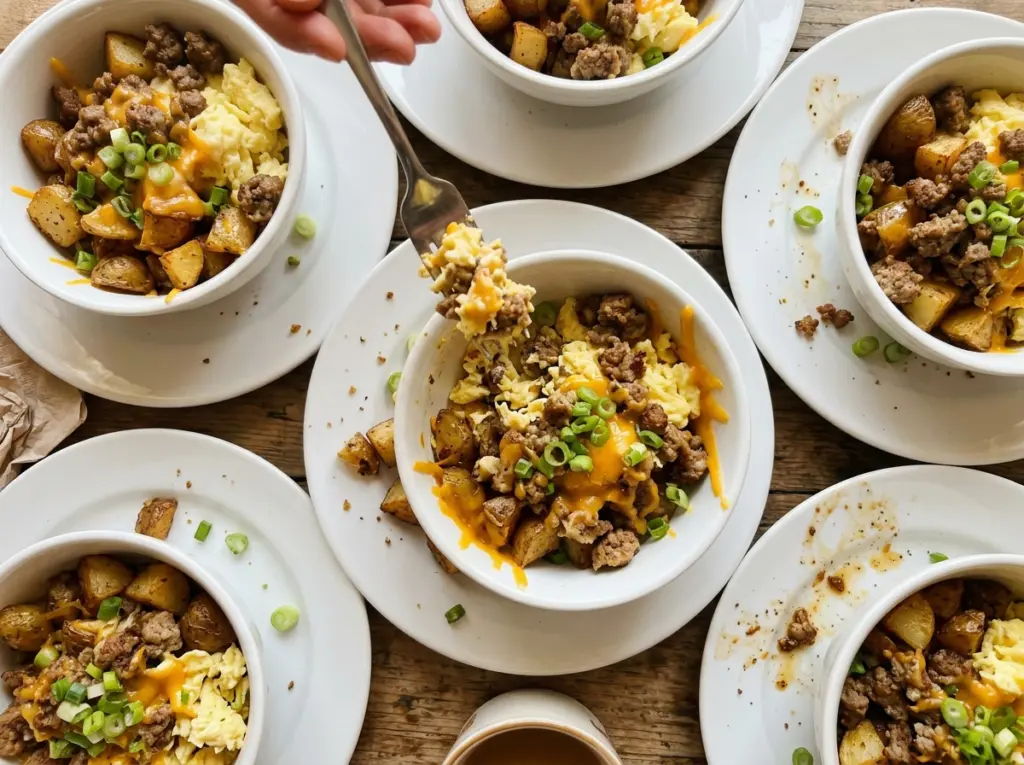
The potatoes start to smell toasted at the edges while the onion turns sweet in the oven, and that’s when breakfast prep stops feeling like a chore. I make these grab and go breakfast bowls when I want something more filling than a quick snack but don’t want to cook from scratch each morning. The separate components give every bowl a bit of everything, instead of leaving one container with all the sausage and another with mostly potatoes.
I roast the vegetables while the sausage browns on the stove, then scramble the eggs once those two jobs are underway. That timing keeps the eggs from sitting around while the potatoes finish and gives me room to portion each part while it’s still easy to handle. The cheddar goes on top, ready to melt when the bowl is reheated.
Russet potatoes make a hearty base, and the sausage brings a savory, browned bite to balance the soft eggs. They’re filling, easy to portion, and ready to grab from the refrigerator on a busy morning.
Kitchen Note
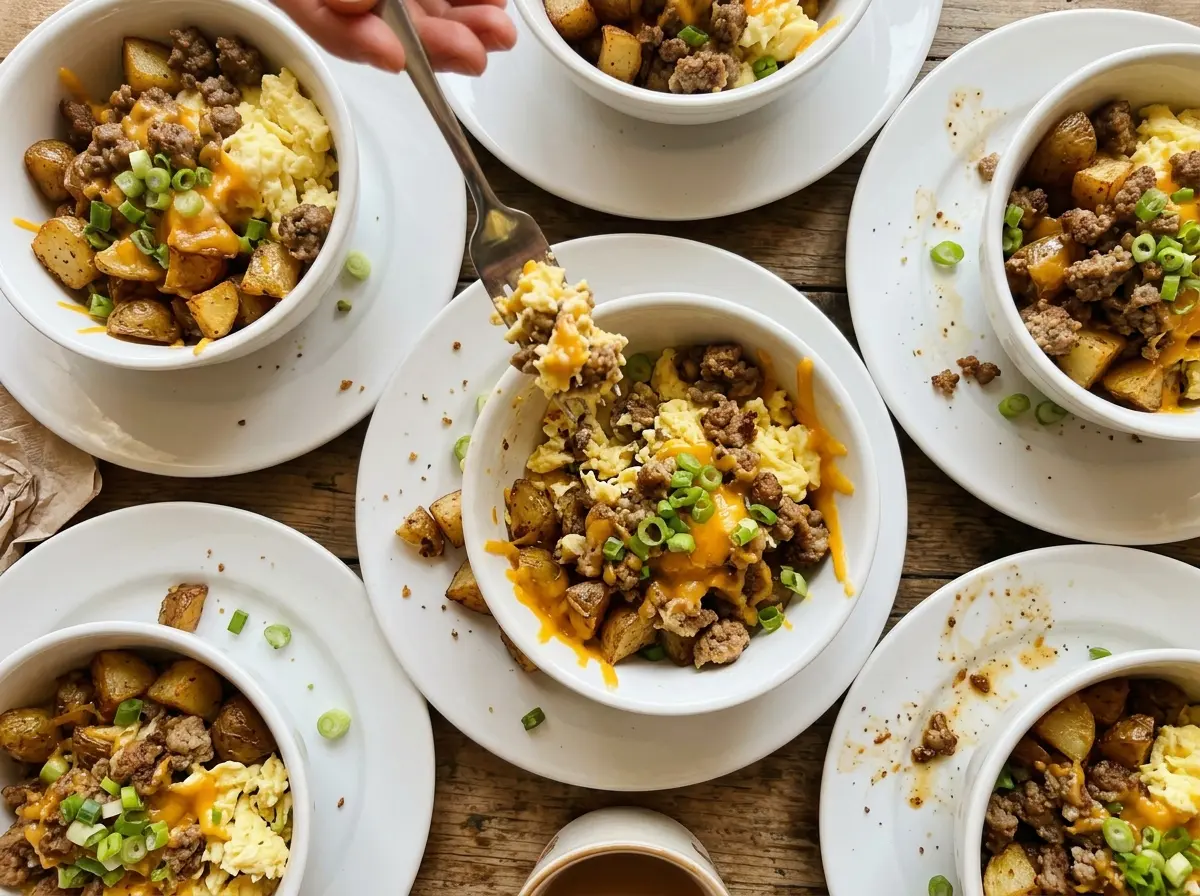
I stop scrambling when the eggs are softly set, not firm and dry. They tighten a little as the bowls cool, then warm again in the microwave, so starting with tender curds makes a noticeable difference at breakfast.
Save these grab and go breakfast bowls for a week of filling mornings, with browned potatoes, breakfast sausage, soft eggs, and cheddar in every container.
The Full Sheet Pan Is What Keeps These Potatoes From Going Soft
Roasted potatoes need room for moisture to escape. When the pieces are packed too tightly, the steam they release hangs around them, and the surfaces soften instead of browning. The 18×13-inch rimmed baking sheet gives the diced potatoes and vegetables space to roast in one even layer, which is especially helpful here because the potatoes share the pan with onion and bell pepper.
Cutting the russets into 1/2-inch dice helps the pieces cook at a similar pace. Smaller pieces can brown before their centers turn tender; much larger ones take longer to cook through. Stirring once during roasting moves the pieces that were against the hot pan and gives the vegetables a more even finish. Look for browned edges and potatoes that are tender when pierced, rather than judging by color alone.
This is also why I don’t pile the vegetables into a deep roasting dish for this batch. The broad pan gives them the direct heat and open space they need, while the rim keeps the oil and small pieces contained.
Which Ingredients Help These Bowls Reheat Well

- Russet potatoes — Their fluffy centers make a substantial base beneath the eggs and sausage. Choose firm potatoes without soft spots; the inexpensive ones work well here. Scrub them and keep the dice consistent. There isn’t another ingredient in this bowl that can replace their starchy, filling texture.
- Red bell pepper and yellow onion — The pepper adds gentle sweetness, while onion softens and browns alongside the potatoes. Pick vegetables that feel firm, but there’s no need to seek out a specialty variety. If you leave the pepper out, the bowls still work, though they’ll lose some sweetness and color.
- Pork breakfast sausage — Bulk pork breakfast sausage is easy to break into small pieces and brings the seasoned, savory element to each serving. A standard grocery-store package works well; the main thing is to crumble it as it cooks so it portions evenly. Leaving it out is the simplest meatless adjustment, though the bowls will be less hearty.
- Eggs and milk — Large eggs give the bowls their soft, filling center, and milk helps the scramble stay tender. Use the eggs you normally buy; specialty eggs aren’t needed. For a dairy-free version, leave out the milk along with the butter and cheese, as described below.
- Cheddar and butter — Unsalted butter gives the eggs a little richness, and cheddar melts over the warm ingredients. Bagged shredded cheddar is convenient; freshly shredded cheddar tends to melt more smoothly, so use whichever fits your prep routine. Omit both for the dairy-free adaptation.
Roast, Brown, Scramble: The Order for Six Breakfast Bowls
Roast the potatoes and vegetables until tender
Heat the oven to 425°F. Toss the diced russet potatoes, red bell pepper, onion, olive oil, kosher salt, black pepper, and paprika on an 18×13-inch rimmed baking sheet, then spread them in an even layer. Roast for 30–35 minutes, stirring halfway through. The potatoes should be tender inside with browned spots on the outside.
Brown the sausage in small pieces
While the vegetables roast, cook the pork breakfast sausage in a 12-inch skillet over medium heat. Break it into small pieces as it cooks so you don’t end up with a few oversized chunks in some bowls. It takes 8–10 minutes to brown and cook through to 160°F. Transfer the cooked sausage to a plate.
Scramble the eggs gently
Whisk the eggs and milk together in a medium bowl. Melt the unsalted butter in a 10-inch nonstick skillet over medium-low heat, add the egg mixture, and stir gently as it cooks. The scramble takes about 5–8 minutes; look for soft curds rather than a dry, firm mass, and cook to 160°F.
Divide the components among containers
Divide the roasted potatoes and vegetables, sausage, and eggs among six 2-cup microwave-safe containers. Spread the components among the containers rather than filling one at a time with only what’s nearest, so each serving gets a balance of potatoes, vegetables, meat, and eggs. Finish each bowl with cheddar across the top.
Two Ways to Adapt These Bowls Without Losing Their Prep-Ahead Ease
Dairy-free breakfast bowls
Omit the milk, butter, and cheddar. Cook the eggs in the 10-inch nonstick skillet over medium-low heat without the butter, stirring gently until softly set. The eggs will be a little less rich, and you’ll miss the melted cheese on top, but the potatoes, vegetables, sausage, and eggs still make a complete bowl.
Meatless potato-and-egg bowls
Leave out the pork breakfast sausage and divide the roasted vegetables and scrambled eggs among the bowls with the cheddar. This makes an ovo-lacto vegetarian breakfast with a lighter, less savory feel than the sausage version; there’s no need to change how the potatoes or eggs are cooked.
Storage and Reheating
- Refrigerator: Let the bowls cool briefly, then cover and refrigerate within 2 hours. Use within 4 days; the potato edges soften a bit as they sit.
- Freezer: I don’t freeze these bowls because cooked eggs can turn watery and potatoes can lose their pleasant texture after thawing. The refrigerator is the better choice for this batch.
- Reheating: Microwave a bowl covered for 1–2 minutes, stirring halfway through, until heated to 165°F. Skipping the stir can leave the center cooler than the edges.
Questions That Come Up When You Meal-Prep Breakfast Bowls
Grab and Go Breakfast Bowls
Ingredients
Equipment
Method
- Heat the oven to 425°F.
- Toss the potatoes, bell pepper, onion, olive oil, salt, pepper, and paprika on an 18x13-inch rimmed baking sheet.
- Spread the vegetables in an even layer.
- Roast for 30–35 minutes, stirring halfway through, until the potatoes are tender and browned.
- While the vegetables roast, cook the sausage in a 12-inch skillet over medium heat, breaking it into small pieces, for 8–10 minutes, until browned and cooked to 160°F.
- Transfer the sausage to a plate.
- Whisk the eggs and milk in a medium bowl.
- Melt the butter in a 10-inch nonstick skillet over medium-low heat.
- Add the eggs and cook, stirring gently, until softly set and 160°F, about 5–8 minutes.
- Divide the roasted potatoes and vegetables, sausage, and eggs among six 2-cup microwave-safe containers.
- Top the bowls with the cheddar.
- Let the bowls cool briefly.
- Cover and refrigerate within 2 hours; use within 4 days.
- Microwave a bowl covered for 1–2 minutes, stirring halfway through, until heated to 165°F.


