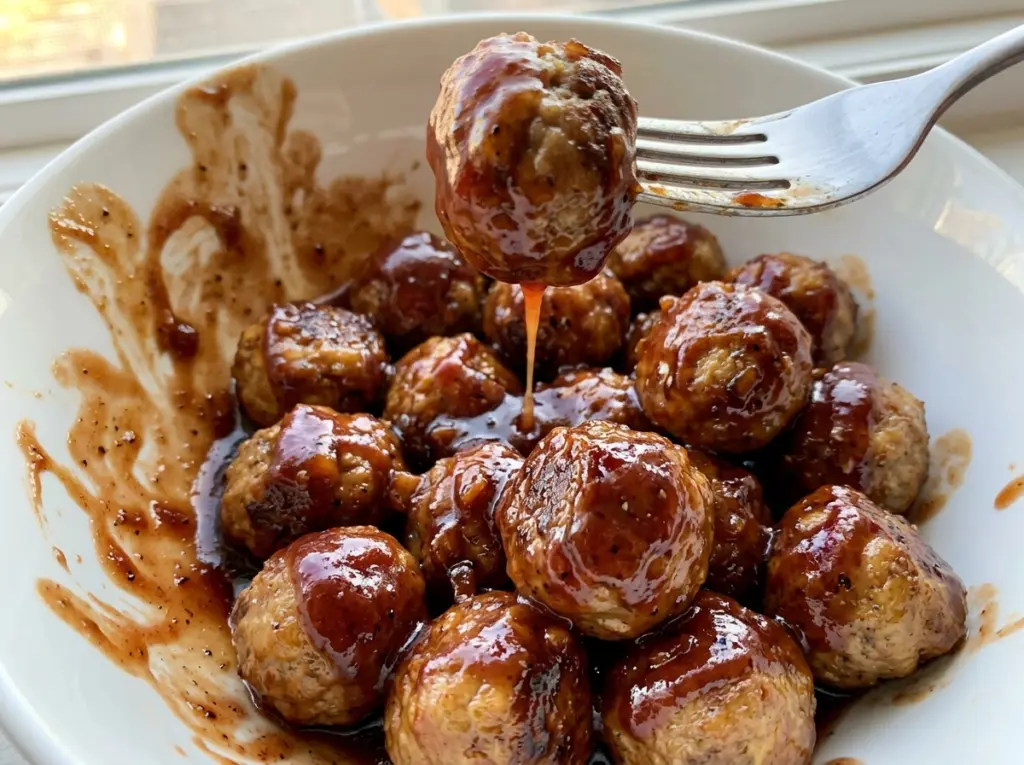
As grape jelly warms in a pot, it goes from firm and sticky to glossy, and the barbecue sauce changes with it. The first few stirs can look uneven, but give the jelly a little time over medium-low heat and the two come together into a smooth coating. That’s the base for these Grape Jelly BBQ Meatballs: sweet, tangy, and easy to get on the table without making a separate glaze.
I use frozen, fully cooked meatballs here because they can go straight into the sauce, where they heat through as the flavors mingle. The Dutch oven keeps everything in one pot, and a low simmer gives the sauce time to cling without scorching on the bottom. What you want at the end is tender, hot meatballs coated in a shiny sauce—not a pot of jelly with barbecue sauce stirred through it.
Kitchen Note
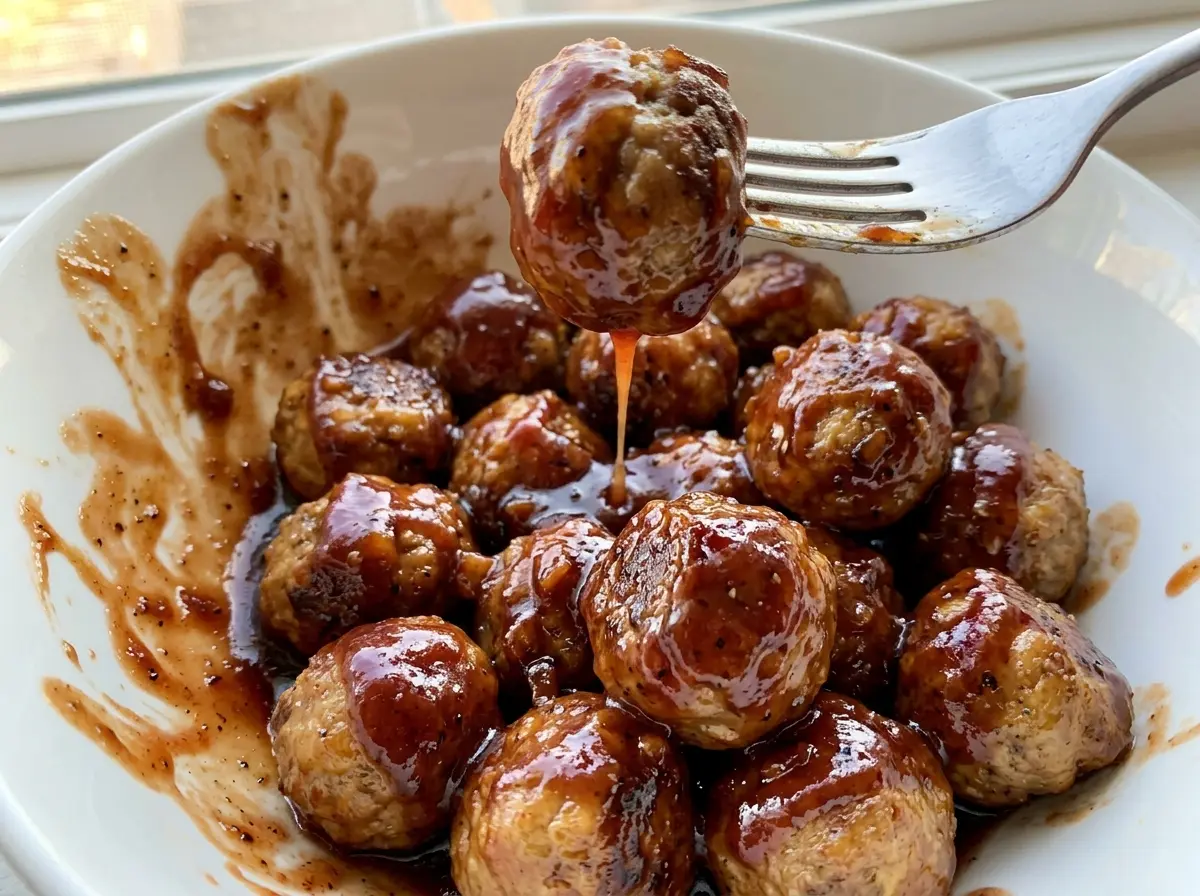
Stir the pot every 10 minutes while the meatballs simmer. The sauce is thick enough to settle on the bottom, and a quick stir keeps it moving while redistributing the coating over the meatballs.
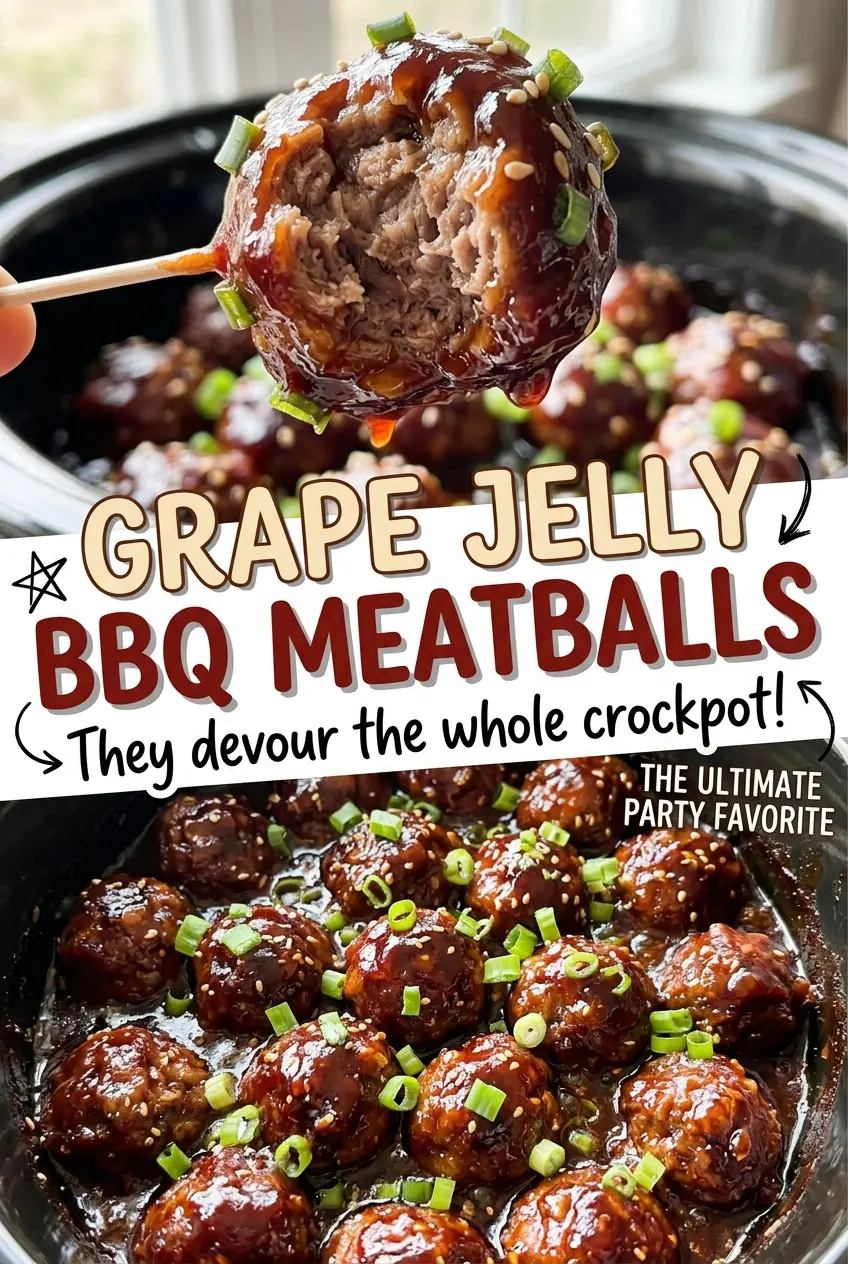
Save these Grape Jelly BBQ Meatballs for a potluck or game-day spread—the sweet-tangy sauce coats every meatball with just two sauce ingredients.
Why the Jelly Needs Time to Melt Before the Meatballs Go In
Grape jelly and barbecue sauce each bring something different to the pot. The jelly adds sweetness and body, while the barbecue sauce gives the mixture its tangy, savory side. Use them in equal amounts and neither has to do all the work; the result is a sauce that tastes balanced rather than like plain melted jelly or straight barbecue sauce.
The order matters because frozen meatballs cool the sauce as soon as they hit the pot. Stirring the two sauces together first gives the jelly time to melt evenly, so you start with a smooth coating instead of trying to work firm pieces of jelly around cold meatballs. Keep the heat at medium-low during this short melting stage. Higher heat isn’t a shortcut worth taking with a sugary sauce.
- Look for a smooth surface. The jelly should be melted into the barbecue sauce before you add the meatballs.
- Expect the sauce to be sweet-tangy. The type of barbecue sauce you choose will influence the balance, but the jelly remains noticeable.
- Keep the sauce in the pot. The meatballs simmer directly in it, so there’s no separate glaze to reduce or pour over at the end.
What the Jelly, Barbecue Sauce, and Meatballs Each Bring
- Grape jelly — This is what gives the sauce its distinctive sweetness and glossy, thick texture. A standard grape jelly works well; there’s no need to seek out a specialty version. Another type of spread would change the flavor and may not melt into the same familiar sauce, so grape jelly is the closest choice for this dish.
- Barbecue sauce — Its tang and savory seasoning keep the jelly from tasting one-note. Use a barbecue sauce you already enjoy, since its taste comes through in the finished coating. A smoky or spicy style is an easy way to steer the flavor without introducing another ingredient.
- Frozen, fully cooked meatballs — Starting with fully cooked meatballs makes this a straightforward simmer rather than a raw-meat cooking project. Frozen ones can be added straight to the pot, and the covered simmer warms them through. Another frozen, fully cooked meatball works in the same way; raw meatballs aren’t a direct swap for this timing.
How to Melt the Sauce and Heat the Meatballs Evenly
Stir the Jelly and Barbecue Sauce Smooth
Put the grape jelly and barbecue sauce in a 5- to 6-quart Dutch oven over medium-low heat. Stir for 3 to 5 minutes, watching as the jelly softens and blends into the barbecue sauce. At first, the mixture may look streaky or hold small jelly pieces; keep stirring until it looks smooth. Don’t turn the heat up to rush it, since the sugar can catch on the bottom of the pot.
Coat the Frozen Meatballs
Add the frozen, fully cooked meatballs to the smooth sauce and stir until they’re coated. They’ll cool the sauce, so don’t worry if it thickens or looks less glossy at this point. Use a spoon that reaches the bottom of the pot to bring the sauce up over the meatballs. Once they’re coated, cover the Dutch oven and lower the heat for the simmer.
Simmer Until Hot in the Center
Simmer over low heat for 30 to 40 minutes, stirring every 10 minutes. Keep the lid on between stirs so the pot stays covered and the meatballs heat through in the sauce. Check a meatball in the center of the pot with an instant-read thermometer; it should reach 165°F in the center. If the middle is still cool, cover the pot again and continue simmering until it reaches that temperature.
Easy Ways to Change the Sauce Without Changing Its Character
Choose a smoky barbecue sauce
Use a smoky style of barbecue sauce in the same amount. It gives the sweet grape jelly a deeper, more savory edge, while keeping the same two-part sauce and stovetop method.
Give the sauce a spicy edge
Swap in a spicy barbecue sauce, keeping the same quantity. The jelly still rounds out the sauce, but the finished meatballs will have more heat than the classic sweet-tangy version.
Make a gluten-free version
Choose gluten-free frozen fully cooked meatballs and gluten-free barbecue sauce, keeping the same amounts. The sauce stays familiar, though the meatball texture and seasoning may vary by brand.
Storage and Reheating
- Refrigerator: Refrigerate leftovers within 2 hours in a covered container and use them within 3 to 4 days. The chilled sauce will thicken, then loosen as it warms.
- Freezer: Freeze the cooled meatballs and sauce together in an airtight freezer-safe container for up to 2 to 3 months. Thaw in the refrigerator before reheating; the sauce may look thicker after thawing.
- Reheating: Warm gently in a covered saucepan over low heat, stirring occasionally, until hot throughout. Avoid high heat, which can scorch the sugary sauce before the meatballs are warm in the middle.
Questions That Come Up When Making Grape Jelly BBQ Meatballs
Grape Jelly BBQ Meatballs
Ingredients
Equipment
Method
- In a 5- to 6-quart Dutch oven, stir the grape jelly and barbecue sauce over medium-low heat for 3 to 5 minutes, until the jelly melts and the sauce is smooth.
- Add the frozen meatballs and stir to coat.
- Cover and simmer over low heat for 30 to 40 minutes, stirring every 10 minutes, until the meatballs are hot throughout and reach 165°F in the center.


