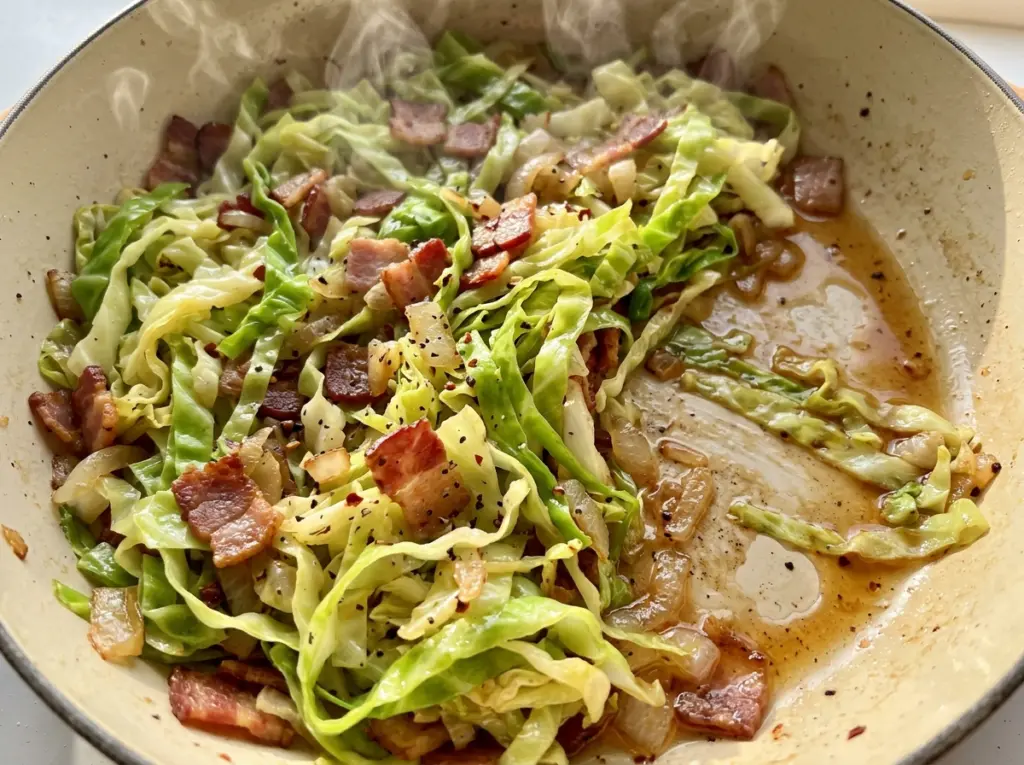
The bacon starts to crisp in the Dutch oven, and within a few minutes there’s enough rendered fat to coat the onion and cabbage. That’s the beginning of Southern fried cabbage: straightforward ingredients, one pot, and a finish that’s tender without turning limp.
I cook the cabbage in two stages. A short stretch covered lets the thick pieces soften in steam; then the lid comes off so excess moisture can cook away and the edges can brown. Add the cabbage by handfuls as it wilts, and the pot goes from crowded to manageable without crushing everything down. With crisp bacon stirred back in at the end, each serving gets a little smoky crunch against the sweet, soft cabbage.
Kitchen Note
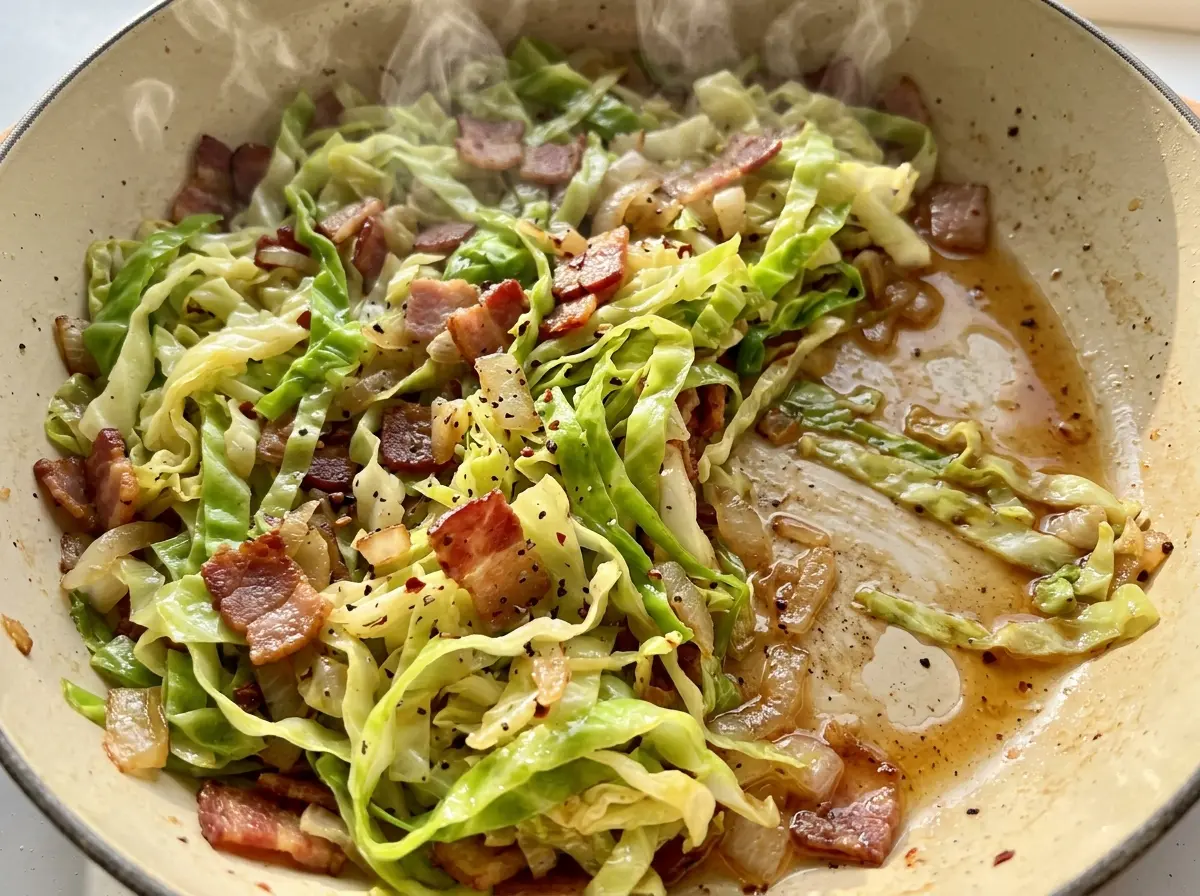
A whole head of cabbage looks like too much for the pot at first. Add it a handful at a time, stirring as it wilts, and you’ll have room for the rest without packing the pieces down.
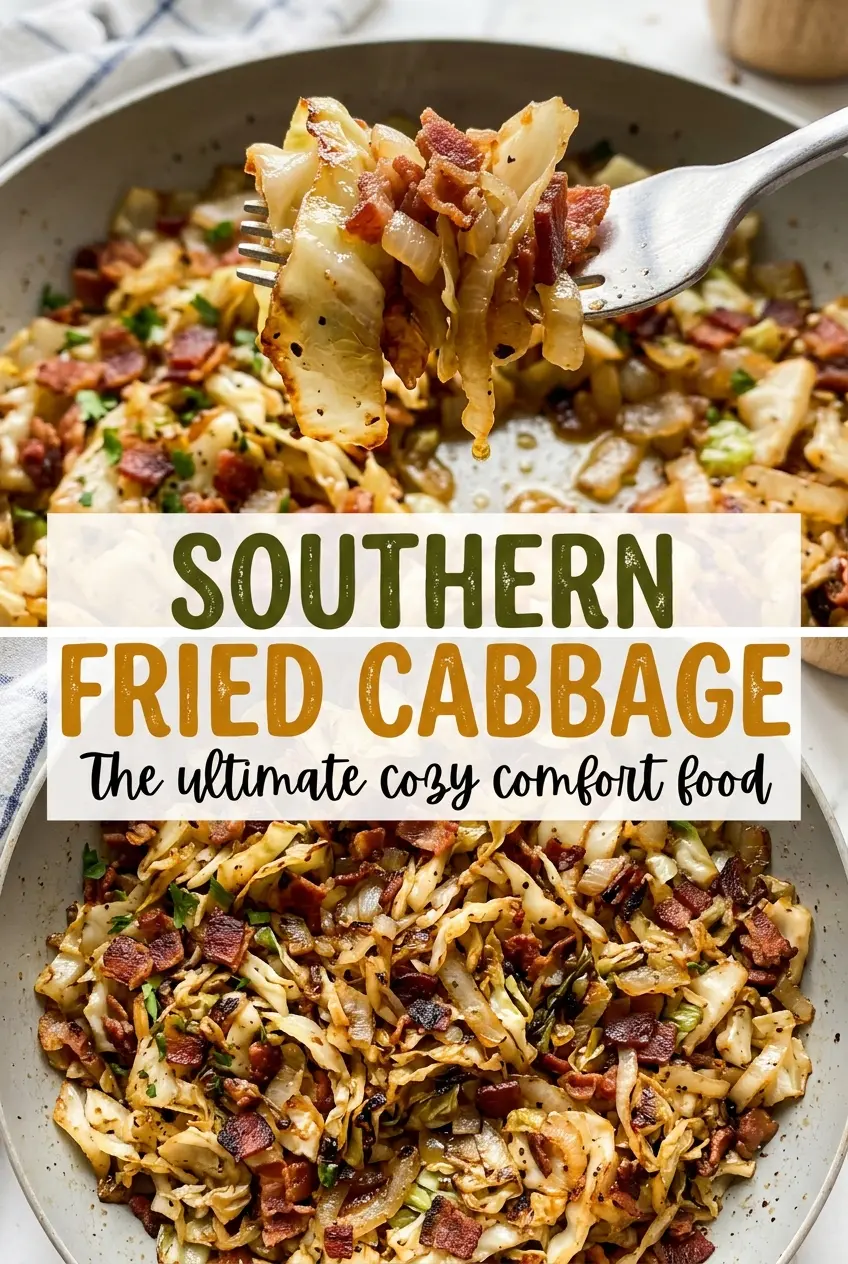
Save this Southern fried cabbage for a one-pot side with crisp bacon and tender cabbage browned at the edges.
Why the Lid Comes Off Before the Cabbage Is Tender
“Fried” doesn’t mean this cabbage spends the whole time uncovered in hot fat. A medium head is a lot of vegetables for one pot, and cooking it uncovered from the start can leave the outside pieces browned before the thicker pieces soften. The covered stage solves that problem by trapping steam around the cabbage, helping it turn tender without constant stirring.
But leaving the lid on through the whole cook creates a different problem: cabbage releases moisture, and that liquid needs somewhere to go. Once you uncover the pot, the steam escapes and the remaining moisture cooks down. That’s when the edges pick up color and the cabbage tastes concentrated rather than watery. Stir once during the covered stretch, then occasionally after uncovering; frequent stirring can break the softening pieces before they have a chance to brown.
Use the texture as your guide at the end. The cabbage should be tender, with browned edges, not crisp like raw slaw and not collapsed into a wet pile. If it’s soft but still looks glossy with liquid, keep it uncovered over medium heat and give the moisture more time to cook away.
What Bacon, Onion, and Cabbage Each Bring to the Pot
- Bacon — Chopped bacon provides both the crisp pieces at the finish and the fat for cooking the onion. Let it get crisp before moving it to a paper towel-lined plate; the rendered fat is part of the cooking base, so leave about 2 tablespoons in the pot. There isn’t a like-for-like substitute in this ingredient list, and leaving it out changes the flavor and how the onion cooks.
- Yellow onion — Thin slices soften quickly and bring a mild sweetness that balances the savory bacon. A firm onion is all you need here; no specialty variety is worth seeking out. Cutting it thinly matters more than finding a particular brand because thicker pieces take longer to soften.
- Green cabbage — Choose a firm, compact head without wilted or damaged outer leaves. Core it and cut it into 1-inch pieces so the pieces soften at a similar pace. This version is built around green cabbage; a different cabbage variety can vary in density and cooking time, so it won’t behave quite as predictably.
- Water, salt, and black pepper — The water creates steam under the lid, while kosher salt seasons the cabbage and pepper adds a little warmth. Measure the water rather than pouring freely; too much liquid takes longer to cook off. Freshly ground or pre-ground black pepper both work, so use what you have.
From Crisp Bacon to Tender, Brown-Edged Cabbage
Render the Bacon and Save the Cooking Fat
Put the chopped bacon in a 6-quart Dutch oven over medium heat and cook for 8 to 10 minutes, stirring occasionally, until crisp. The pieces should be browned and firm rather than pale and chewy. Transfer them to a paper towel-lined plate, then leave about 2 tablespoons of fat in the pot. If you pour it all off, the onion loses the fat it needs for the next stage.
Soften the Onion Without Rushing It
Add the thinly sliced onion to the bacon fat and cook over medium heat for 4 to 5 minutes, stirring occasionally. It’s ready when the slices have softened and look glossy, not when they’ve turned deeply browned. If the onion starts catching on the bottom, lower the heat slightly and stir; browned onion can make the finished cabbage taste more bitter than sweet. Keep the pot on the burner for the cabbage.
Season the Cabbage as It Wilts
Add the cabbage by handfuls, stirring as it wilts to make room for the next addition. When it’s all in the pot, add the water, kosher salt, and black pepper. Cover and cook over medium-low heat for 8 to 10 minutes, stirring once during that time. The cabbage will begin to soften, but don’t expect browned edges yet.
Uncover, Cook Off Moisture, and Finish
Remove the lid and cook over medium heat for 8 to 12 minutes, stirring occasionally, until the cabbage is tender with browned edges. The pot should look less steamy as the released moisture cooks away; if the cabbage still has a pool of liquid, keep cooking until it reduces. Stir the crisp bacon back in once the cabbage is ready, then serve while the bacon still has some bite.
Small Changes That Keep the Pot Balanced
Make a Half Batch
Halve each ingredient for a smaller pot of cabbage. Use the same order of steps, but rely on the visual cues as well as the clock: a smaller quantity may soften and brown sooner, so stop when it’s tender with browned edges rather than waiting for the full cook time automatically.
Make the Cabbage More Prominent
Use 4 slices of bacon instead of 6 and keep the rest of the ingredient amounts the same. The cabbage will taste less smoky and the finished pot will have fewer crisp bacon pieces, while the bacon still contributes rendered fat and savory flavor.
Turn Up the Pepper
For a more peppery finish, increase the black pepper from 1/4 teaspoon to 1/2 teaspoon. The extra bite stands out against the soft cabbage without changing the one-pot method.
Storage and Reheating
- Refrigerator: Refrigerate leftovers within 2 hours and keep them covered for up to 3 to 4 days. The cabbage softens further as it sits.
- Freezer: It can be frozen in an airtight container for up to 2 to 3 months, though the thawed cabbage will be softer and the bacon less crisp.
- Reheating: Warm it in a skillet over medium-low heat, stirring occasionally, until it reaches 165°F throughout. Avoid high heat, which can scorch the bacon and make the cabbage break down further.
Questions That Come Up While Cooking Southern Fried Cabbage
Southern Fried Cabbage
Ingredients
Equipment
Method
- Cook the bacon in a 6-quart Dutch oven over medium heat for 8 to 10 minutes, stirring occasionally, until crisp.
- Transfer the bacon to a paper towel-lined plate and leave about 2 tablespoons of fat in the pot.
- Add the onion and cook over medium heat for 4 to 5 minutes, stirring occasionally, until softened.
- Add the cabbage by handfuls, stirring as it wilts to make room.
- Add the water, salt, and pepper.
- Cover and cook over medium-low heat for 8 to 10 minutes, stirring once.
- Uncover and cook for 8 to 12 minutes, stirring occasionally, until the cabbage is tender with browned edges.
- Stir the cooked bacon back into the cabbage and serve.


