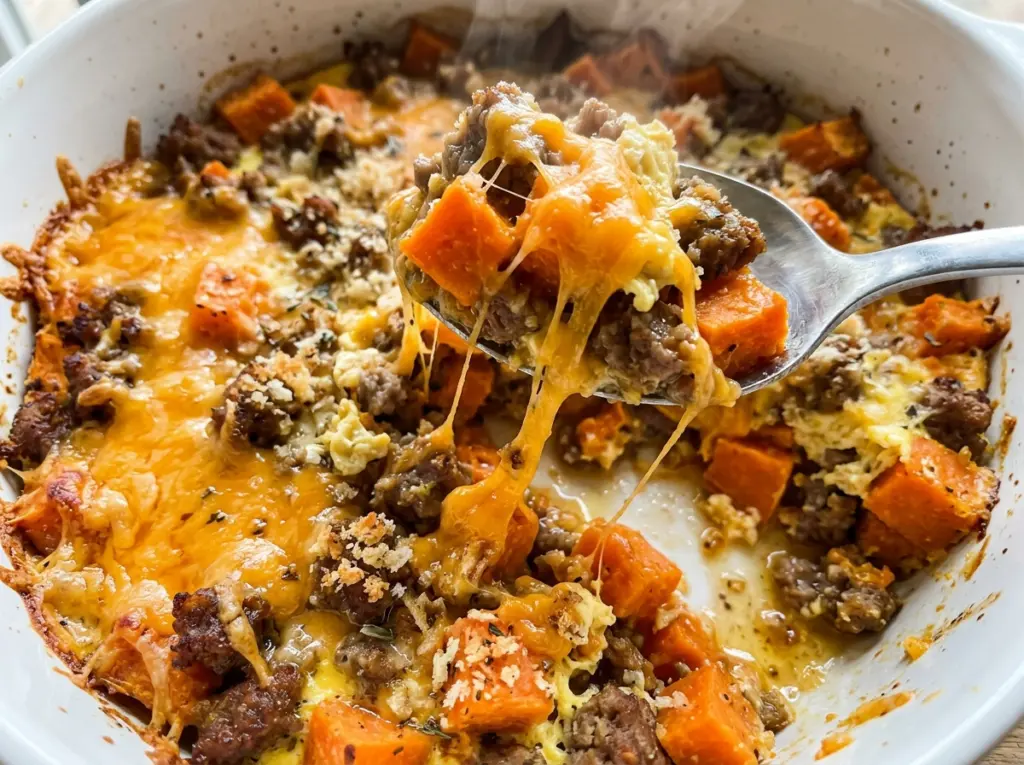
The sweet potatoes need their own time in the oven before they join the eggs. I learned that the hard way: when everything goes into the baking dish raw, the potatoes can stay firm while the eggs are already setting. Roasting them first gives this Sweet Potato and Sausage Casserole tender cubes and keeps the breakfast sausage from having to do double duty in the pan.
The order matters, but none of the steps are fussy. The potatoes roast while the sausage and onion cook on the stovetop, then the whole filling goes into a 9×13-inch dish with whisked eggs, milk, and sharp cheddar. You get savory sausage in every scoop, sweet potato that holds its shape, and a cheesy top that turns golden as the center sets.
Kitchen Note
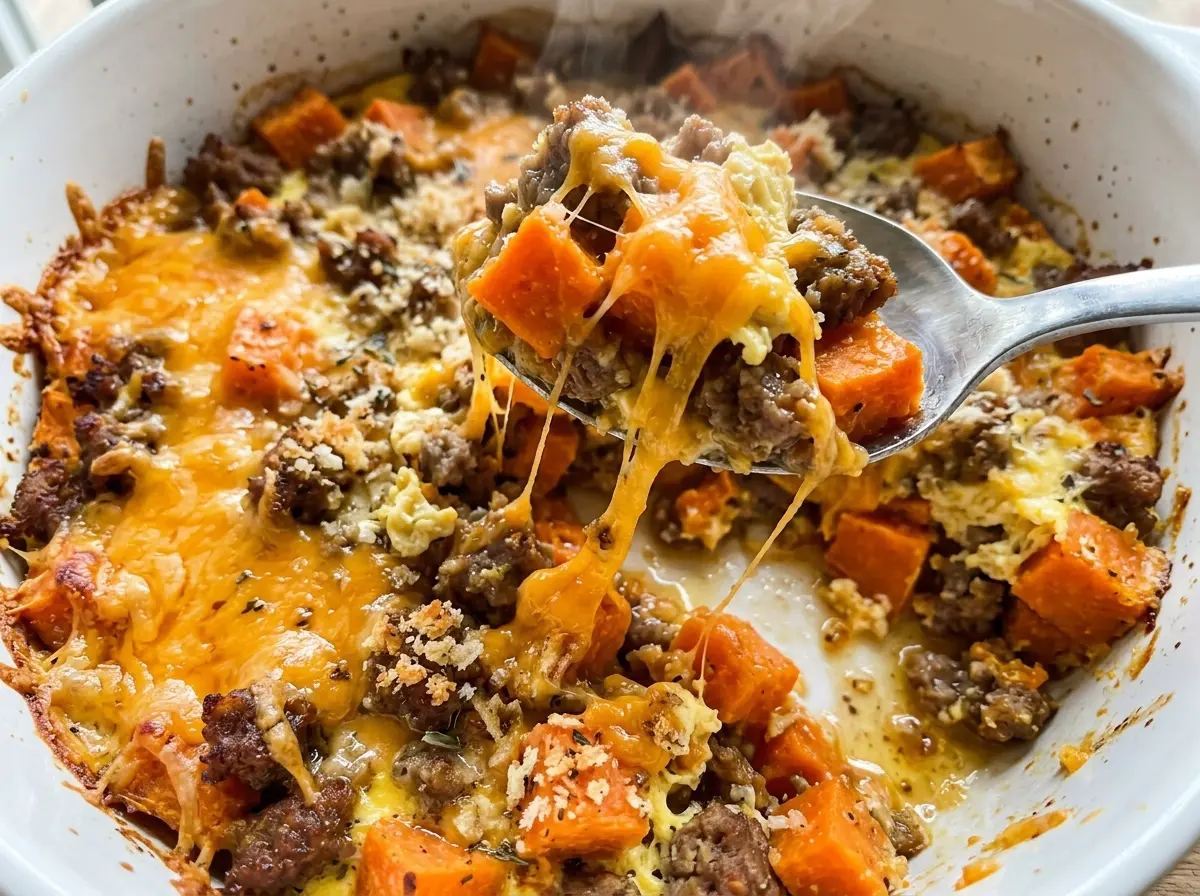
I stick with the 9×13-inch dish for this amount of filling. The potatoes and sausage spread out instead of piling up, so the eggs can set around them in an even layer.
Save this sweet potato and sausage casserole for a hearty breakfast bake with tender roasted potatoes and a sharp cheddar top.
Why the Sweet Potatoes Roast Before They Meet the Eggs
Sweet potatoes take longer to soften than the eggs need to set. Roasting them separately gives them a head start, so they’re fork-tender by the time the casserole comes out of the oven. It also lets you spread the cubes in one layer on a rimmed baking sheet instead of burying them in the sausage and egg mixture, where they’d cook more slowly.
The other useful detail is the temperature change. The potatoes roast at 425°F, which cooks them through before assembly; the oven then drops to 350°F for the egg bake. Starting the casserole at the higher temperature could set the edges too quickly while the center is still loose. Stirring the potatoes once during roasting helps them cook evenly, and an even layer keeps the cubes from sitting in their own steam. Give them that first round in the oven, and the finished casserole has distinct pieces of sweet potato instead of pockets of firm, undercooked cubes.
What the Sausage, Eggs, and Sharp Cheddar Each Bring

- Sweet potatoes — Their natural sweetness balances the savory sausage, and cutting them into uniform 1/2-inch cubes helps them soften at the same pace. Peel them before cutting so the finished casserole has a tender, consistent bite.
- Bulk breakfast sausage — It brings seasoning and savory richness without needing casings removed. Break it into crumbles as it cooks so you get small pieces throughout, rather than a few large clumps. Bulk sausage is the right texture for this filling.
- Yellow onion — Diced onion softens in the sausage pan and adds a mellow savory base. Let it cook until softened; larger pieces stay sharper and more noticeable in the finished bake.
- Eggs and whole milk — The eggs bind the filling into slices, while whole milk keeps the set tender rather than dense. Whisk them together thoroughly so the whites and yolks are evenly combined before pouring.
- Sharp cheddar — Its stronger flavor stands up to both the sausage and sweet potatoes, and it melts across the top as the casserole bakes. Shredding the cheese yourself gives you control over the shred size; sharpness matters more here than choosing a specialty aged cheese.
- Olive oil, kosher salt, and black pepper — These season and coat the potatoes before roasting. Toss them well so the oil and seasoning reach the cut surfaces instead of collecting at the bottom of the pan.
Roast, Brown, Then Let the Eggs Set Gently
Roast the Sweet Potato Cubes
Heat the oven to 425°F. Toss the peeled 1/2-inch sweet potato cubes with olive oil, kosher salt, and black pepper right on a rimmed baking sheet, then spread them into an even layer. Roast for 25 to 30 minutes, stirring once, until a fork slides into a cube easily. If they’re still firm in the middle, give them the full roasting time before moving on.
Brown the Sausage and Soften the Onion
While the potatoes roast, cook the bulk breakfast sausage in a 12-inch skillet over medium heat for 7 to 9 minutes, breaking it into crumbles as it browns. Add the diced yellow onion and cook for another 4 to 5 minutes, until it softens and the sausage is no longer pink. Keep the sausage in small crumbles so it distributes evenly through the dish. The onion should lose its raw bite, but it doesn’t need to brown deeply.
Layer the Filling and Pour in the Eggs
Grease a 9×13-inch baking dish, then reduce the oven to 350°F. Transfer the roasted sweet potatoes and sausage mixture to the dish and spread them out so each scoop will get a bit of both. Whisk the eggs and whole milk in a medium bowl until the mixture looks uniform, then pour it evenly over the filling. Finish by sprinkling the shredded sharp cheddar across the top.
Bake Until the Center Sets
Bake for 30 to 35 minutes, until the center is set and an instant-read thermometer reaches 160°F. The middle shouldn’t look liquid when you gently move the dish; check the center rather than relying only on the firmer edges. Let the casserole rest for 10 minutes before serving so it settles and is easier to portion. Cutting immediately can leave the pieces soft and loose.
Two Sausage Flavors and a Dairy-Free Option
Use Hot Bulk Breakfast Sausage
Choose hot bulk breakfast sausage in place of mild sausage for a more peppery, lively casserole. Keep the cooking method the same and crumble it in the skillet; the heat will carry through the egg filling without adding another ingredient.
Choose a Milder Sausage
A mild bulk breakfast sausage keeps the sweet potato and sharp cheddar more prominent. It’s a good choice when you want the casserole savory without much peppery heat; brown and crumble it just as you would a more strongly seasoned sausage.
Make It Dairy-Free
Replace the whole milk with an unsweetened, unflavored dairy-free milk and use dairy-free shredded cheddar. The eggs still set the casserole, though the cheese may melt less smoothly and the finished top won’t be quite as rich as the original.
Storage and Reheating
- Refrigerator: Refrigerate leftovers in a covered container for 3 to 4 days. The eggs will firm up as they chill, so the casserole will be less soft than it is fresh from the oven.
- Freezer: Freeze individual portions in airtight containers for up to 2 months. Thaw overnight in the refrigerator for more even reheating; the potatoes may soften slightly after freezing.
- Reheating: Warm a portion in the microwave until hot throughout, or cover a larger portion and heat it in a 325°F oven. Reheat leftovers to 165°F; avoid leaving them in the oven uncovered too long, which can dry the eggs.
Questions That Come Up When Making This Casserole
Sweet Potato and Sausage Casserole
Ingredients
Equipment
Method
- Heat the oven to 425°F.
- Toss the sweet potatoes with the olive oil, kosher salt, and black pepper on a rimmed baking sheet.
- Spread the sweet potatoes in an even layer and roast for 25 to 30 minutes, stirring once, until fork-tender.
- While the potatoes roast, cook the sausage in a 12-inch skillet over medium heat for 7 to 9 minutes, breaking it into crumbles.
- Add the onion and cook for 4 to 5 minutes, until softened and the sausage is no longer pink.
- Grease a 9x13-inch baking dish.
- Reduce the oven to 350°F.
- Transfer the roasted sweet potatoes and sausage mixture to the baking dish.
- Whisk the eggs and milk in a medium bowl.
- Pour the egg mixture evenly over the casserole.
- Sprinkle the cheddar on top.
- Bake for 30 to 35 minutes, until the center is set and reaches 160°F on an instant-read thermometer.
- Rest for 10 minutes before serving.


