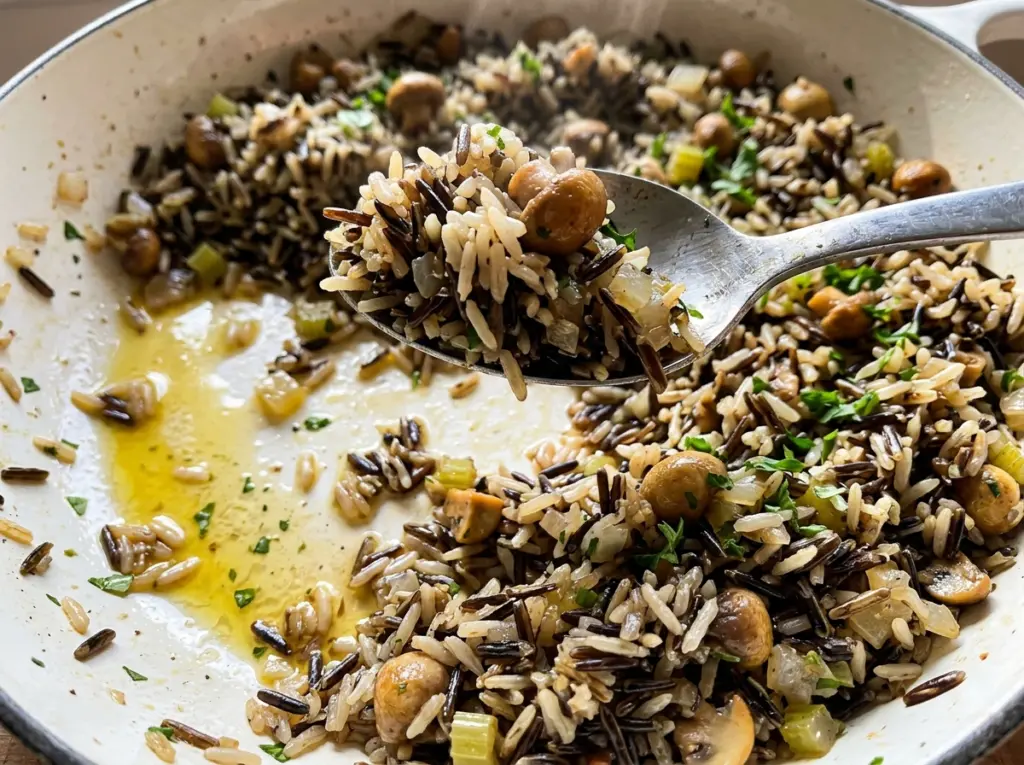
When the pecans turn fragrant in the saucepan, take them out before they darken; they keep toasting a little from the pan’s heat. I learned to do that before starting the vegetables, which gives this wild rice pilaf a nutty finish without risking scorched pecans. The same saucepan then carries the butter, onion, celery, garlic, and rice, so the savory base builds in one place.
Wild rice needs a different doneness check from fluffy white rice. Its kernels should split and turn tender while keeping a pleasant chew, and the cooking time can vary from batch to batch. I use the texture of the rice, not the clock alone, to decide when it’s ready. With parsley stirred in at the end, the finished pilaf is earthy, aromatic, and dotted with crisp pecans.
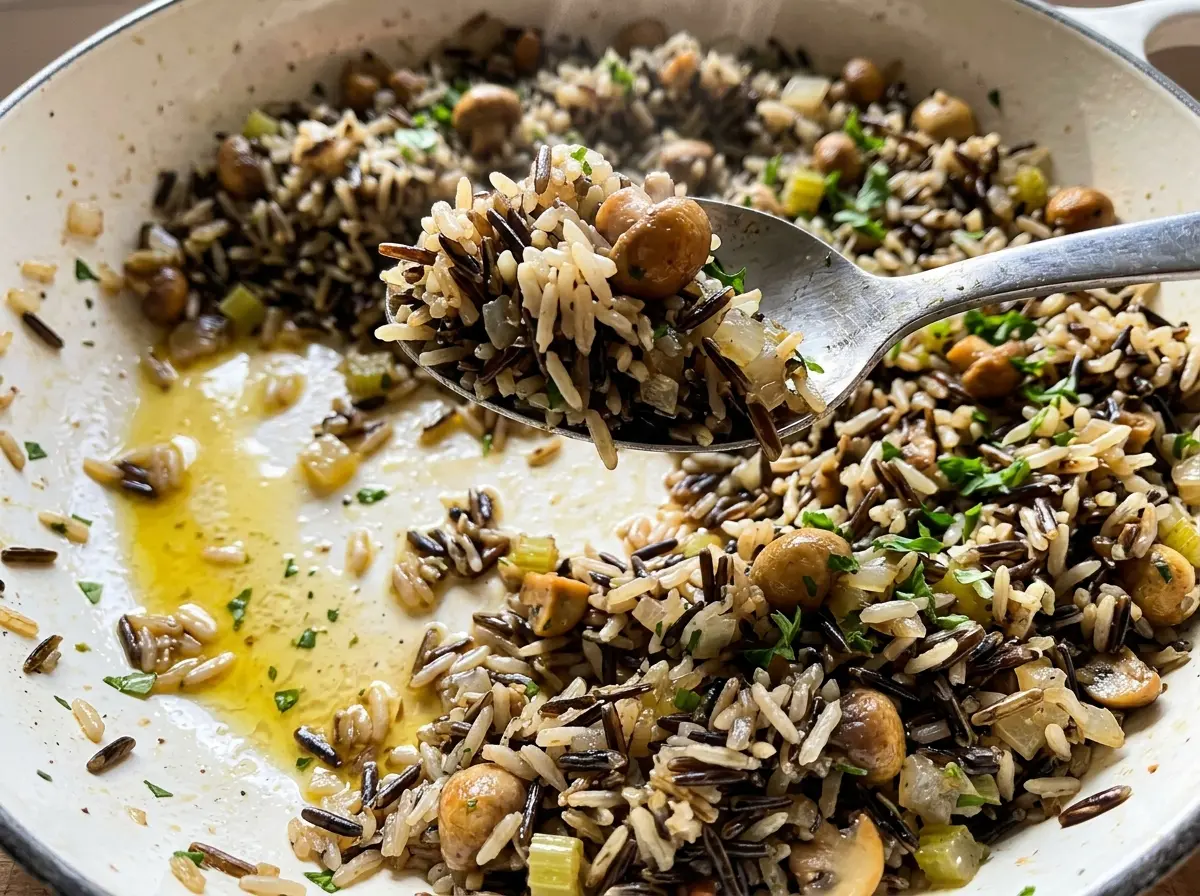
Kitchen Note
Let the cooked rice rest, covered, for the full 10 minutes before fluffing. The pause gives the grains time to settle, so they separate more easily instead of breaking when you stir in the parsley and pecans.
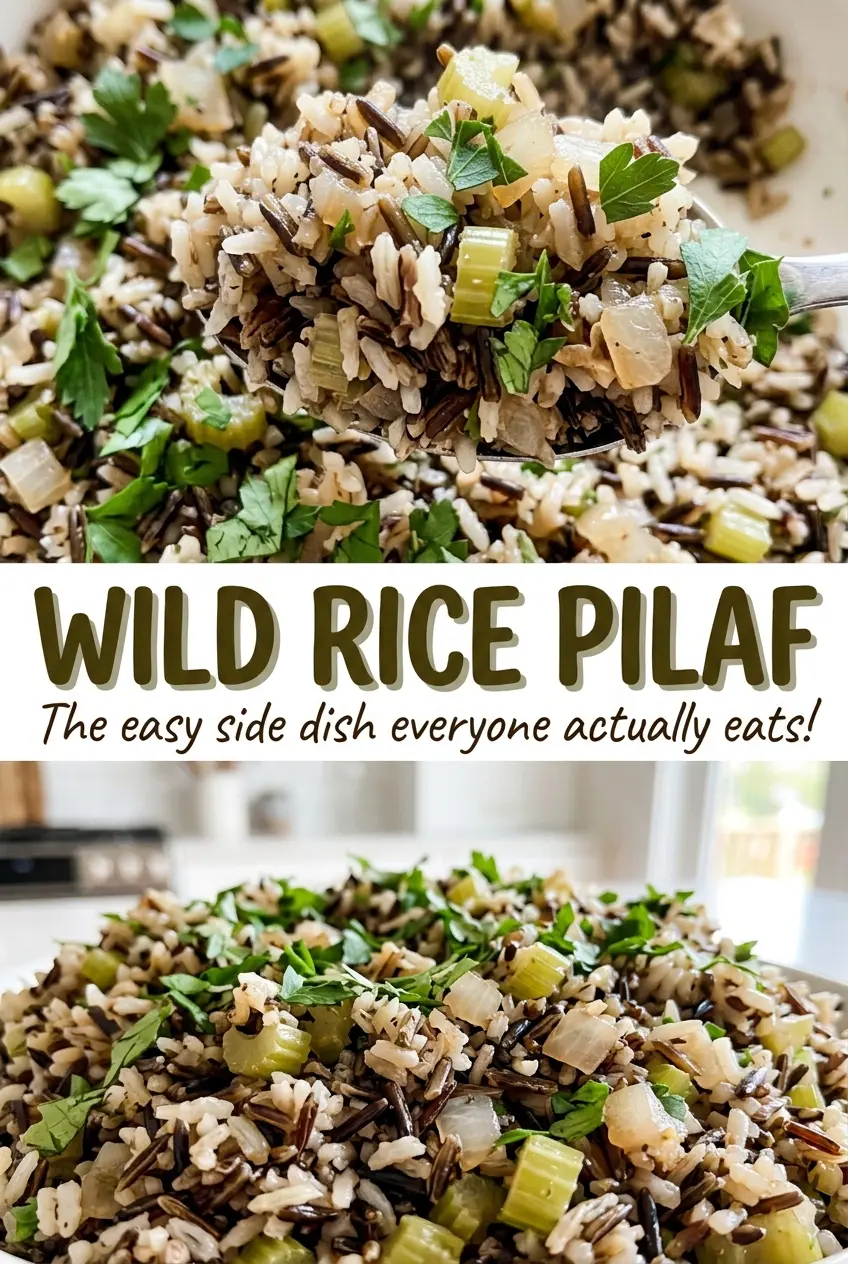
Save this wild rice pilaf for a cozy side dish with tender, chewy grains and toasted pecans.
Why Wild Rice Needs a Texture Check, Not Just a Timer
Wild rice doesn’t cook into soft, separate grains the way many white rice varieties do. Each long, dark kernel opens as it cooks, revealing a lighter interior, and the finished bite should stay pleasantly chewy. A pot can look ready before every kernel has split, so taste a few rather than judging by appearance alone. Tender-but-chewy is the goal; mushy rice has gone too far.
The timing range allows for the natural differences between packages and batches. Keep the heat low once the broth comes to a boil, and let the covered pot simmer steadily instead of rushing it at a higher temperature. If you judge doneness by the split kernels and their bite, you’ll have a better result than if you stop at a precise minute. Wild rice also gives off a different amount of liquid as it cooks, so the rice itself—not a bone-dry pan—is the useful cue for doneness.
What Each Ingredient Brings to This Wild Rice Pilaf
- Wild rice — Whole wild rice gives the pilaf its dark color and distinct, chewy bite. Rinse and drain it before cooking; don’t substitute a packaged wild rice blend without adjusting the cooking method, since blends can contain grains that cook at different rates.
- Low-sodium chicken broth — Broth gives the grains a savory base, while the low-sodium kind leaves room to season the pot without making it too salty. A good everyday carton works well here; there’s no need to reach for a specialty stock.
- Pecans — Their buttery crunch balances the chewy rice, and toasting brings out their nutty aroma. Choose fresh-tasting pecans, since stale nuts can make the whole pilaf taste flat. Walnuts are the closest easy swap and will bring a slightly more assertive, earthy note.
- Yellow onion and celery — Finely chopping both helps them soften into the base instead of leaving large, firm pieces among the rice. Regular yellow onion and crisp celery are just right; no special variety is needed.
- Unsalted butter — Butter carries the flavor of the softened vegetables and adds a rounded richness. Olive oil works in a dairy-free version, though the finished pilaf will taste less buttery.
- Fresh parsley — Stirring it in after cooking preserves its fresh, green flavor. Flat-leaf or curly parsley both work; chop it shortly before using for the brightest taste.
Building the Pilaf in One Saucepan
Toast the Pecans Until Fragrant
Set a dry 4-quart saucepan over medium heat and add the pecans. Stir often for 3 to 4 minutes, watching for a warm, nutty aroma rather than waiting for them to turn dark. They can go from toasted to scorched quickly, so keep them moving. Transfer them to a bowl as soon as they smell fragrant.
Soften the Onion and Celery in Butter
Melt the butter in the same saucepan over medium heat, then add the finely chopped onion and celery. Cook for 5 to 7 minutes, stirring occasionally, until both have softened. The vegetables should look glossy and tender, not browned or crisp. If the onion starts coloring before it softens, lower the heat slightly.
Coat the Rice with the Aromatic Base
Stir in the minced garlic and rinsed, drained wild rice. Cook for 1 minute, stirring so the garlic and rice are mixed through the softened vegetables. The garlic should smell fragrant but shouldn’t take on color. Keep stirring during this brief stage so it doesn’t catch on the bottom of the pan.
Simmer Until the Kernels Split and Turn Tender
Add the chicken broth, kosher salt, and black pepper, then bring the liquid to a boil over medium-high heat. Cover the saucepan, reduce the heat to low, and simmer for 45 to 60 minutes, until the kernels have split and are tender but chewy. If the rice reaches that texture while broth remains, drain off the excess liquid. Remove the pan from the heat and let it rest, covered, for 10 minutes; then fluff with a fork and stir in the parsley and toasted pecans.
Easy Ways to Change the Flavor or Fit a Diet
Make It Vegetarian and Dairy-Free
Use vegetable broth in place of chicken broth and olive oil instead of butter. The rice will still cook into a savory pilaf, but its flavor will be lighter and less buttery than the original.
Add a Sweet-Tart Cranberry Finish
Stir chopped dried cranberries in with the parsley and pecans after the rice has rested. Their sweet-tart flavor gives each bite a brighter contrast, though it makes the pilaf taste less purely savory.
Use Walnuts for a Different Crunch
Swap the pecans for walnuts and toast them in the same dry saucepan. Walnuts have a deeper, slightly more bitter edge, but they bring the same crisp contrast to the chewy rice.
Storage and Reheating
- Refrigerator: Transfer leftovers to a shallow airtight container within 2 hours and refrigerate for up to 4 days. The rice will firm up, and the pecans will soften.
- Freezer: Freeze in an airtight container for up to 3 months for best quality. Thaw overnight in the refrigerator before reheating.
- Reheating: Add a small splash of broth or water, cover, and warm gently on the stovetop or in the microwave until steaming hot throughout, 165°F. Heat just until hot; leaving it uncovered can dry out the rice.
Questions That Come Up When Cooking Wild Rice Pilaf
Wild Rice Pilaf
Ingredients
Equipment
Method
- Toast the pecans in a dry 4-quart saucepan over medium heat, stirring often, for 3 to 4 minutes, until fragrant.
- Transfer the toasted pecans to a bowl.
- Melt the butter in the same saucepan over medium heat.
- Add the onion and celery and cook for 5 to 7 minutes, stirring occasionally, until softened.
- Stir in the garlic and rinsed wild rice and cook for 1 minute.
- Add the broth, salt, and pepper, and bring to a boil over medium-high heat.
- Cover, reduce the heat to low, and simmer for 45 to 60 minutes, until the kernels have split and are tender but chewy.
- If the rice is tender but liquid remains, drain off the excess.
- Remove the saucepan from the heat and let the rice rest, covered, for 10 minutes.
- Fluff the rice with a fork and stir in the parsley and toasted pecans.


